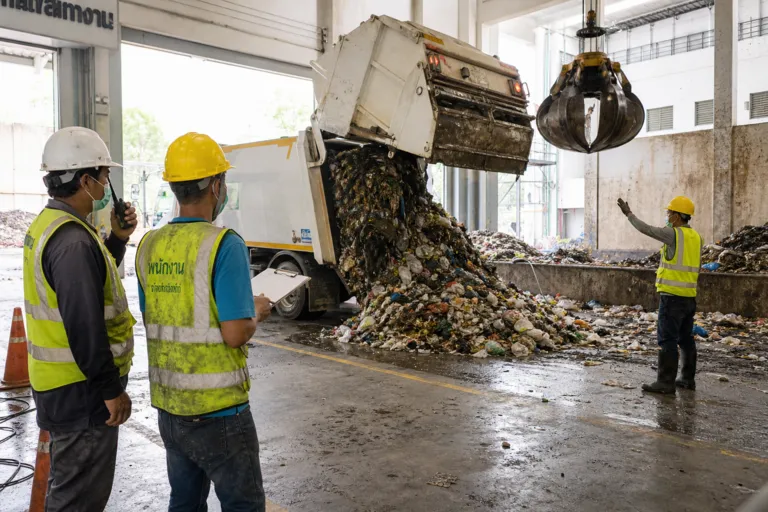
Thailand’s waste challenge is becoming harder to manage as urbanization accelerates and the country’s role as a major tourism hub adds more collection loads. A Thailand waste management report highlights mounting pressure in metropolitan and coastal areas, naming Bangkok, Pattaya, and Phuket as locations experiencing increased waste from residential, commercial, and tourism-related activity. This is raising demand for integrated systems such as smart segregation, real-time tracking, and scalable energy recovery. In parallel, Thailand’s broader waste management market was valued at USD 18.28 billion in 2023 and is predicted to reach USD 34.83 billion by 2030, at a CAGR of 8.60% from 2024 to 2030, signaling sustained investment momentum across collection, processing, recycling, and disposal.
Against this backdrop, Thailand’s policy direction is explicitly pulling Waste-to-Energy (WtE) into the mainstream of municipal treatment planning. A Thailand-focused review of organic waste notes a national target that by 2027, about 26–30% of municipal solid waste (MSW) will be treated through WtE. The same source describes organic waste as almost 50% of Thailand’s total MSW, which helps explain why energy-recovery pathways are being discussed alongside composting, anaerobic digestion, mechanical biological treatment, and landfill-gas-related approaches. For the Thailand waste-to-energy market, this mix matters: it expands the pipeline beyond one technology type and ties WtE growth to upstream improvements in sorting, collection discipline, and feedstock quality.
Why WtE Is Moving From “Nice-to-Have” to Core Infrastructure
The case for WtE is also being reinforced by the composition of the waste stream and the need for better treatment options for wet and organic fractions. A Thailand wet waste management market report values the segment at approximately USD 1.8 billion and links growth to urbanization, population growth, and government initiatives promoting recycling and WtE solutions. It also points to food waste volumes in urban areas as a driver for waste-to-energy conversion, while listing a broad mix of local and international companies active in the space, from service delivery to energy-focused solutions. This ecosystem suggests scaling will depend on partnerships that can handle collection, pre-treatment, and conversion in one coordinated chain.
Regional market dynamics add further context for project development and competitive positioning. Mordor Intelligence estimates the Southeast Asia waste-to-energy market will increase from USD 4.64 billion in 2025 to USD 5.22 billion in 2026 and reach USD 9.48 billion by 2031, at a CAGR of 12.65% over 2026–2031. In that same regional view, thermal technology led with a 62.1% share in 2025, while municipal solid waste represented a 56.4% share by waste type, and electricity accounted for a 52.1% share by energy output. These figures are regional, not Thailand-specific, but they help frame what developers typically prioritize when WtE is deployed as both a disposal tool and a firm power source.
Technology supply and implementation capacity are also becoming part of the scale-up conversation. A PRNewswire release about SUS states its equipment and technology are applied in 300 waste-to-energy plants across the world, with a daily capacity over 300,000 tons of municipal solid waste (as of June 30, 2025, based on cited public data). Separate global WtE commentary from DataM Intelligence emphasizes that WtE plants provide a solution for managing MSW by burning it as fuel to generate electricity and can reduce the volume of waste by about 87%, while also noting that incineration systems emit pollutants and pose health hazards. For Thailand’s buildout, the practical takeaway is clear: scaling the Thailand waste-to-energy market must go hand-in-hand with careful technology choices, enforcement, and transparent safeguards.
What WtE target has Thailand set for municipal solid waste by 2027?
Why is organic waste so important to Thailand’s waste treatment strategy?
What is the size outlook for Thailand’s overall waste management market?
How do Southeast Asia’s WtE trends help contextualize Thailand’s waste-to-energy market?
What does the article mean when it says the Thailand waste-to-energy market is scaling up with safeguards in mind?