Thailand’s warehouse automation market is accelerating because e-commerce is forcing faster delivery and more reliable fulfillment. MarketReportAnalytics notes that Thailand’s logistics market is seeing increasing adoption of automated warehousing, track-and-trace systems, and digital freight platforms, even if adoption remains slower than in more developed markets. The same source ties momentum to an e-commerce boom that is pushing demand for faster delivery times and advanced fulfillment solutions, while investment in e-commerce logistics solutions is accelerating. In parallel, Ken Research points to “white-space” opportunities across warehouse automation, last-mile innovation, cold chain for perishables, and cross-border fulfillment infrastructure for 2025–2026F, alongside planned automated hubs, bonded warehouses, and regional fulfillment centers designed to improve nationwide coverage and lower delivery lead times.
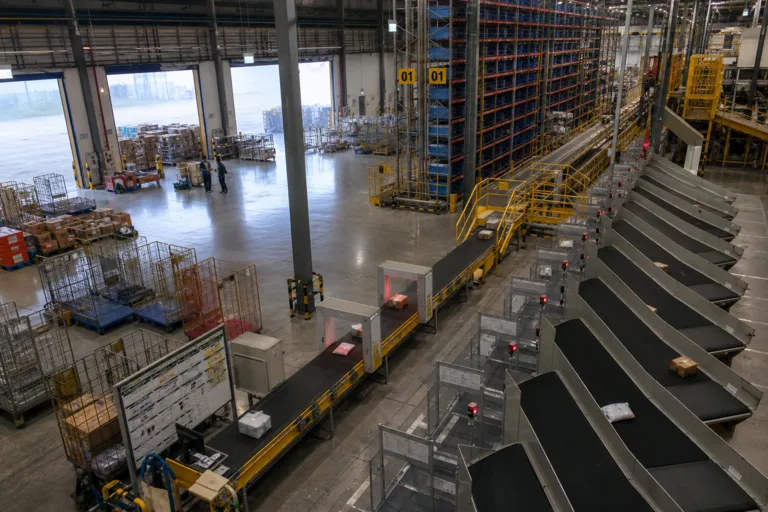
Parcel operations show why automation matters in daily execution. Mordor Intelligence reports that domestic deliveries generated 64.41% of CEP turnover in 2025, driven by social-commerce transactions and urban grocery apps. That volume profile is reshaping the role of urban depots and sortation capacity. The same report says urban warehouses outfitted with automated sorters can handle 30,000 parcels per hour, which helps slash cut-off times for late-night orders. It also describes how domestic CEP players have pivoted from aggressive price wars toward yield management, raising unit profitability and freeing cash flow for automation investments. As carriers and 3PLs pursue better economics, automation becomes a practical lever to protect service levels while managing costs.
Smart Fulfillment Shifts From Equipment to Orchestration
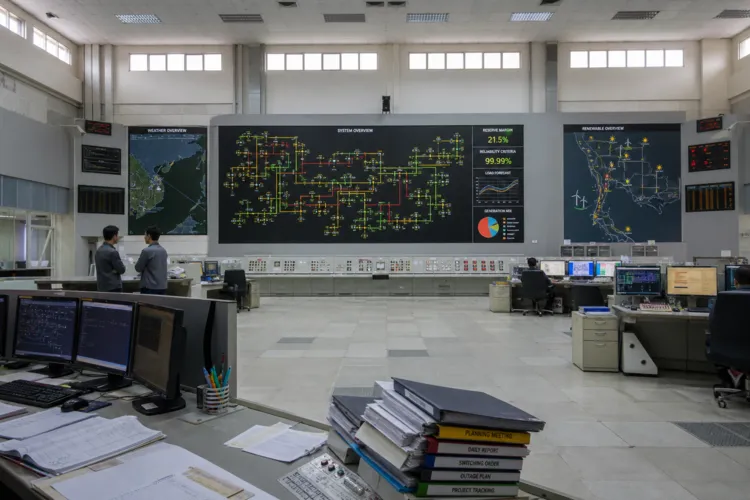
Automation is not only about machines; it is also about software control and real-time decisioning. Mordor Intelligence highlights that consumer expectations for real-time visibility are encouraging AI-enabled dynamic routing, which cuts fuel costs and shrinks carbon footprints. LogisticsIQ frames this broader shift as a move toward “software-defined orchestration,” where Warehouse Execution Systems (WES) and AI machine-vision platforms increasingly influence equipment selection. LogisticsIQ also underscores the structural headroom still available globally, stating that 80% of operational warehouses worldwide remain completely manual. In that context, Thailand’s push toward automated depots and data-driven route optimization aligns with an international transition toward intelligent fulfillment, even as local adoption levels vary by segment and operator maturity.
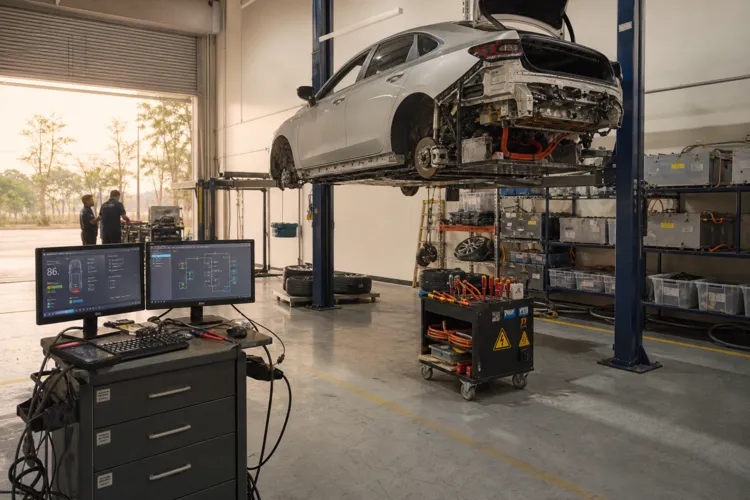
Regional competition is also shaping buyer behavior and vendor strategies in Thailand. In Mordor Intelligence’s Southeast Asia warehouse automation coverage, Indonesia holds a 28.63% share in 2025, supported by Cikarang Dry Port’s 50,000 TEU capacity and corridor upgrades that trimmed transit times 15–20%. Vietnam is described with a 13% CAGR projection, alongside large hubs such as Shopee’s 100,000 m² fulfillment center and SPX Express’s 170,000 m² Yen My hub. Thailand is positioned differently: the report states that Thailand “rides on automotive-sector clustering and Eastern Economic Corridor tax holidays that underwrite AS/RS for EV battery storage.” It also notes that global integrators, including Daifuku, Dematic (KION Group), SSI Schaefer, Swisslog, and Vanderlande, win mega-hub work, while robotics specialists target mid-market warehouses with subscription AMR fleets.
Demand mix within warehousing adds another layer to automation priorities. Mordor Intelligence reports that non-temperature-controlled space comprised 91.52% of 2025 warehousing revenue, reflecting the dominance of consumer goods, automotive parts, and general merchandise. At the same time, the temperature-controlled segment is forecast to record a 5.71% CAGR from 2026–2031, supported by pharmaceutical and frozen-food demand. Ken Research separately states Thailand’s e-commerce logistics market is expected to reach USD 2 billion, reinforcing why investors are scanning across warehouse automation, cold chain, and cross-border fulfillment infrastructure rather than treating automation as a single product purchase. As delivery windows compress and throughput needs exceed manual capacity, Thailand’s smart fulfillment build-out increasingly links automation hardware, software visibility, and network design decisions.
What is driving momentum in Thailand’s warehouse automation market?
How much of Thailand’s CEP turnover came from domestic deliveries in 2025?
What throughput can automated sorters enable in urban Thai warehouses?
How large is Thailand’s e-commerce logistics market expected to be, according to Ken Research?
What is the revenue mix of temperature-controlled vs non-temperature-controlled warehousing in Thailand?