Thailand’s draft Power Development Plan (PDP) for 2026–2050 sets out what officials describe as a major restructuring of the national energy system. The plan’s first phase maps about 50,900 MW of new capacity and is positioned as a shift away from a centralized, fossil-heavy model toward a “Green and Flexible Grid” that blends renewable energy, battery energy storage systems (BESS), and firm low-carbon generation. The draft has been approved by the PDP 2026 drafting subcommittee and was scheduled to open for public consultation on Sept. 8, 2026. The plan is also aligned with Thailand’s third Nationally Determined Contribution (NDC 3.0), which brings forward the country’s net-zero greenhouse-gas emissions target by 15 years to 2050.
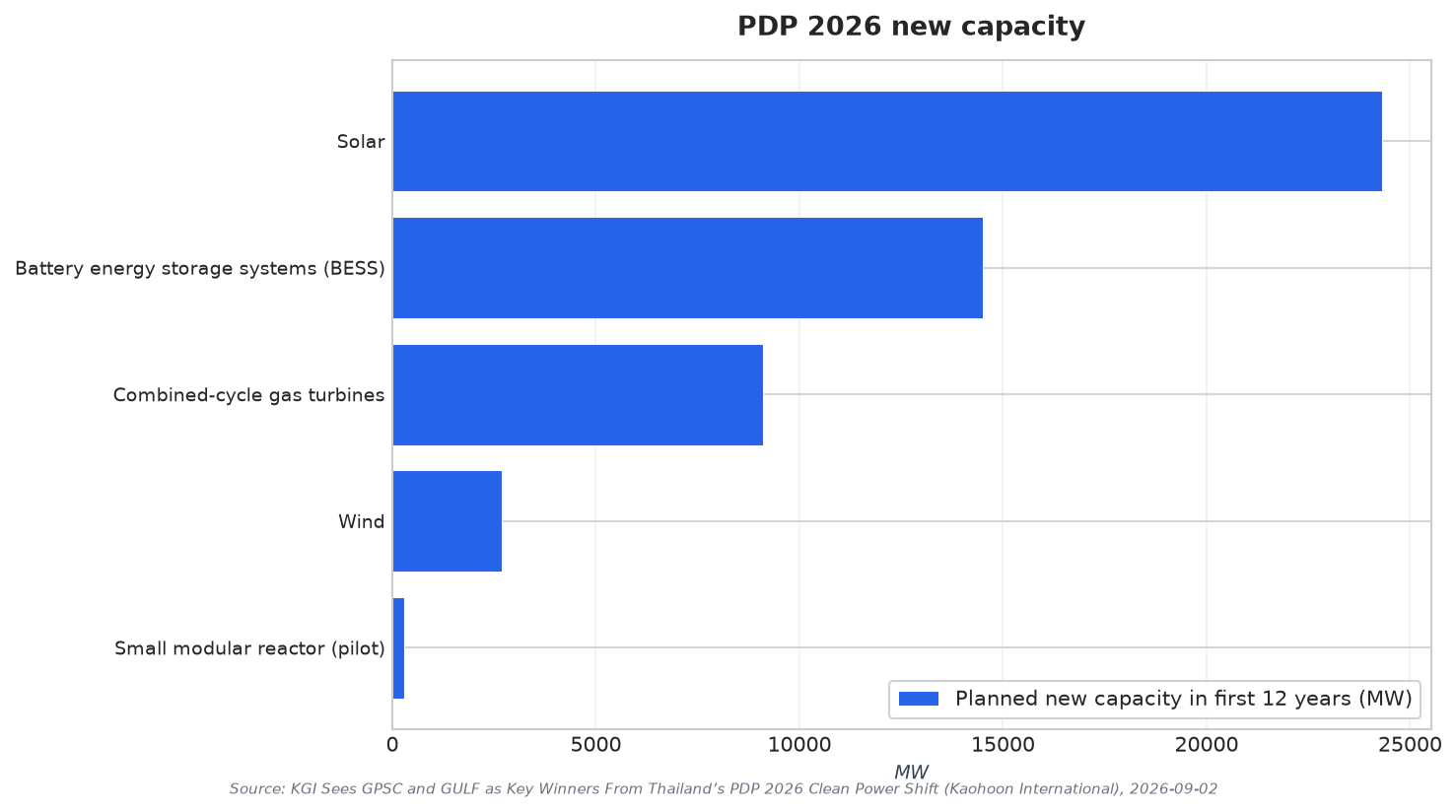
In capacity terms, the build-out has been described as 50.9 GW of additions over the first 12 years, led by 24.3 GW of solar, 14.5 GW of BESS, 2.7 GW of wind, a 300 MW pilot small modular reactor (SMR), and 9.1 GW of combined-cycle gas turbines. The same draft frames a “Clean Swap” approach that replaces expiring fossil-fuel PPAs with renewables and BESS rather than defaulting to new gas additions. This grid transition is also tied to changing demand. Under a high-growth scenario, electricity demand from data centers and AI-related operations could reach 8,800 MW, alongside broader drivers such as electric mobility and rising rooftop solar adoption that push the network toward two-way power flows.
Why Clean Power, Rooftop Solar, and Direct PPAs Sit at the Center
Clean electricity is an explicit target in the draft. Thailand aims to lift clean energy’s share of the power mix from less than 20% today to 50% within the first decade of the new plan. Beyond that initial period, the draft envisages a clean-energy share of between 65% and 90% by 2050. A rooftop solar program targeting 10,000 MW (10 GW) is presented as a public-ownership pathway, described as “people’s power plants,” and the Ministry of Energy has also highlighted creating conditions for 10 GW of rooftop solar. In parallel, proposed electricity-market reforms include direct power purchase agreements (Direct PPAs), so users can buy clean power directly from producers and broaden participation in both generation and purchasing.
The draft also updates how Thailand thinks about reliability. Instead of assessing system security principally through reserve margin, it replaces reliance on that single measure with Loss of Load Expectation (LOLE), intended to better reflect reliability risks as variable renewables rise. One set of commentary on the draft cites a LOLE cap of 1.0 day per year. On the emissions side, PDP 2026 aims to cut carbon dioxide emissions from electricity generation from about 80 million tonnes of CO2 today to 19 million tonnes by 2050, a reduction of more than 75%. Power-sector emissions are projected to fall to about 74 million tonnes of carbon dioxide equivalent in 2037 before declining to 19 million tonnes in 2050.
Energy security and costs are also key themes, especially around gas supply. The energy minister described measures focused on reducing dependence on LNG bought on the volatile spot market, including maximizing the use of gas resources in the Gulf of Thailand and negotiating imports from neighboring Myanmar to their full potential. Meanwhile, independent market analysis frames Thailand’s power system as still dominated by thermal generation, with installed thermal capacity accounting for 75.6% of the Thailand power market in 2024, even as solar-led renewables expand and corporate PPAs multiply. Against that backdrop, the Thailand Power Development Plan 2026 becomes a signal to investors about the direction of grid upgrades, competition, and clean electricity procurement over a 25-year framework extending to 2050.
What is the main capacity build-out proposed under Thailand’s new power plan?
How much solar and battery storage does the draft plan highlight?
How will direct PPAs work under the proposed market reforms?
What does the plan target for clean power share over time?
What changes does the Thailand Power Development Plan 2026 make to grid reliability planning?