

Thailand Africa trade is expanding beyond agricultural commodities as Thai companies participate in manufacturing, hospitality, and investment activities across African markets.
ASEAN–Africa: The Next Corridor, developed by Eurogroup Consulting in collaboration with the Alliance des Patronats Francophones (APF) and the Cambodia Chamber of Commerce (CCC), highlights Thailand's established agricultural relationships and its growing industrial and service-sector presence.
Launched at REF 2026 in Phnom Penh on 14 November, the whitepaper examines how Southeast Asian companies can move beyond merchandise trade toward local production and long-term partnerships.
For Thai business leaders, Africa presents different opportunities across agriculture, manufacturing, and consumer services, each requiring a distinct commercial approach.
What Does Thailand Trade With African Markets?
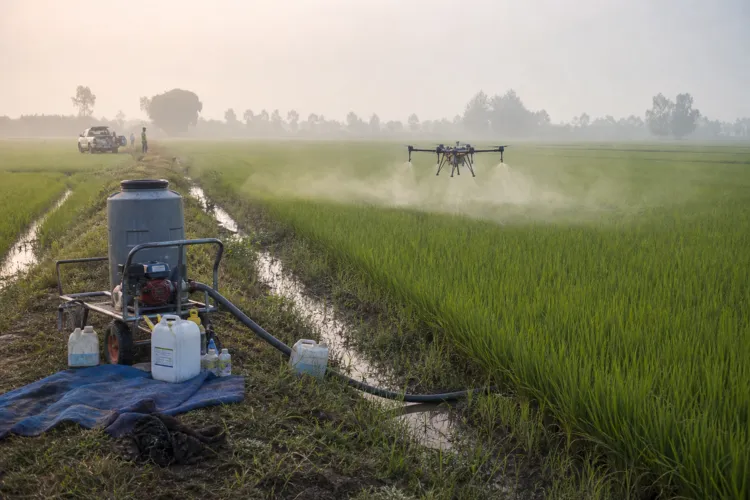
Agriculture remains an important component of Thailand's commercial relationship with Africa.
Rice is particularly significant because Thai production and export capabilities support food supply across international markets.
According to the whitepaper, Thailand exported approximately 7.9 million tonnes of rice worldwide in 2025, including substantial volumes to Africa.
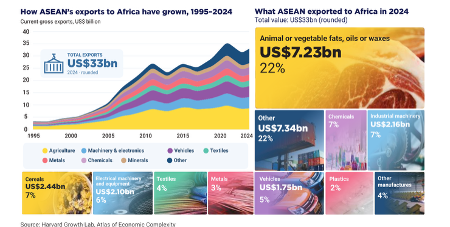
Thailand's rice exports to South Africa alone reached approximately US$467 million in 2024, according to the whitepaper. At regional level, ASEAN exported around US$33 billion of goods to Africa in 2024, including approximately US$2.44 billion of cereals.
The relationship also extends into industrial products.
Thailand's established manufacturing capabilities create potential opportunities in packaging, chemicals, machinery, vehicles, and consumer goods.
However, demand differs significantly across African countries.
Companies must understand customer requirements, distribution channels, pricing, and local competition before selecting target markets.
The ASEAN–Africa: The Next Corridor whitepaper examines how agricultural and manufacturing relationships could develop into more integrated business activities.
Manufacturing Partnerships Create Opportunities Beyond Exports
Africa's expanding consumer markets generate demand for industrial materials, packaging, and manufactured products.
Thai companies can participate through exports, local partnerships, or manufacturing investment.
Indorama Ventures demonstrates this progression.
The Thailand-based industrial group established a PET production plant in Nigeria in 2012, supplying materials used by local beverage and packaging industries.
Rather than relying exclusively on imports, Indorama progressively expanded local manufacturing and downstream activities.
Its African operations also developed through acquisitions, partnerships, and expansion into Ghana.
The whitepaper highlights a planned recycled-PET facility in Lagos, scheduled to begin operations in 2027.
The project was designed to process up to 45,000 tonnes annually, demonstrating the potential to connect industrial production with circular packaging systems.
However, investment in local manufacturing must be justified by market demand, energy availability, logistics, and operating costs.
The Indorama example illustrates how industrial capabilities can be adapted to African markets when commercial conditions support local production.
Thai Hospitality Expertise Is Finding New Markets
Thailand's international capabilities extend beyond agriculture and manufacturing.
Minor International illustrates how Thai hospitality expertise can be transferred across African destinations.
The company has developed a multi-country presence through acquisitions, partnerships, and hotel brands including Anantara and Avani.
Its operations span safari tourism, urban accommodation, and coastal resorts.
According to the whitepaper, Minor operates 16 Elewana properties across Kenya and Tanzania.
These activities demonstrate how service-sector capabilities developed in Southeast Asia can support expansion into African markets.
However, hospitality models require local adaptation.
Visitor demand, operating costs, staffing, and destination positioning differ between countries.
International expansion therefore depends on selecting suitable locations and partners rather than replicating a single operating model without adjustment.
Thailand–Africa Initiative 2.0 Supports Institutional Cooperation
Thailand has also strengthened its commercial relationships with Africa through institutional engagement.
The Thailand–Africa Initiative was introduced in 2013 and renewed as Thailand–Africa Initiative 2.0 in December 2025, according to the whitepaper.
The framework supports cooperation in trade, investment, and diplomatic relations.
Such initiatives can help businesses identify opportunities and establish institutional connections.
However, dialogue becomes commercially meaningful only when companies can develop viable projects and partnerships.
Louis-Victor Duval, Managing Director of Groupe Duval, highlights this potential in the whitepaper:
"An Africa–Asia alliance in infrastructure, another in real estate, and so on, would show companies already established on one continent what they could achieve on the other."
His perspective emphasizes the value of sector-specific partnerships between businesses with complementary capabilities.
Where Should Thai Companies Focus Their Africa Strategy?
Thailand's capabilities in food processing, manufacturing, and hospitality offer several possible expansion routes.
Commercial attractiveness depends on the target industry and market.
Executives should consider:
- Sector fit: Identify where Thai expertise meets demonstrated African customer demand.
- Operating model: Compare exporting, distribution, local manufacturing, and service investment.
- Partner capabilities: Evaluate local operators, distributors, and potential investment partners.
- Commercial feasibility: Assess infrastructure, financing, regulation, and execution risks.
These factors help businesses identify opportunities supported by realistic operating conditions.
Read more about related industrial developments in Thailand's Food Processing Investment Momentum.
For companies evaluating international growth, Thailand market research and strategic consulting services can support market assessment and investment planning.
Frequently Asked Questions
What does Thailand export to Africa?
Thailand exports rice, agricultural products, and selected manufactured goods to African markets. Other relevant product categories include vehicles, machinery, and chemicals. Commercial opportunities vary by country, product demand, distribution conditions, and the competitiveness of Thai suppliers.
Which Thai companies have operations in Africa?
The whitepaper highlights Indorama Ventures and Minor International. Indorama has developed manufacturing and packaging operations, while Minor participates in hospitality markets across several African countries. Their experiences demonstrate different models of international expansion through local investment, acquisitions, and partnerships.
What is the Thailand–Africa Initiative?
The Thailand–Africa Initiative is a framework supporting Thailand's economic and diplomatic relationships with African countries. Its activities concern trade, investment, and institutional engagement. The framework was renewed as Thailand–Africa Initiative 2.0 in December 2025, according to the whitepaper.
What opportunities could Thai hospitality companies find in Africa?
Potential opportunities include hotel management, resort development, acquisitions, and operating partnerships. Thailand's established hospitality capabilities may be relevant to selected African destinations. Investors must nevertheless evaluate visitor demand, location competitiveness, staffing requirements, financing, and local operating conditions.
Explore Thailand's Expanding Business Opportunities in Africa
Thailand's agricultural, manufacturing, and hospitality capabilities offer opportunities to build stronger commercial relationships with African markets.
For executives evaluating expansion, the full whitepaper examines sector opportunities, company experiences, institutional partnerships, and the conditions supporting successful ASEAN–Africa cooperation.