Urban routines are reshaping how people eat in Thailand, and convenience is increasingly built into home dining. Research on Thailand’s foodservice trends links the shift to rapid urbanization and changing lifestyles, as consumers look for convenient dining solutions and integrate food delivery into everyday habits. Ready-to-eat options also extend beyond delivery. Grab-and-go meals in convenience stores are part of the same behavior change, supported by CP All’s extensive 7-Eleven network as a distribution channel for ready-to-eat meals. In parallel, food delivery platforms such as GrabFood and Line Man, alongside the “explosive rise” of cloud kitchens, add capacity and speed that fit busy schedules.
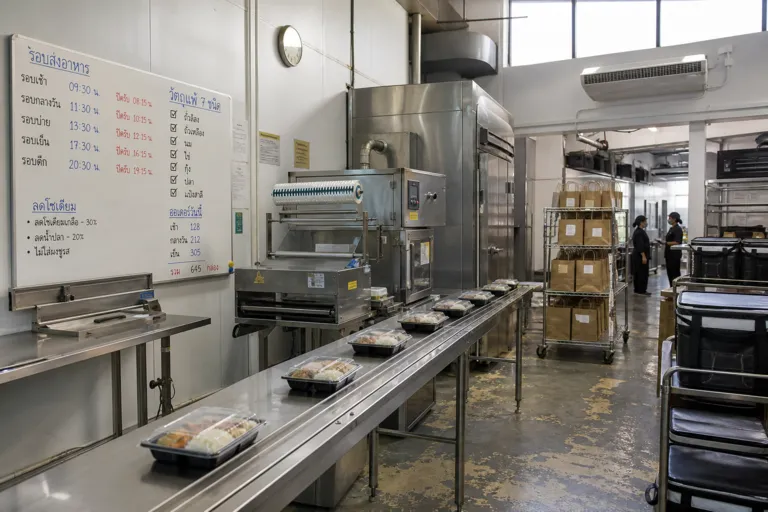
On the production side, Thailand’s ready-to-eat output was reported at 531,800 tonnes worth US$2.4 billion, with domestic consumption accounting for 52.9% of sales. The supply base is broad. As of 2024, Thailand had 575 active, registered factories producing ready-to-eat foods, and 548 of these were SMEs. Within dry and long-shelf-life foods, 225 factories represented 39.1% of factories, and most were SMEs (212). This structure helps explain why a wide variety of formats and cuisines can reach shelves quickly, especially when nationwide convenience-store coverage is expanding and product ranges include Thai, Chinese, Japanese, and Italian dishes.
Convenience Channels Expand, but Health and Sentiment Shape the Pace
Forward-looking expectations show growth, but not without friction. Krungsri Research forecasts Thailand’s ready-to-eat food market will grow 2.3–3.3% per year during 2026–2028, driven by faster-paced lifestyles, data-driven product development, and wider convenience-store coverage. However, the same outlook flags constraints for 2026, including fragile domestic sentiment, high household debt, health concerns over high sodium intake, and an incomplete rebound in tourism. Sodium is a prominent issue in the broader policy and health conversation. Thailand’s average daily intake was cited at 10.8g, compared with WHO guidelines of 5g, while governments worldwide push for lower sodium content.
Within chilled and frozen ready meals, Krungsri Research reported overall consumption volume grew at a CAGR of 6.3% during 2019–2024, attributing the gain to urban expansion and fast-paced city lifestyles. It also noted concentration at the top of the market: collectively, key players account for over 81.8% of Thailand’s chilled and frozen ready meals market value. Exports add another lever. In 2024, export volume for chilled and frozen ready meals expanded by 10.4% and export value rose by 10.3%. Exports to the United States, described as Thailand’s largest export destination, surged by 38.0% in 2024, tied to demand for convenient and affordable meal solutions amid a gradual recovery in economic activity.
For brands competing in the Thailand ready-to-eat meals market, the opportunity is not only speed, but also relevance to evolving preferences and usage occasions. Mintel describes ready meals as pre-prepared products designed for convenience, including heat-and-eat formats that come frozen, chilled, or ambient and require only heating. Its Thailand-focused report highlights that brands are “adding value beyond convenience,” that occasion influences which formats consumers choose, and that chilled formats are growing while frozen is declining. At the same time, Thailand’s foodservice research points to rising interest in health-conscious and sustainable menu options, including plant-based and flexitarian foods. Together, these signals suggest growth will reward offerings that fit urban time pressure, retail availability, and shifting expectations around health and product format.
What is driving growth in Thailand’s ready-to-eat meals market?
How fast is Thailand’s ready-to-eat food market expected to grow in 2026–2028?
How large is Thailand’s production base for ready-to-eat foods?
What happened to Thailand’s chilled and frozen ready-meal exports in 2024?
What risks could slow ready-to-eat growth in Thailand?