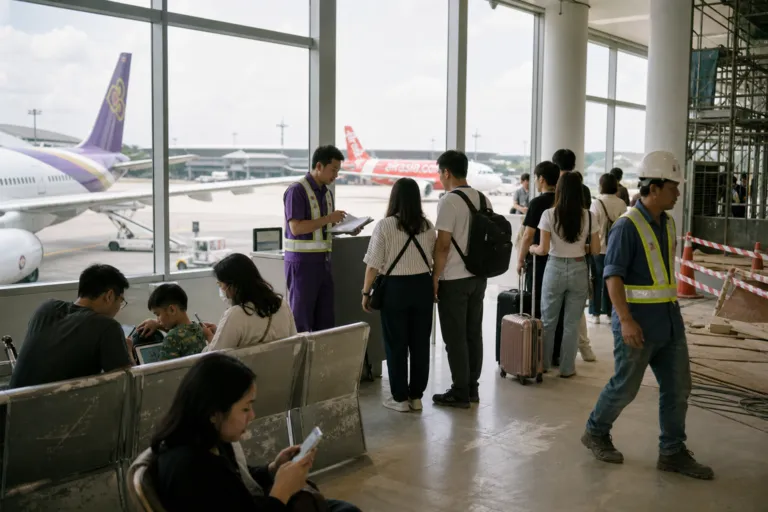
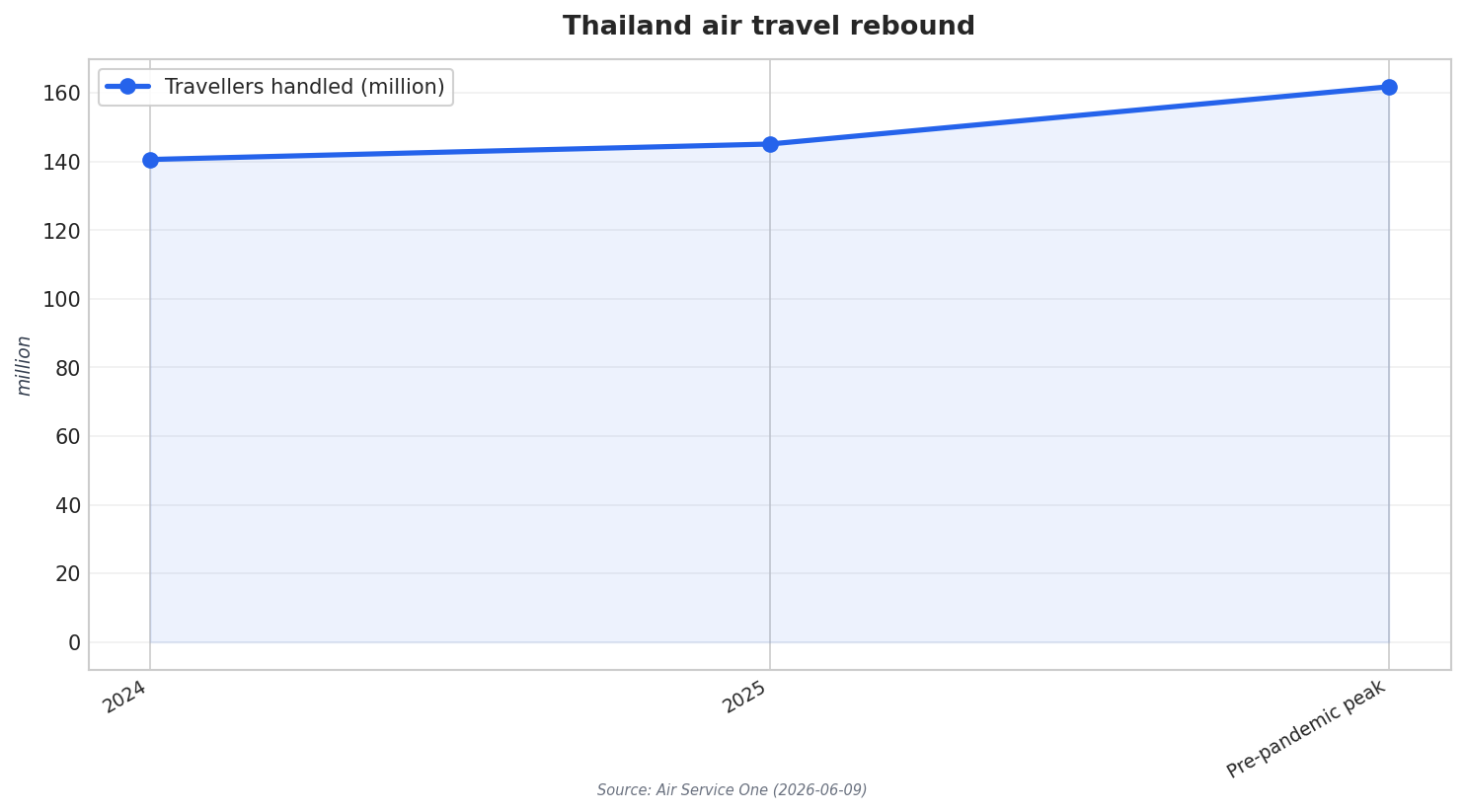
Thailand’s air market is moving into a new phase of recovery and competition. Airports of Thailand (AOT) and the Department of Airports have expressed a positive view of the sector’s recovery, linking growth to a surge in passenger traffic and the rebound of tourism. In 2025, Thailand’s airports handled 145.1 million travellers, up from 140.6 million in 2024, though still below the pre-pandemic peak of 161.8 million. Against that backdrop, AOT forecasts passenger volumes could reach 170 million passengers annually within five years. This mix of current momentum and forward-looking targets is reshaping how airlines and airports plan capacity and network priorities.
In airline strategy, Thai Airways International PCL sits at the center of a fleet and efficiency story that signals change across the Thailand airline industry. Euromonitor describes “aggressive fleet expansion” by Thai Airways and low-cost carriers, with a focus on optimizing route networks and recapturing market share. Other reporting highlights that Thai Airways is dealing with a fleet modernization bottleneck, with older aircraft retiring faster than new Boeing 787s and Airbus A350s arrive, creating a capacity shortage that can delay long-haul expansion, particularly in Europe. Even so, Thai Airways has set specific steps for near-term capacity, aiming by 2026 to add 17 narrow-body aircraft for regional Asian routes, while long-haul capacity remains limited until 2027.
Low-Cost Carrier Growth Meets Airport Expansion Reality
Low-cost carriers (LCCs) are not waiting for widebody availability to improve. Air Service One describes a domestic market where LCCs dominate capacity and passenger volumes, with Thai AirAsia identified as the country’s largest airline through a capacity-driven strategy built on high utilisation and dense domestic networks. The same source points to other budget carriers, including Thai Lion Air and Thai VietJet, reinforcing the segment’s dominance, while full-service airlines such as Thai Airways and Bangkok Airways play more targeted roles. Euromonitor also notes Thai AirAsia’s push to operate domestic flights from both Don Mueang and Suvarnabhumi airports, widening passenger choice and intensifying competition on core routes.
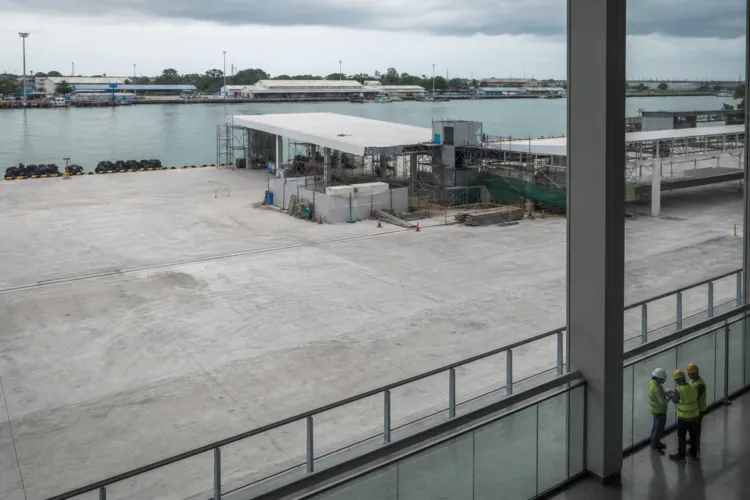
Airport capacity and infrastructure upgrades are becoming just as strategic as aircraft orders. AOT is accelerating development projects across its six airports, including expansions at Suvarnabhumi and Don Mueang, plus plans to build two new airports in Phuket and Chiang Mai. The Suvarnabhumi Airport Development Project is designed to increase capacity from 65 million to 150 million passengers annually. Its components include an eastern terminal extension adding capacity for 15 million passengers, a new southern terminal capable of handling 70 million passengers, and a fourth runway intended to accommodate up to 120 flights per hour. Don Mueang is also slated for expansion to raise capacity to 40 million passengers per year through a new international terminal and upgrades to existing facilities.
For Thai Airways, the next chapter is also about extracting more output from existing assets while long-term fleet plans advance. One strategic outlook report states aircraft utilization reached 13.5 hours per aircraft per day in the first nine months of 2025, up from 13.0 hours in the same period of 2024, supporting capacity expansion without proportional fleet growth. The same source cites a five-year investment plan worth approximately 170 billion baht, including 120 billion baht for new aircraft acquisitions, with a target of operating 150 aircraft by 2033 compared with a current fleet of 78 aircraft. Meanwhile, market dynamics on international routes are shifting: Air Service One notes foreign airlines account for most international traffic, shaping overall market outcomes even as Thai carriers retain a presence.
What signals a new chapter for Thailand’s airline market?
How many travellers did Thailand’s airports handle in 2025?
What are Thai Airways’ near-term fleet steps mentioned in the sources?
How is AOT expanding Suvarnabhumi’s capacity?
What is changing in the Thailand airline industry on domestic routes?