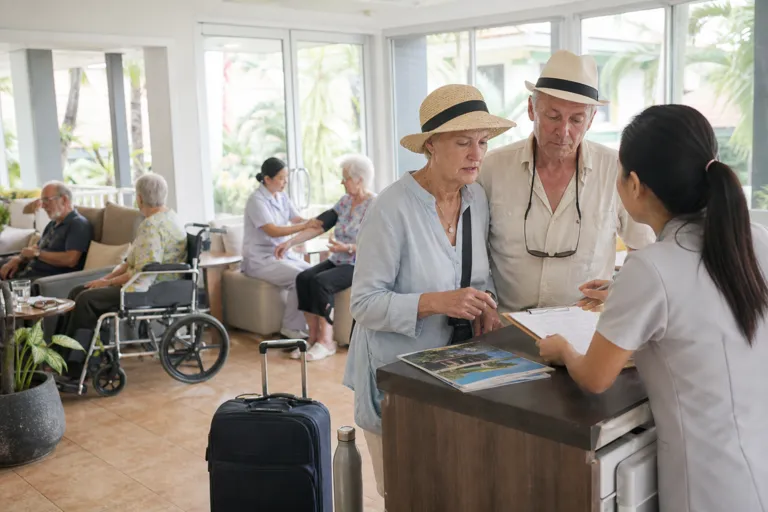
Thailand is increasingly positioned as a global retirement destination, and that is reshaping property decisions in places that combine lifestyle and healthcare access. In the 2026 International Retirement Index, Thailand ranked 9th worldwide and was the highest-ranked destination in Southeast Asia, ahead of Malaysia. That visibility strengthens interest in purpose-built housing for older residents, from independent communities to higher-care formats. According to Angel Real Estate Consultancy, Thailand has seen a significant boom in senior residence development in recent years, with some segments recording annual growth rates of over 25%. For buyers and developers, this momentum is not just about housing. It is about a maturing ecosystem for retirement living that includes amenities, care pathways, and community design.
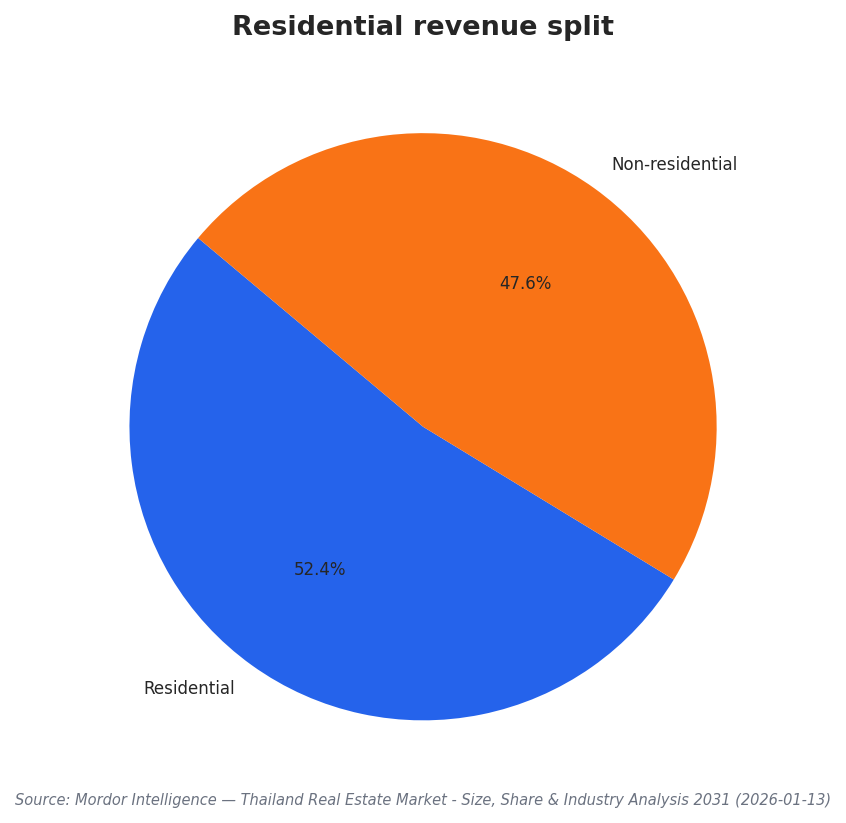
The broader property backdrop helps explain why retirement-led demand can find opportunities outside Bangkok. Mordor Intelligence estimates the Thailand real estate market size at USD 60.78 billion in 2026, projecting it to reach USD 80.00 billion by 2031 at a 5.65% CAGR during 2026 to 2031. Bangkok led with a 53.1% share in 2025, but the same source also flags Phuket as a growth geography, projected to grow at a 4.10% CAGR during 2026 to 2031. In parallel, the residential side shows momentum in specific segments: apartments and condominiums accounted for 63.35% of 2025 sales value in Thailand’s residential real estate market, and Thailand’s residential market forecasts point to USD 40.68 billion with a 5.11% CAGR from 2026 to 2031. These figures form the demand canvas on which retirement-focused products are now being layered.
Why Phuket and Chiang Mai Are Rising on Retiree Shortlists
Phuket and Chiang Mai repeatedly appear as beneficiary markets where retirement demand, lifestyle migration, and higher-end residential formats intersect. Angel Real Estate Consultancy notes that secondary markets such as Chiang Mai and Phuket stand to benefit the most as assisted-living and continuing-care models gain traction among foreign retirees and affluent Thai families. On the residential side, Mordor Intelligence projects Phuket should register the quickest progress, with a 5.91% CAGR through 2031 as tourism and remote-worker inflows accelerate. Chiang Mai is also described as a retiree and expatriate magnet: Ken Research highlights that Chiang Mai attracts retirees and expatriates with its cultural heritage and lower cost of living, while Phuket continues to see robust demand, especially for luxury villas and branded residences driven by international buyers. Together, these signals help explain why retirement-led real estate strategies increasingly prioritize these two cities.
Policy-linked inflows and adjacent lifestyle trends are also supporting premium demand in locations favored by older international residents. In Thailand’s residential market context, Mordor Intelligence reports that more than 7,000 LTR permits had cleared by late 2025, injecting USD 657 million into Thailand’s economy and re-energizing luxury-condo demand in Sukhumvit and Sathorn. It also states that the companion Digital Nomad Visa logged 35,000 approvals during its inaugural year, steering higher-income remote workers toward Chiang Mai and Phuket co-working enclaves. While remote workers are not the same segment as retirees, these approvals and the geographic pull toward Chiang Mai and Phuket help reinforce investment interest in amenity-rich developments. For senior living operators, that can translate into stronger confidence around services, staffing, and healthcare-adjacent partnerships in the same markets.
At the product level, Thailand’s senior living pipeline is not limited to independent living. Jarniascyril describes a rapidly growing senior living residence market shaped by an increasing influx of foreign retirees and supported by foreign investment and joint ventures. It cites examples including a high-end residence in Chiang Mai developed in partnership with a Dutch group, Japanese-Thai pilot projects integrating assistive robotics, and Australian investments targeting Phuket to create medical-hotel complexes dedicated to retirees. Angel Real Estate Consultancy adds that continuing-care retirement communities remain limited in number due to complexity, yet they are described as a rapidly growing high-end segment driven by affluent Thai and foreign retirees seeking a single-campus solution for evolving care needs. Taken together, these details show how the Thailand senior living real estate market is diversifying by care level, partnership model, and location.
How fast are senior residence segments growing in Thailand?
Why are Phuket and Chiang Mai frequently mentioned in retirement-oriented real estate?
What is the projected growth outlook for Phuket in Thailand’s property market reports?
What do the LTR and Digital Nomad Visa figures suggest about demand in Chiang Mai and Phuket?
What kinds of projects indicate how the Thailand senior living real estate market is evolving?