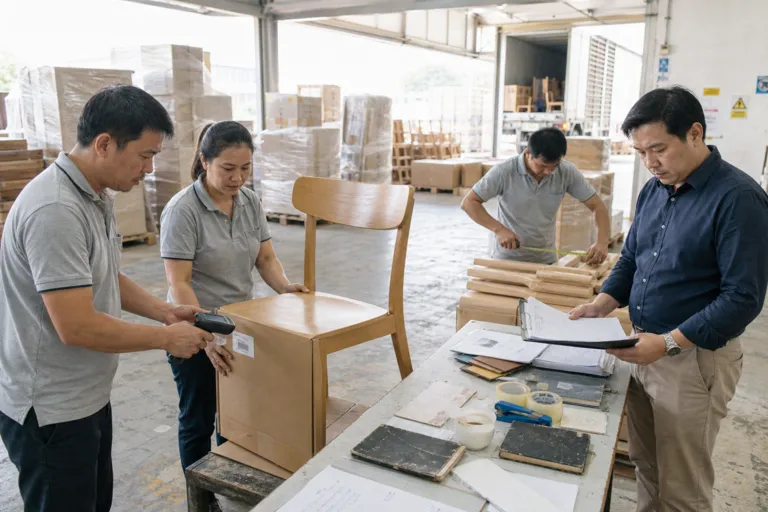
Thailand’s furniture exporters are searching for new ground as US trade demand shifts and buyers rethink sourcing. In US-Thailand trade data for 2025, “Furniture, bedding, & mattresses” (HS code 94) is listed at $1.23 billion, underscoring how meaningful the US market can be for Thai suppliers. The same source links Thailand’s appeal to skilled craftsmanship and “high-quality materials,” and notes that US importers see the country as a reliable source for wood and composite furniture, modular office structures, and commercial furnishings. At the same time, the current environment is shaped by recalibrated supply chains, shifting tariff structures, and tighter compliance focus, raising the bar for market access and sustained growth.
Policy and market frictions are adding urgency to diversification. The Bangkok Post reported that upholstered furniture is subject to a 25% tariff from the US, and this is expected to push exporters in that category to explore alternative markets, including Thailand’s own market. The same report also warns that, as more players try to enter new export destinations, some may use aggressive pricing strategies to penetrate those markets. That creates a double challenge: defending margins while building demand in unfamiliar channels. Even so, the article argues Thailand should not overlook existing markets with strong trade value and growth potential, especially when some US importers may be open to new trade deals that could create partnership opportunities.
Why Regional Shifts Matter for Thailand’s Next Moves
Thailand’s repositioning also sits inside a broader ASEAN furniture story. A Southeast Asia industry outlook cites ASEAN trade statistics and Statista’s market outlook, saying regional exports “consistently surpass” US$19 billion in 2024, supported by demand in the United States, Europe, and Japan. However, it also states that Vietnam, Malaysia, and Indonesia jointly account for more than 80% of ASEAN’s total furniture exports, signaling intense competition for US orders. A separate South-Eastern Asia market report adds context on the region’s export concentration and pricing, stating Vietnam produces 2.2 million tons annually (56% of regional output) and holds a 67% share of export value, while the 2024 average export price is $4,294 per ton versus an import price of $2,762 per ton. For Thailand, these regional benchmarks reinforce the need to differentiate, not just compete on price.
Branding and certification are becoming more central to differentiation. The Bangkok Post highlights calls for consistent national branding support, backed by quality assurances such as the Thailand Trust Mark (T Mark). It also notes that, as consumers become more conscious of sustainability, government support for sustainable or low-carbon certifications could help small entrepreneurs reach customers seeking verified sustainable products. This direction aligns with the Southeast Asia outlook, which says sustainability and certified raw materials are now essential for global buyers, and points to certifications and requirements such as FSC, PEFC, BSCI, and REACH-compliant finishes. For Thailand’s exporters, compliance becomes a sales tool when it is translated into buyer confidence and clear proof of standards.
Demand shifts at home can also support the export transition by building scale and product readiness. A Thailand furniture market report notes that demand for both residential and commercial furniture has surged, driven by preferences for stylish and functional interiors, with growing interest in modern, minimalist, and eco-friendly products. It also points to modular and space-saving solutions as consumers optimize smaller living spaces. Regionally, an Asia Pacific market report states that the mid-range segment represents approximately 42% of total sales in 2023, attributing this dominance to an expanding middle class across countries like Thailand, Malaysia, and the Philippines. Together, these signals suggest the Thailand furniture export industry can refine designs and sustainability claims at home while using more specialized fairs, including hotel-industry events, to reach buyers directly and secure new routes to growth.
How big is the US market in the trade data for Thai furniture-related exports?
What tariff pressure is mentioned for upholstered furniture shipped to the US?
Which ASEAN countries dominate furniture exports in the region?
What pricing gap does the South-Eastern Asia market report cite for 2024 trade?
What is changing for the Thailand furniture export industry as US demand shifts?