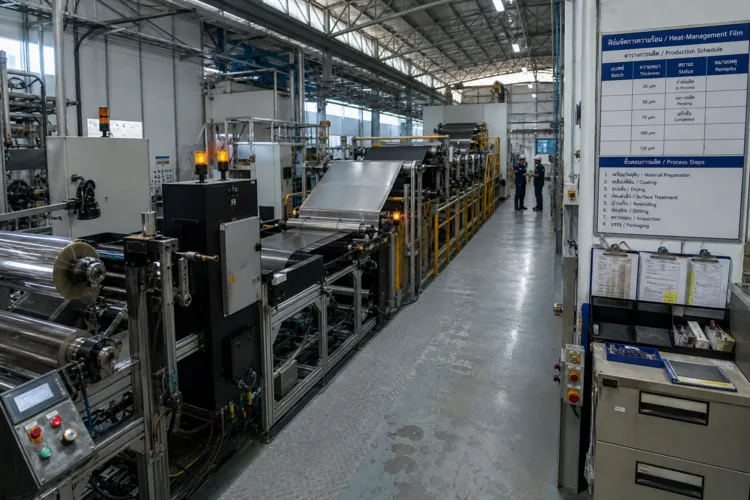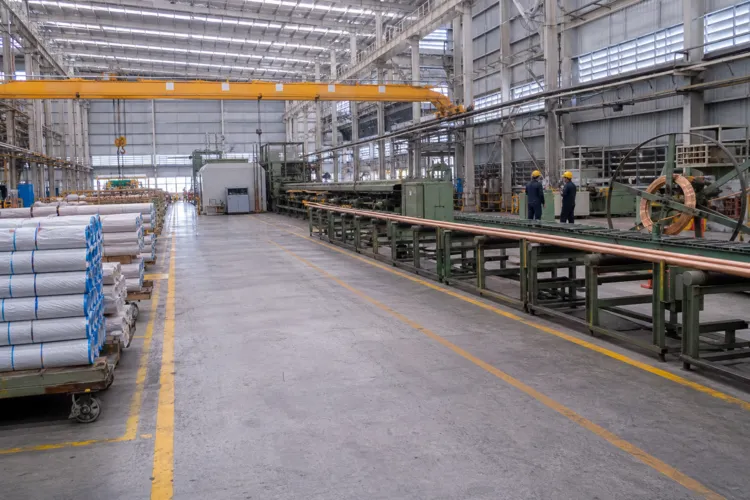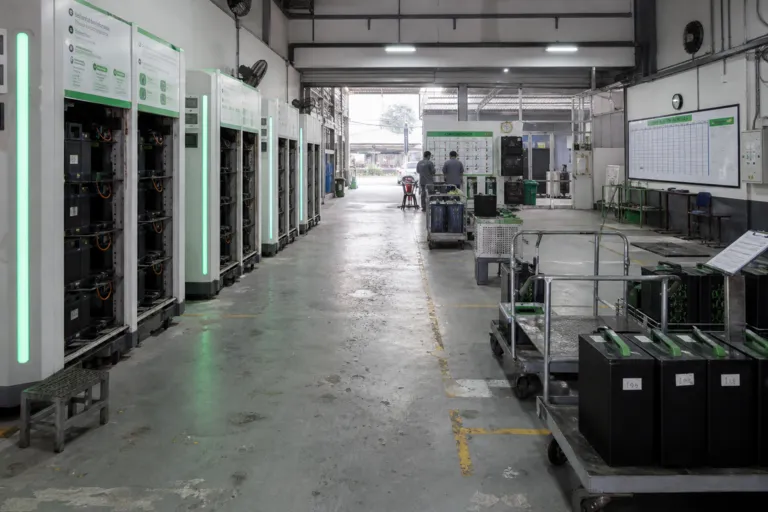
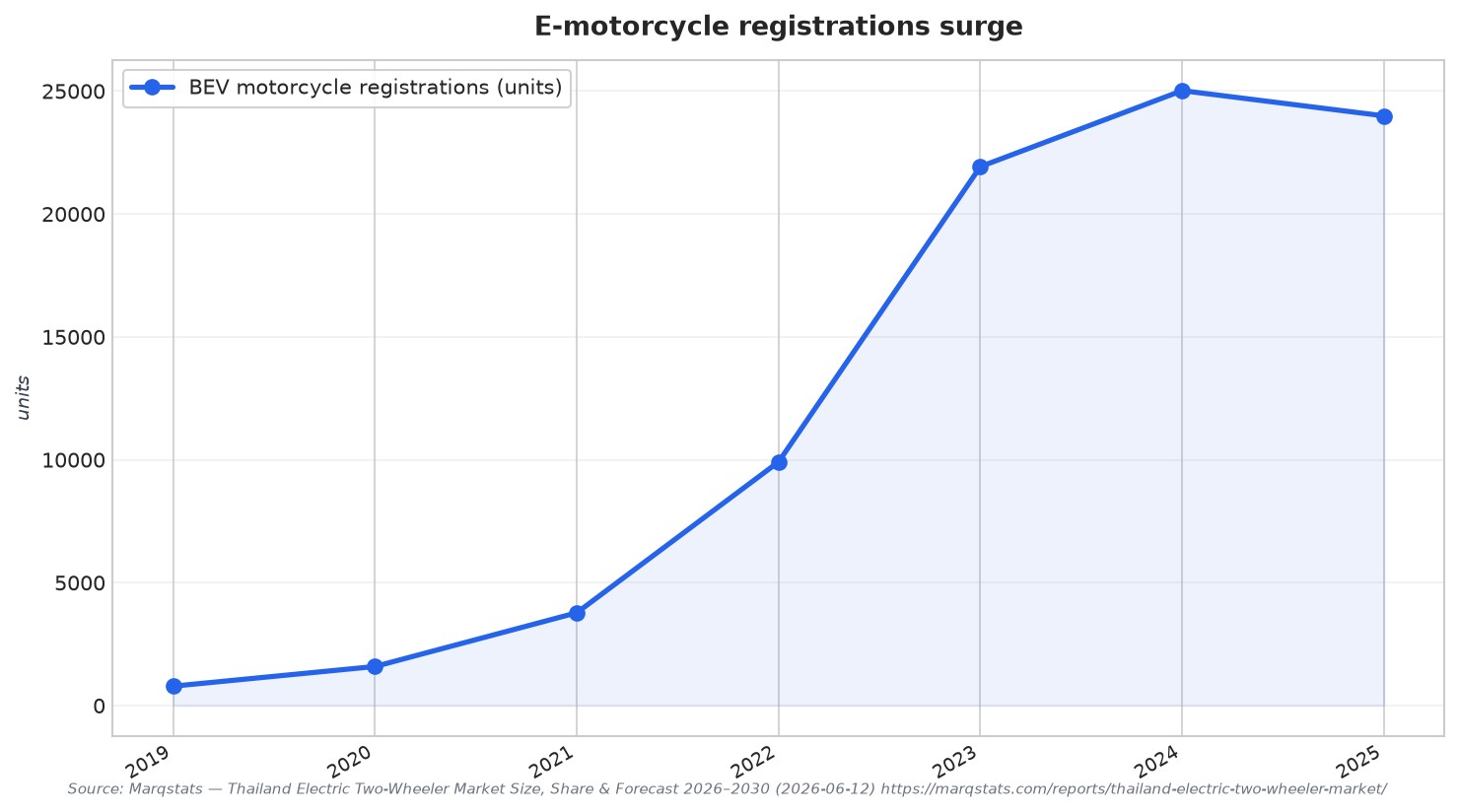
Thailand’s electric motorcycle market is growing, but the battery swapping layer is being rebuilt after PTT’s Swap & Go was discontinued. The broader electric two-wheeler market was valued at approximately 24 thousand units in 2025 and is projected to reach 89 thousand units by 2030, with a forecast CAGR of 25.61%. At the same time, adoption has been uneven year to year. BEV motorcycle registrations rose from 791 units in 2019 to 23,993 units in 2025, after reaching 25,020 units in 2024 (+14% year on year) and then softening in 2025 (-4%). That slowdown matters for swap operators, because their economics depend on daily utilization, not just vehicle sales.
Regulation has also shaped what business models can work. One constraint described in market commentary is that riders cannot register a motorcycle without owning its battery, which limits battery-as-a-service approaches and pushes operators toward rental-style arrangements. That helps explain why the few swap systems operating have remained narrow in scope, even as the addressable base is large: total Thai motorcycle domestic sales reached 1,711,846 units in 2025, while BEV share of new motorcycle registrations stabilized near 1.3% in both 2024 and 2025. In this environment, incumbents still matter. Honda is described as controlling roughly 77–80% of Thailand’s motorcycle market, and its commitment level influences how quickly swap-compatible platforms can scale.
Where the Reset Starts: Fleet Density, Bangkok, and Investment
Despite structural friction, fleet usage is a clear anchor for swapping networks. Bangkok alone accounted for 46.5% of new electric motorcycle registrations in 2025, linked to the availability of EV infrastructure and the concentration of food delivery and ride-hailing activity. This aligns with a practical market lesson: electric two-wheelers capture only 4.68% of 2025 maintenance value even though unit counts reached 87,151 in 2025, which is why recurring swap subscriptions and fleet service models stand out as core revenue logic. Reported maintenance spending also illustrates the gap: an electric two-wheeler averages THB 1,850 a year versus THB 10,200 for a passenger BEV, reinforcing why operators look to energy services rather than workshop margins.
Capital is still flowing into the ecosystem, even if individual networks exit. Cumulative approved investments across EV manufacturing, key components, charging systems, and battery swapping services reached THB 137.7 billion as of mid-2025, with battery swap projects representing THB 1.28 billion of that total. Supply-side readiness is also notable. Thailand has 15 domestic manufacturers approved by the Thailand Automotive Institute, with combined committed capacity of 550,000 units annually. Incentives aimed at fleets support demand signals too, including a 200% corporate tax deduction for purchases of domestically manufactured EVs, and market growth is attributed in part to the EV3.5 incentive scheme and expanding swap infrastructure.
In the regional context, battery swapping momentum is often framed around rapid turnaround for high-frequency use. A South East Asia battery swapping market report forecasts growth from USD 0.71 billion in 2025 to USD 0.94 billion in 2026 and USD 3.85 billion by 2031, at a 32.52% CAGR over 2026–2031, with two-wheelers holding a 70.62% share in 2025. Within that same regional report, Thailand is referenced with a 2030 target of 650,000 electric bikes and 1,450 swap sites, alongside a claimed 30% fuel-cost savings framing for drivers. Against that backdrop, the Thailand electric motorcycle battery swapping reset is less about a single operator’s exit and more about whether new players can standardize service, win fleet partnerships, and turn dense urban utilization into sustainable station economics.
Why did Thailand’s battery swapping market need a reset after Swap & Go?
How big is Thailand’s electric two-wheeler market today and where is it projected?
What does Bangkok’s share of new electric motorcycle registrations indicate for swapping networks?
What investment signals support new entrants in swapping and related services?
What’s happening in the Thailand electric motorcycle battery swapping space versus the wider region?