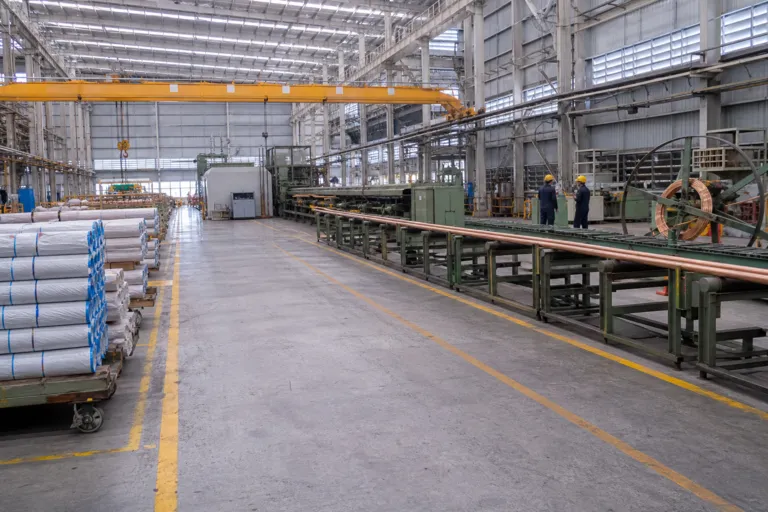
Thailand’s air-conditioner boom is forcing upstream materials to keep pace, and copper tubing sits at the center of that pressure. In 2024, Thailand produced around 21 million air conditioners and shipped over 19 million units worldwide, generating approximately USD 7 billion in export revenues. Manufacturing strength is reinforced by clustering in the Eastern Economic Corridor, including Rayong, Chonburi near Laem Chabang port, and Chachoengsao, where outbound logistics are faster. This backdrop is reshaping procurement in the Thailand copper tube industry as OEMs and Tier suppliers seek reliable flows of refrigerant-grade tube to support high-volume exports.
Component localization supports this scale, but not every input is equally domestic. Thailand sources about 70%–80% of air-conditioner components locally, while imports concentrate on higher-tech parts such as sensors. Copper tube is different: one market view describes Thailand’s copper tubes and pipes market as structurally import-dependent, with imports from China, Japan, South Korea, and Vietnam typically accounting for an estimated 55%–70% of supply. That import reliance makes landed cost, exchange rates, and freight major price-setting forces, especially when copper demand is tied to export production schedules.
Why Air Conditioner Exports Are Pulling Copper Tube Specs Upstream
Export mix also matters for tubing specifications. Thailand’s air-conditioner exports are mainly split units at about 60%–65%, window units at 25%–30%, and VRF systems at 10%–15%, plus parts such as PCBs and compressors. Tube demand is concentrated in HVAC and refrigeration, described as roughly 40%–50% of copper tube volume in Thailand, with the HVAC share rising as air-conditioner manufacturing and building retrofit cycles expand. Another trend note is that Thailand’s role as a manufacturing hub is pulling demand toward OEM-grade, thin-wall, and inner-grooved specifications rather than standard plumbing-grade tube, raising the bar for consistency and certification.
US policy and pricing shifts are adding urgency to supply-chain readiness. One source describes the US taking 35% of Thailand’s air-conditioner exports, while in the first seven months of 2025 the US took 59% of Thailand’s exports, and those shipments were nearly all window-type units. Exporters accelerated shipments ahead of a 19% reciprocal tariff on Thai imports starting August 1, 2025, alongside a 50% tariff on steel components under Section 232. Yet Thai-made products were still described as 13%–23% cheaper than Chinese units after duty-driven price adjustments, changing competitive math and influencing production planning that flows back into copper tube ordering.
Scaling the copper tube base is not only a question of volume, but also of how quickly suppliers can match evolving requirements and substitution risk. One global research view notes that aluminum microchannel heat exchangers have been displacing copper tube-aluminum fin designs in some outdoor condenser units, and that the copper consumption per air conditioner has already fallen by approximately 20%–30% compared to systems produced a decade ago. Even so, buyers still lean on copper where performance and joining constraints matter, while pricing discipline increases: copper price volatility and Thai baht fluctuation are pushing shorter contract cycles and indexed pricing, and smaller buyers may pay a 10%–25% premium through distributor layers.
What is driving growth pressure on Thailand’s copper tube supply chain?
How import-dependent is Thailand’s copper tubes and pipes market?
How are US tariffs influencing Thailand’s air-conditioner exports and upstream inputs?
How is the Thailand copper tube industry shifting its product focus for OEMs?
What substitution risk could reduce copper use per air conditioner?