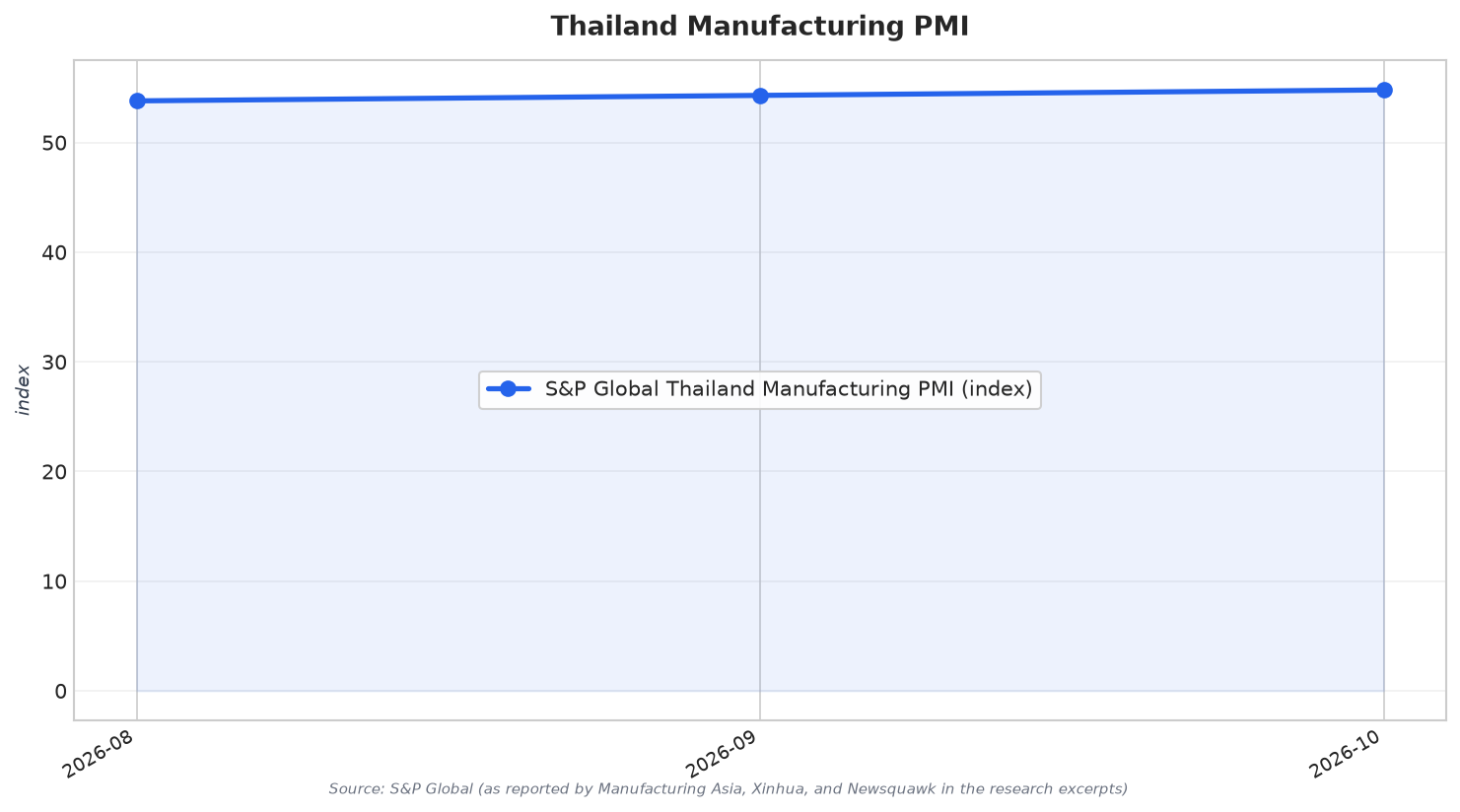
Thailand’s factory sector ended October on a firmer footing, as S&P Global’s survey showed a clear acceleration in operating conditions. The headline PMI rose to 54.8 in October from 54.3 in September, and S&P Global described the reading as the highest since December 2025. Because a PMI above 50 indicates growth, the October result signals ongoing expansion rather than a marginal rebound. This is the latest step in a broader improvement that has been visible in recent months, including an August reading of 53.8 after July’s seven-month high of 54.2.
The most important message for planners is what happened underneath the headline. S&P Global attributed stronger output to rising new orders, supported by improving demand, growing customer bases, and successful promotional efforts. Manufacturing production expanded at its fastest pace since December 2025, highlighting how quickly factories responded once new work arrived. In this context, the Thailand manufacturing PMI is not just a sentiment marker. It becomes a real-time signal that demand is pulling production higher and forcing managers to make immediate decisions on shifts, throughput, and supplier coordination.
What Rising New Orders Can Mean for Capacity and Hiring
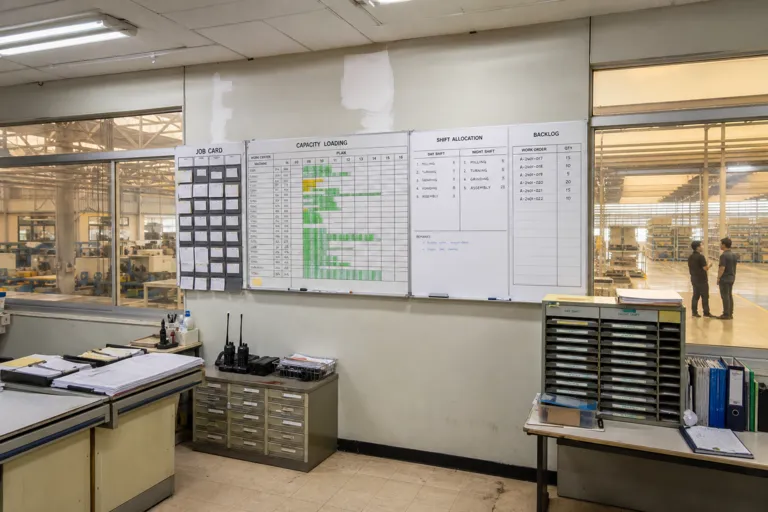
Stronger demand is positive, but the October survey also flagged a constraint that can reshape hiring plans. Xinhua reported that reduced workforce capacity contributed to accumulating backlogs, even as output was pushed higher. S&P Global also noted that unfinished orders rose at the strongest pace in nearly a year due to surging new business inflows. That combination matters: when new orders rise faster than deliverable output, backlogs increase and factories must decide whether to add labor, extend hours, or prioritize higher-margin contracts to protect performance.
Recent survey history provides a useful comparison for how hiring could evolve when demand outpaces capacity. In October 2025, Manufacturing Asia reported that the PMI climbed to 56.6 from 54.6 in September, and that factories struggled to keep up as work backlogs accumulated at a record pace despite firms ramping up production and hiring additional workers. It also said workforce capacity rose for a second consecutive month at that time. That earlier episode shows how quickly backlogs can pressure staffing decisions when production is already accelerating.
Investors and operators should also remember that PMI is a soft survey, so a single month does not settle the outlook by itself. Newsquawk emphasized that the direction is useful, but confirmation typically comes from follow-on activity data, and that new orders and export orders subindices have historically provided a clearer forward signal than the headline. Still, October’s pattern is hard to ignore: faster output alongside one of the strongest paces of incoming new orders on record, plus unfinished work rising at the strongest pace in nearly a year. If that mix persists, capacity expansion and recruitment become less optional and more operational necessity.
What did the October reading show for Thailand’s manufacturing PMI?
How does a PMI reading above 50 relate to factory activity?
Why do rising new orders matter for factory capacity?
What does the survey suggest about hiring and workforce capacity?
How should readers interpret the Thailand manufacturing PMI signal?