Thailand’s SME sector is under acute strain as loan growth stays negative for 16 consecutive quarters, even as lending to large businesses has returned to positive growth over the previous two to three quarters. Bank of Thailand (BOT) Governor Vitai Ratanakorn described the situation as a crisis, warning of a K-shaped recovery that leaves smaller firms behind. SMEs employ about 13.6 million people, roughly 70% of total employment, and contribute around 35% of GDP. Yet access to bank credit remains limited and uneven, feeding a widening gap in Thailand SME financing outcomes.
Credit stress is also visible in loan quality. BOT figures cited in September 2026 put the NPL ratio for SMEs at 9.16%, compared with 2.85% across the commercial banking system. In another update, Vitai said the overall NPL ratio rose from 2.85% to 2.97% in May 2026, and he highlighted a stark split between firm sizes: SME NPLs at 9.5% versus 1.5% for large corporate borrowers. Asian Banking & Finance also reported NPLs rising by THB104b, with THB52b as new NPLs and THB52b re-entering NPLs, underscoring why banks may remain cautious.
Why SMEs Keep Getting Rejected—and Paying More
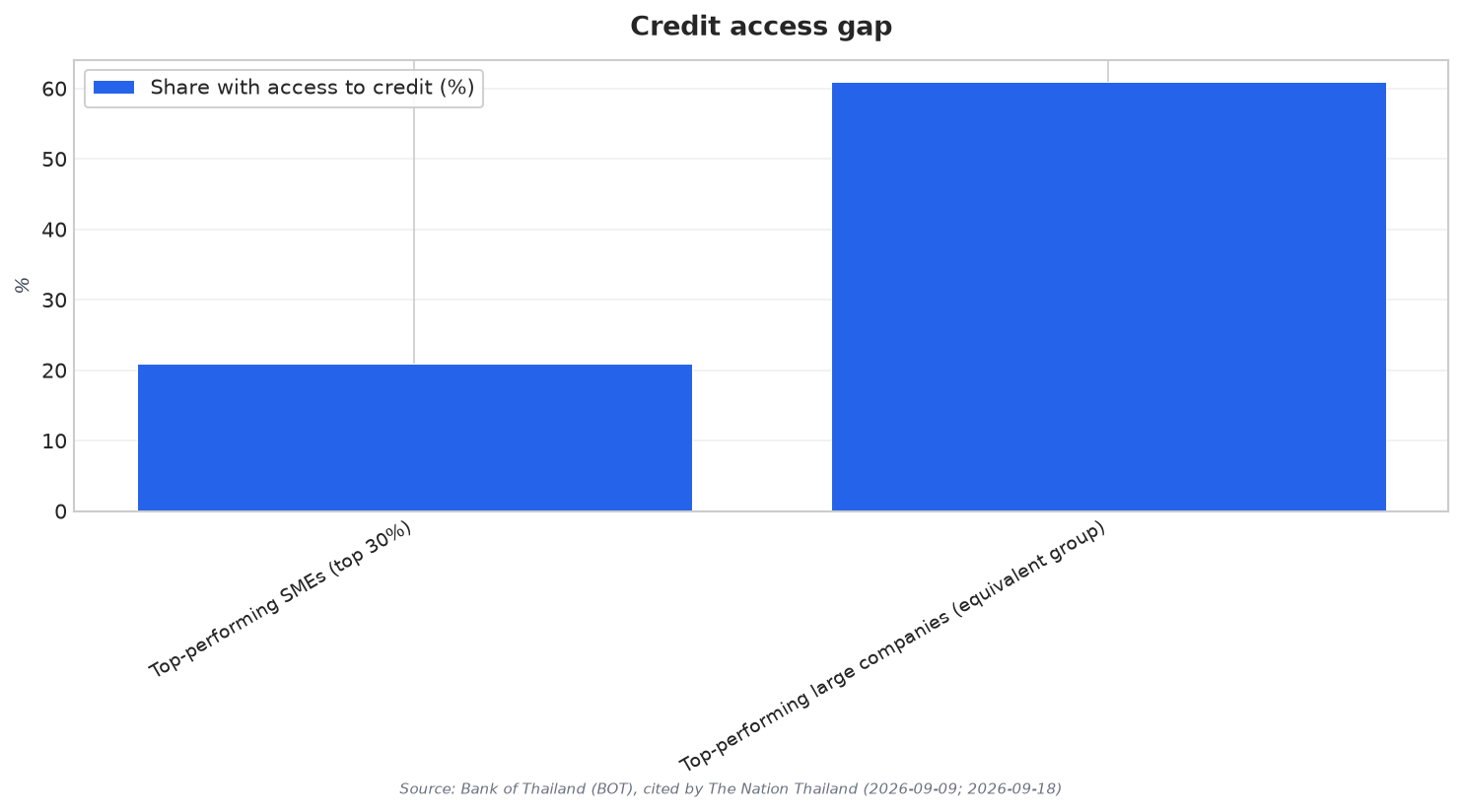
The bottleneck is not only risk, but also information and pricing. Vitai said SME loan rejection rates run about 60–70% and can be higher for some groups. The rejection rate was 78% for new SMEs with no financial history and 86% for businesses with an existing bad-debt record, possibly reaching 90% in practice. Even among the top-performing 30% of SMEs, only 21% can access credit, compared with 61% of large companies in the equivalent performance group. When SMEs do borrow, average interest costs are about 6.9%, versus about 3% for large companies.
Cash flow friction adds another layer to the credit squeeze. The Trade Competition Commission of Thailand (TCCT) said existing rules cap payment terms at 30 days for agricultural suppliers and 45 days for SMEs, calculated from the billing date. In practice, some suppliers to large modern-trade retailers have reportedly waited six to eight months to be paid. Trade Competition Commissioner Warawan Chitaroon estimated unpaid funds tied up in the system could total roughly THB100–200 billion. For SMEs with limited reserves, delayed receipts can force short-term borrowing and additional interest burdens while they wait for payment.
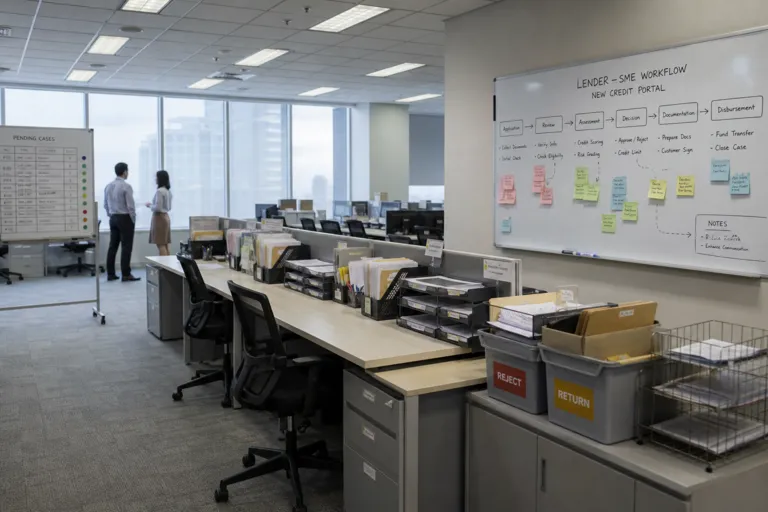
To reduce costs and risks in the credit system and connect SMEs with potential to finance, the BOT is preparing three actions. First, it plans to launch a Credit Portal by the end of 2026, and separately described a December 2026 launch plan, positioning it as an online marketplace where SMEs can state funding needs, compare options, and connect with banks, virtual banks, and non-bank lenders. Second, the BOT is developing a new credit-guarantee mechanism along the lines of the Thai Credit Guarantee Corporation (TCG), with a proposal expected to go to the Ministry of Finance within three to four months and an operating start the BOT hopes for in 2027. Third, it plans to use alternative data to assess repayment capacity for SMEs with no financial history. Separately, a THB20b SME Credit Boost programme was reported as compensating banks when a loan becomes an NPL by paying 15% to 30% with a protection period of seven years.
What is driving the Thailand SME financing gap right now?
How high are SME loan rejection rates in Thailand?
What do the sources say about SME non-performing loans (NPLs)?
When will the Bank of Thailand’s SME Credit Portal launch, and what will it do?
How do late payments from large buyers affect SME financing needs?