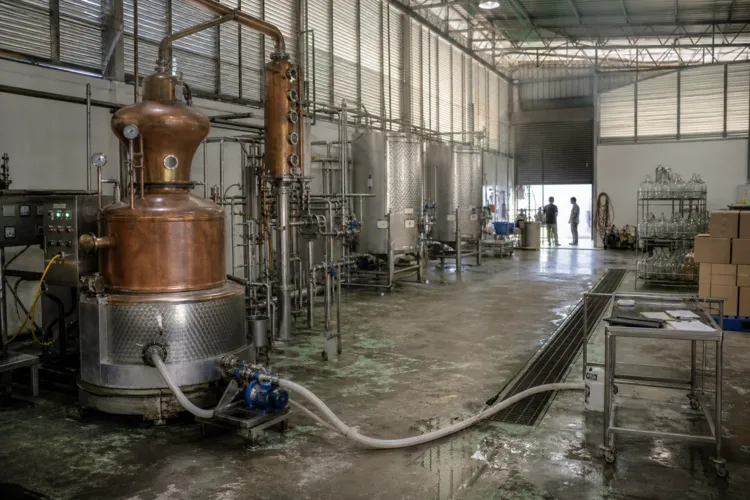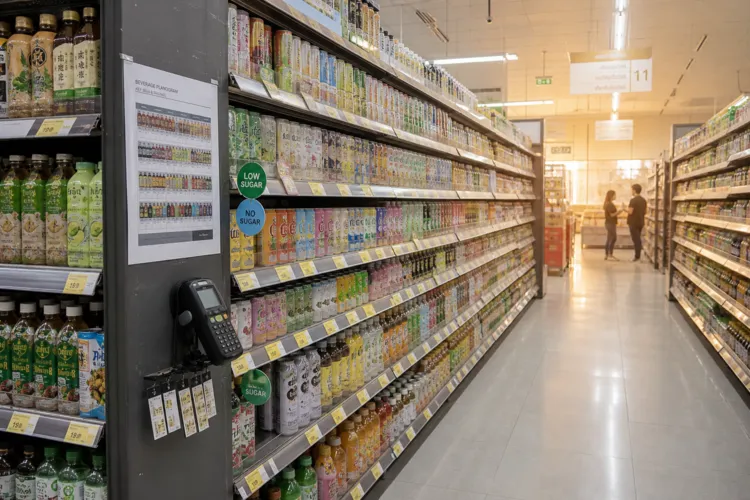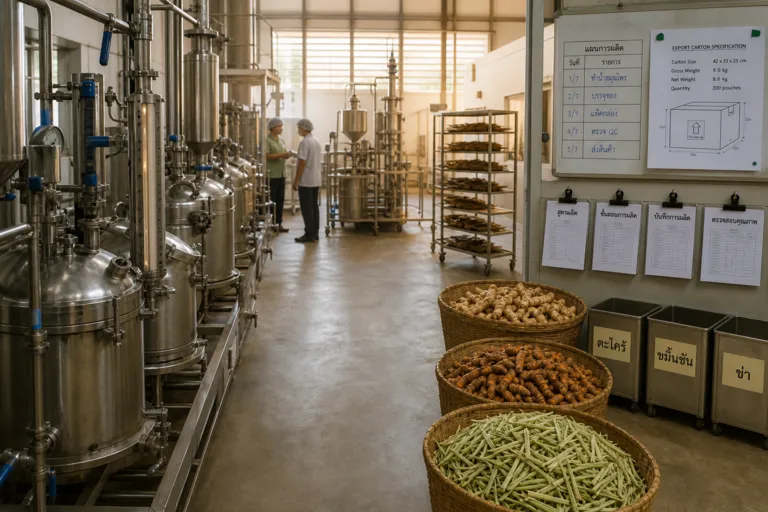
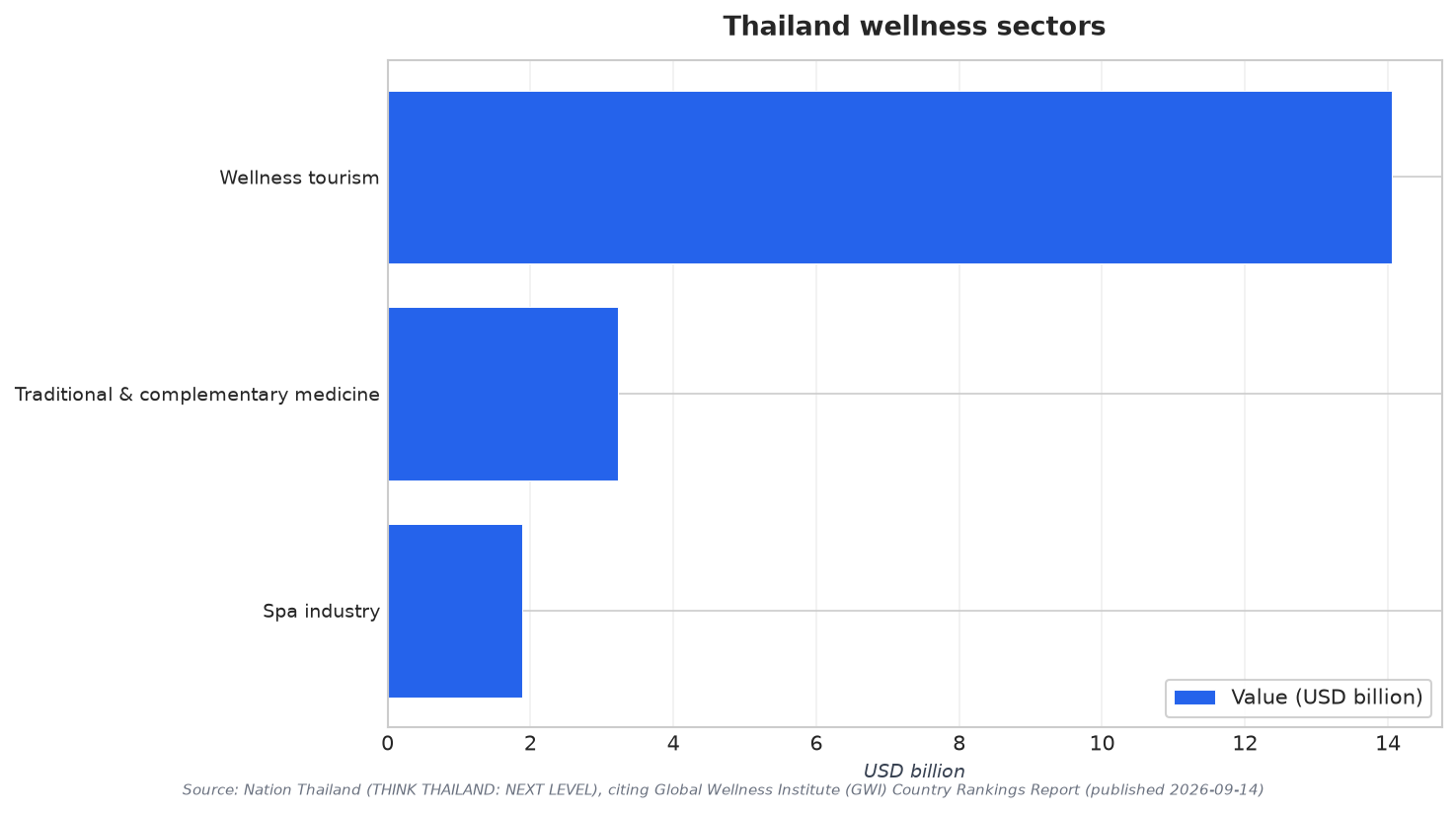
Thailand’s herbal remedies sit inside a wider wellness economy that is being pushed toward higher-value products and services. The Global Wellness Institute (GWI) data cited in Thai strategy coverage shows Thailand’s wellness market expanded by 10% in 2024 compared with 2023, rising from US$38.8 billion to US$42.7 billion. In that same view of the ecosystem, traditional and complementary medicine was valued at US$3.23 billion and ranked 18th globally, while wellness tourism generated more than US$14.05 billion and ranked 15th globally. These numbers matter for herbal brands because spa programs and wellness travel packages frequently incorporate traditional Thai therapies and herbal remedies, linking product demand to the country’s premium travel positioning.
Market outlooks also indicate rapid expansion for herbal products sold domestically and exported through Thai channels. Grand View Research projects Thailand’s herbal medicine market will reach US$2.7 billion in revenue by 2033, and expects a 27.1% CAGR from 2026 to 2033. In 2025, Traditional Chinese Medicine was the largest segment in Thailand’s herbal medicine market, with a 50.0% revenue share, showing how diverse traditions are competing within the same Thai marketplace. The same outlook segments products by form (including powder, liquid/gel, and tablets/capsules) and distribution methods (direct sales and e-sales), framing the Thailand herbal medicine industry as a structured market with multiple export-friendly formats.
Premium Wellness Exports Gain Momentum Through Travel and Trade
Thailand’s premium wellness export push is also reinforced by the country’s role in global wellness events and the travel economy surrounding them. Phuket will host the 20th Global Wellness Summit from November 10 to 13, 2026. Reporting on Thailand’s medical and health tourism drive says the event is expected to draw more than 600 delegates from over 30 countries and generate a minimum of 300 million baht in direct economic impact. The same report, citing GWI data, places the global wellness economy at about US$6.8 trillion in 2024 and projects it will reach US$9.8 trillion by 2029. For Thai herbal and traditional remedy suppliers, this creates a timely showcase effect: more international buyers, more high-spend travelers, and more attention on Thailand’s wellness positioning.
Wellness travel growth gives Thai herbal remedies another pathway to premiumization: visitors experience the treatments first, then seek products afterward. GWI’s Thailand-focused release says Thailand’s wellness tourism market grew 36.4% annually—about three times the average global growth rate. It also notes that in the spa sector, traditional Thai therapies and herbal remedies are often incorporated into treatment programs, and that Thai massage has earned global recognition in spa circles worldwide. The same release describes BDMS Wellness Clinic as Thailand’s largest wellness clinic network, with 25 branches nationwide, showing how medical-based wellness providers can help normalize evidence-led, higher-priced wellness experiences that influence product expectations.
Thailand’s export targeting is becoming more specific, and trade promotion results show deal-making is already happening. The Department of International Trade Promotion (DITP) has supported entrepreneurs through trade missions and participation in international exhibitions, under themes such as “Driving Thai Wellness Businesses into Global Markets” looking toward 2027. In 2025, DITP’s international market development activities generated THB 468.44 million in trade negotiation value through six trade missions covering Cambodia, Japan, Saudi Arabia, Vietnam, and two cities in China, plus participation in Cosmoprof Asia 2024 in Hong Kong. In 2026, DITP activities generated THB 159.60 million through three trade missions to Taiwan, Japan, and Vietnam, plus participation in Cosmoprof Asia 2025 in Hong Kong. Strategy commentary also highlights Middle East momentum, with exports to Saudi Arabia up 25.51% and exports to the United Arab Emirates up 22.82%, tied to interest in Thai fragrances, aromatic products, and essential oils—categories that often sit close to herbal wellness positioning.
How fast is Thailand’s herbal medicine market expected to grow?
Which segment led Thailand’s herbal medicine market in 2025?
What signals that Thailand is targeting premium wellness exports rather than volume alone?
How does wellness tourism support demand for Thai herbal remedies?
What is happening in the Thailand herbal medicine industry that connects it to global wellness attention in 2026?