Thailand’s Board of Investment (BOI) reported stronger momentum in the agriculture and food segment during the first nine months of 2026, alongside a broader rise in promotion requests across the economy. From January to September, Thailand recorded 1,954 applications for investment promotion with a total value of THB 1,707,430 million, which was described as a 28% increase compared with the same period last year. BOI Secretary General Narit Therdsteerasukdi linked the overall upswing to investment relocation trends amid geopolitical pressures and technological advancement, and pointed to facilitation mechanisms such as Thailand FastPass and the government’s Skill Bridge measures for workforce development.
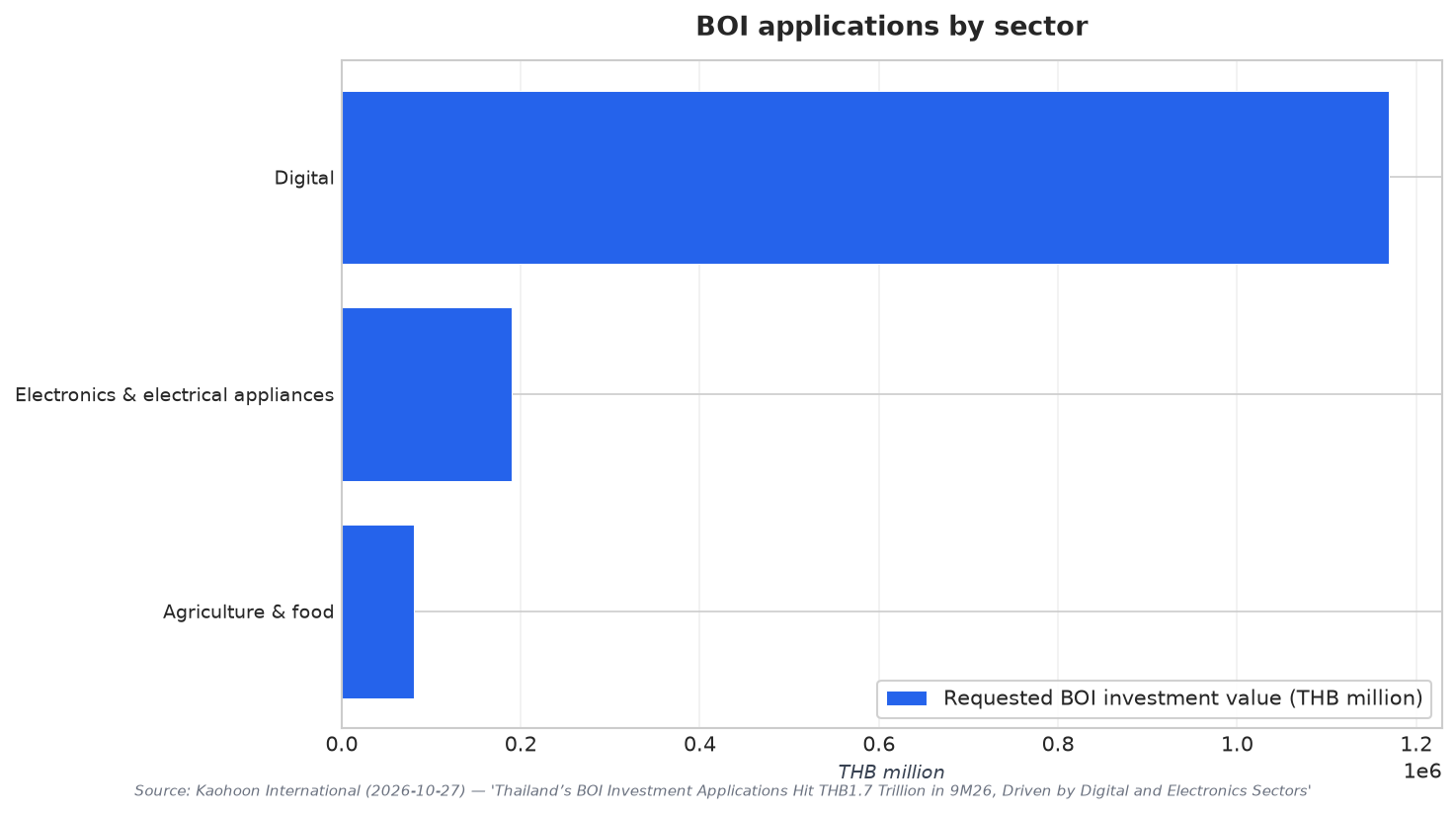
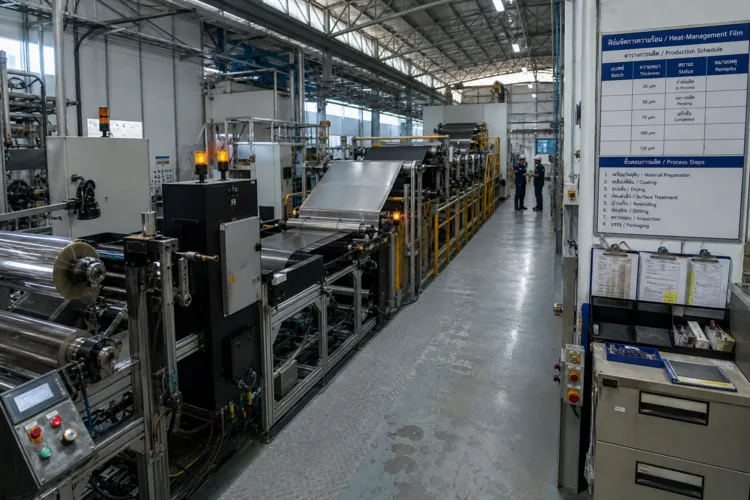
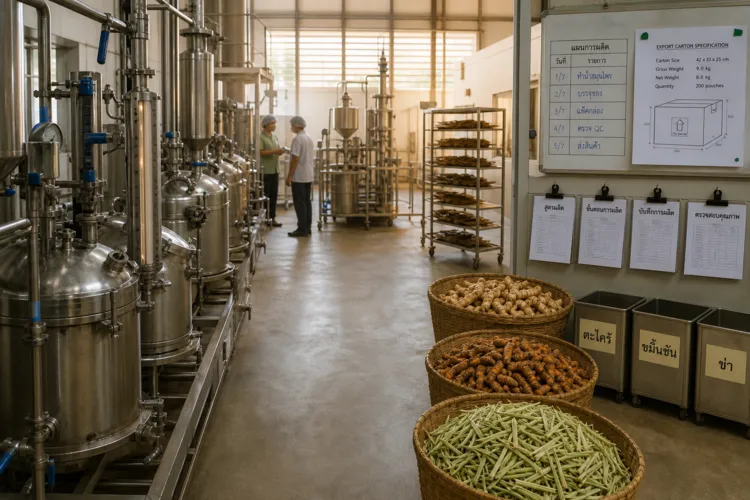
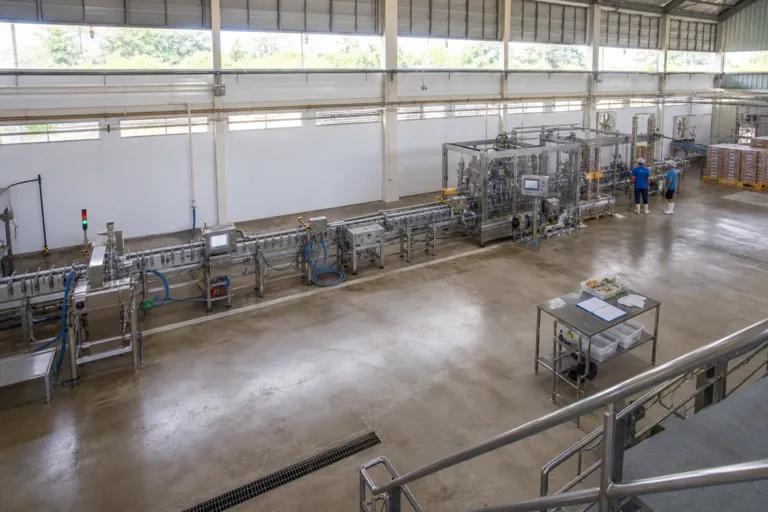
Within that larger pipeline, the BOI said agriculture and food applications reached THB 80,190 million across 218 projects, up 59%. These proposals covered modern food and beverage production, animal feed, processed starch, natural extracts, rubber products, plus agricultural-based products and packaging. This cluster is where Thailand food processing investment is being expressed most clearly in the BOI’s 9M 2026 filings, with projects spanning both upstream inputs and downstream packaging lines tied to agricultural raw materials and waste materials.
How Digital and Electronics Momentum Sits Alongside Agri-Food Growth
BOI figures show the biggest capital volumes were still concentrated in digital and electronics, which helps explain the investment backdrop for food and agribusiness projects competing for attention and resources. The digital industry registered over THB 1.17 trillion from 139 projects, described as nearly doubling from the same period last year. Electronics and electrical appliances followed with THB 189,370 million across 262 projects, up 7%. BOI commentary also highlighted 111 applications valued at over THB 1.2 trillion connected to the AI supply chain, spanning data centers, cloud services, chip design, semiconductor manufacturing or testing, printed circuit boards, photonics products, AI servers, and hard disk drives and components.
Foreign participation was also a key feature of the 9M 2026 picture. RetailNews Asia reported foreign direct investment applications surged 62% year on year to 1.55 trillion baht across 1,309 proposals, while another report cited 1.551 trillion baht across 1,309 applications with foreign participation. Within that foreign-origin mix, Singapore was identified as the largest source by value at around 1.16 trillion baht (also cited as 1.165 trillion baht) across 214 projects, followed by China, the United Kingdom, Japan, and Taiwan. These flows were reported as being directed largely to digital infrastructure, semiconductors, electronics and electrical equipment, while also including investments in the food industry.
Geographically, RetailNews Asia said Thailand’s Central region drew THB 955.2 billion and the Eastern region attracted THB 632.3 billion through September, with the two regions together accounting for 93% of pledged investment value. The same report noted that this concentration can reinforce logistics advantages while tightening competition for power grids, industrial water rights, and technical operators. For food and agribusiness applicants, the BOI’s project list indicates breadth—ranging from modernized food and beverage lines to packaging based on agricultural raw materials—while the national totals underscore that agri-food growth is unfolding in a year when Thailand’s overall BOI applications reached more than THB 1.7 trillion in just nine months.
How large were Thailand’s BOI agri-food applications in 9M 2026?
What types of projects are included in the agri-food filings?
How does Thailand food processing investment compare with the total BOI pipeline in 9M 2026?
Which sectors led Thailand’s BOI investment applications by value?
What happened to foreign direct investment applications in 9M 2026?