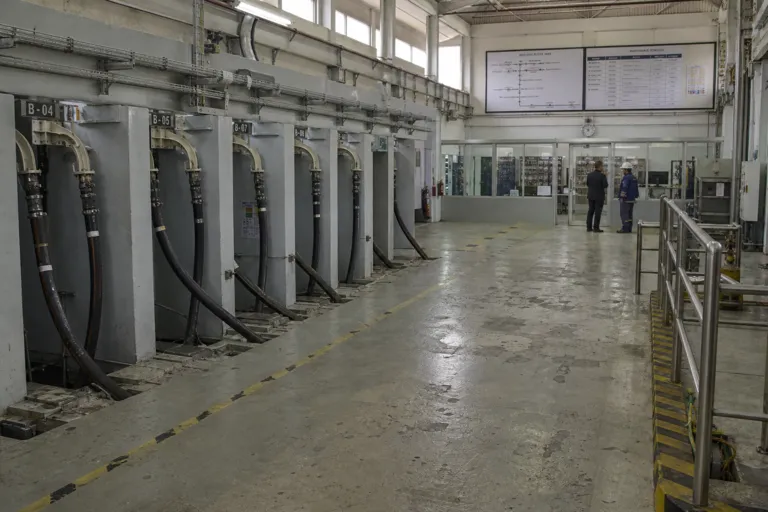
Thailand’s submarine cable buildout is picking up pace as operators and partners position the country for rising AI and cloud demand. A major driver is the basic structure of global connectivity: about 95-99% of international internet traffic travels through fiber-optic cables on the ocean floor rather than satellites. That reality makes undersea route diversity and landing capacity central to any data-center ambition. In 2026, multiple moves point in the same direction: reinforce Thailand’s regional links, add new long-haul options, and reduce exposure to geopolitical and physical disruption.
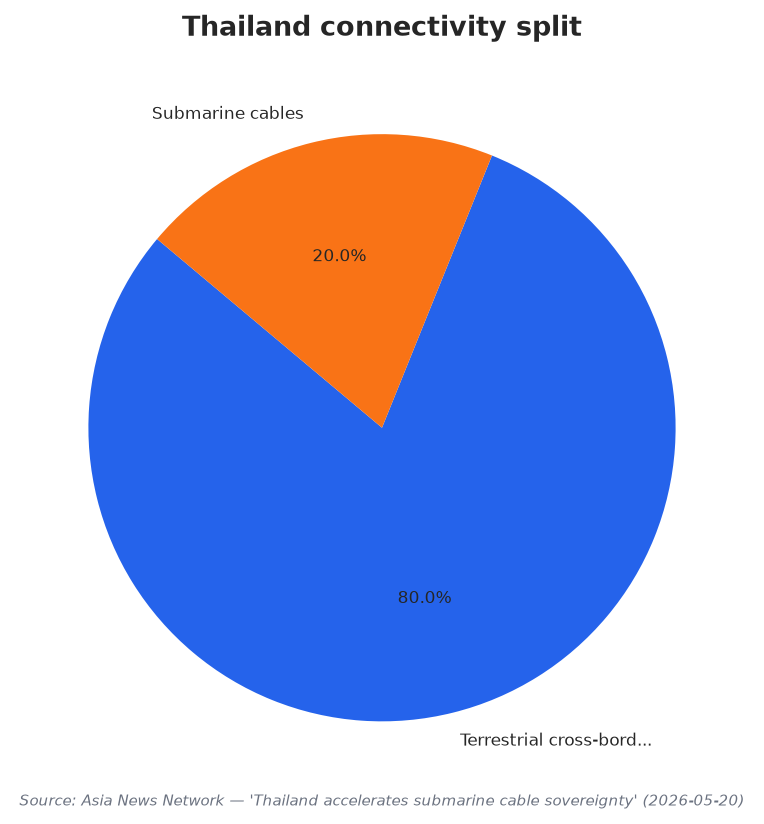
One pressure point is Thailand’s current mix of international connectivity. Policymakers have described a “geopolitical risk” because 80% of Thailand’s international internet traffic relies on terrestrial cross-border networks, while submarine cables carry 20%. That undersea “buffer” is also described as fragile: out of seven or eight existing submarine lines, ongoing damage means only two or three are operating at full capacity. Against that backdrop, Thailand’s state-owned National Telecom Public Company (NT) has officially launched the Asia Direct Cable (ADC), an international network spanning over 9,988 kilometres. The ADC links multiple Asian IT hubs, including China (Hong Kong and Guangdong), Japan, the Philippines, Singapore, Vietnam, and Thailand, and is positioned for high-capacity use cases such as 5G, AI, cloud computing, and big data.
New Routes and Partners Signal a Faster Build Cycle
Private-sector partnerships are also reshaping the subsea map around Thailand. On September 10, 2026, Gulf Development and Singtel confirmed a strategic partnership to jointly build and invest in submarine cable infrastructure between Thailand and Singapore. Their first initiative is the Vietnam-Thailand-Singapore (VTS) Cable System, expected to be operational by 2030, with capital spending spread over several years. The plan is explicitly tied to higher-capacity international connectivity for data centres, cloud providers, and AI services. On the operating side, Singtel Singapore and its Thai associate AIS are expected to bring market expertise, network capabilities, and customer reach to help build and commercialize the new system.
Thailand is also being drawn into a proposed transpacific route framed around security, resilience, and replacement of ageing links. On September 15, 2026, the US Trade and Development Agency (USTDA) announced funding for a feasibility study for a new submarine cable linking the US with Thailand and as many as five other Southeast Asian nations. The proposed route could extend up to 18,507 km, connecting Thailand with the United States via Indonesia, Malaysia, the Philippines, Singapore, and Vietnam, while avoiding the South China Sea and other routes described as carrying security risks. Thailand’s National Telecom president said the Thailand-US Submarine Cable System would strengthen resilience and diversity, support the growth of Thailand’s data centre, cloud, and AI sectors, and expand affordable connectivity.
This Thailand submarine cable momentum is unfolding within a broader global investment cycle for subsea infrastructure tied to cloud adoption, hyperscale expansion, and AI workloads. One industry briefing citing Mordor Intelligence put the market size for complete submarine cable systems at USD 22.19 billion in 2025 and USD 24.96 billion in 2026, with a CAGR of 12.5%. The same source estimated the submarine optical fiber cable market at USD 5.31 billion in 2025 and USD 5.89 billion in 2026, with a 2031 projection of USD 9.86 billion at a CAGR of 10.87%. In Thailand, the policy response includes a stated plan to consolidate fragmented landing stations in Songkhla and Satun under tighter state supervision, aligning route expansion with a “submarine cable sovereignty” agenda.
Why is Thailand prioritizing new undersea cable routes now?
What is the Asia Direct Cable (ADC), and how long is it?
What is the VTS Cable System, and when is it expected to be operational?
How long could the proposed Thailand-US subsea cable be, and what route does it follow?
What does the Thailand submarine cable push mean for AI and cloud traffic?