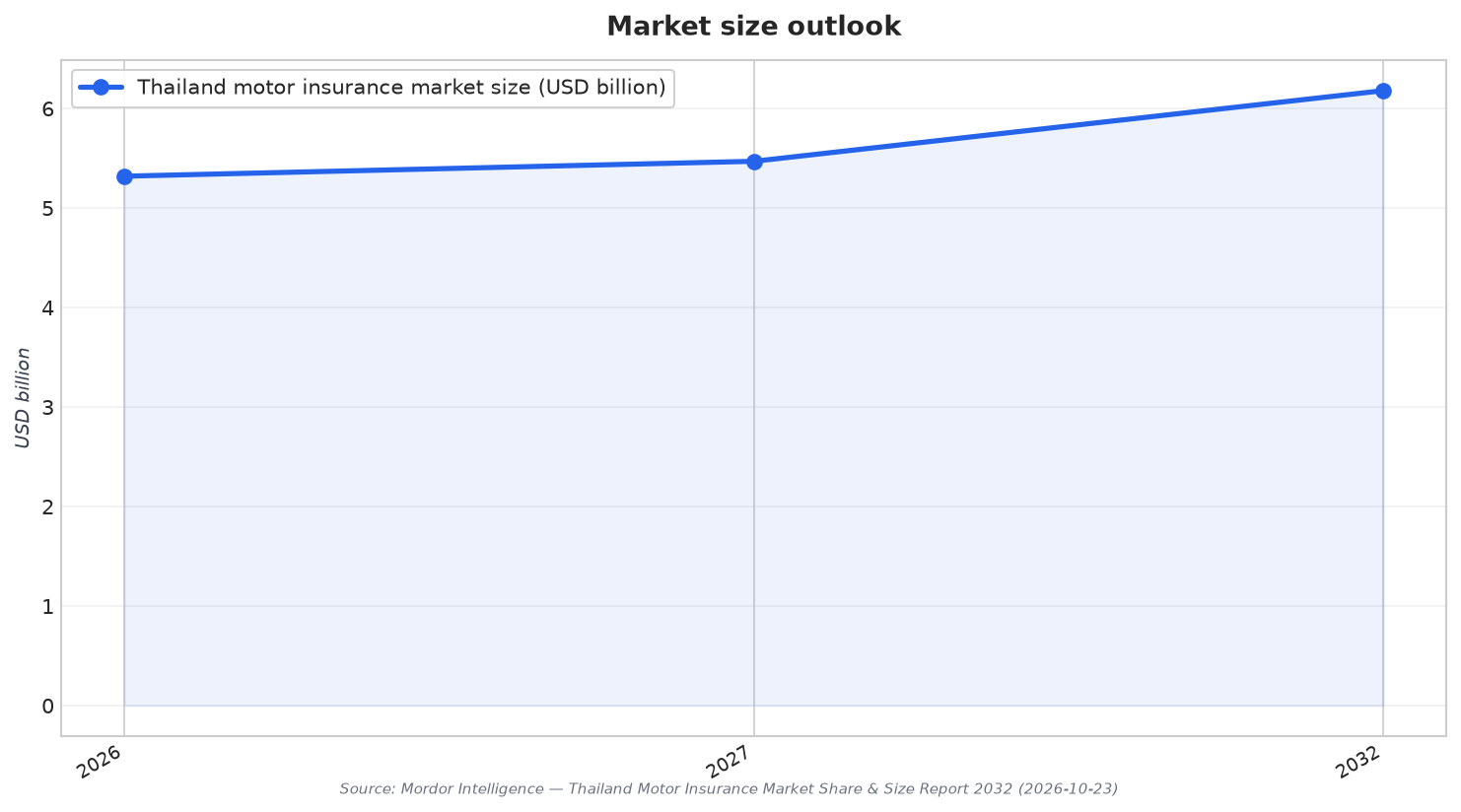
Thailand’s motor insurance sector is being pushed into sharper risk pricing as claims dynamics shift. Mordor Intelligence valued the Thailand motor insurance market at USD 5.32 billion in 2026 and estimated growth from USD 5.47 billion in 2027 to USD 6.18 billion by 2032, at a 2.46% CAGR for 2027-2032. Growth drivers include EV adoption and broader financing for pickups, but the same EV transition is also exposing insurers to more volatile repair costs and valuation uncertainty. Mordor also flagged that flooding in Southern Thailand after heavy rains from November 2025 exposed service dependencies, turning claims-handling capacity into part of the product itself.
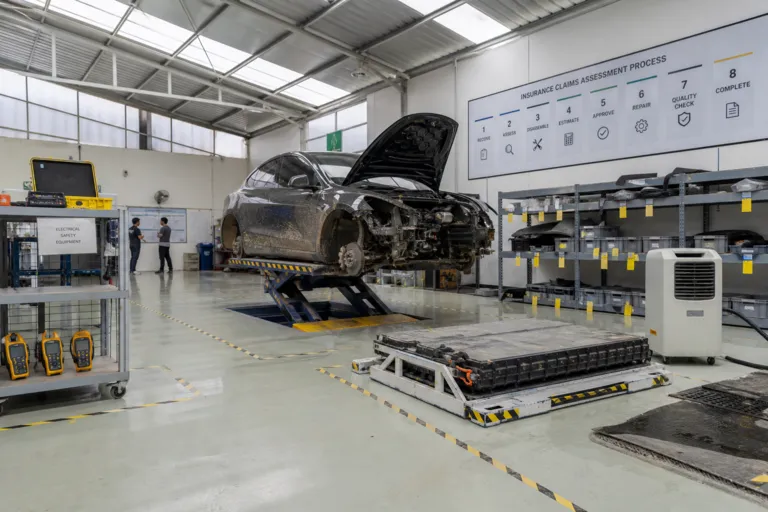
EV underwriting pressure is already visible in industry loss metrics. Bangkok Post cited TGIA and TIRD data showing insurers facing loss ratios exceeding 80%, alongside repair costs that are 50% higher for EVs than for internal combustion engine (ICE) vehicles, contributing to upward premium pressure in 2026. The Insurance Bureau System survey of private passenger cars with first-class insurance policies in 2024 found EV accident frequency of 74.8% versus 47.2% for ICE vehicles. Average loss per EV claim was 30,071 baht compared with 19,876 baht for ICE, and EV loss ratios climbed to 84.3% versus 61.3% for ICE. At the same time, EV first-class policies accounted for 3.83% of all first-class private passenger motor policies, with industry data pointing to roughly 400% average annual growth.
Regulation, Distribution, and Valuation Risks Are Re-shaping Pricing
Regulatory settings and competitive dynamics are tightening the frame around pricing decisions. Mordor reported that the OIC amended the EV motor-policy premium tariff under Registrar’s Order 51/2568 (2025), effective January 1, 2026, setting minimum third-party bodily-injury cover of THB 500,000 (USD 16,000) per person and THB 20 million (USD 639,600) per occurrence above compulsory cover. In parallel, vehicle values are harder to pin down. Mordor noted that automaker discounting in Thailand from October 2025, tied to a Chinese EV price war, added vehicle-valuation uncertainty. The Thaiger also pointed to aggressive EV price competition creating underwriting challenges, with faster and more volatile depreciation complicating risk pricing and claims valuation.
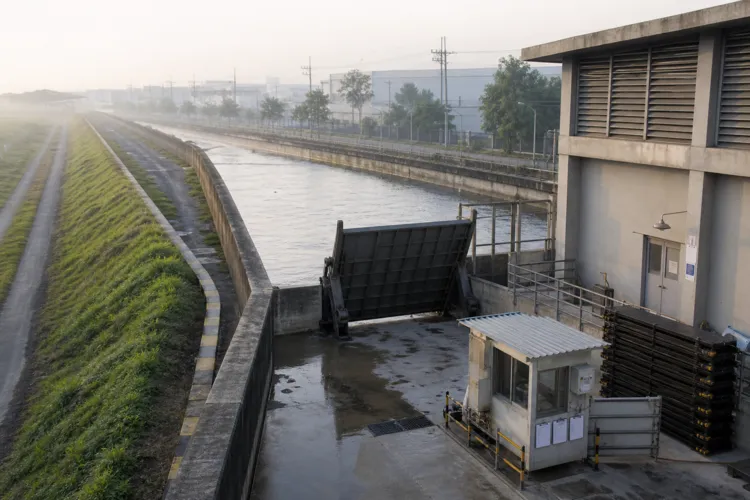
Flood risk is adding another layer of underwriting scrutiny, especially where seasonal events intersect with complex vehicle systems and supply chains. The Insurer reported that the scale of Thailand’s 2026 floods raised additional considerations for reinsurance coverage, but the more likely effect was sharper underwriting scrutiny and greater differentiation between risks, including sub-limits, deductibles, and the quality of exposure data. Crawford & Company’s Thailand country manager, Sompong Suriwong, said strict annual aggregate flood sub-limits exist in almost all Thai policies, capping insurers’ liabilities by these sub-limits rather than the full sum insured. He added that claims from the 2026 event could reduce or potentially exhaust annual flood limits, requiring reinstatements to restore limits for the rest of the monsoon season.
Insurers are also balancing growth with channel economics and product mix. Mordor found car insurance held a 93.18% share of market size in 2026, while voluntary cover represented 86.93% of motor premiums. Brokers dominated distribution with a 79.5% share in 2026, and Bangkok and its peri-urban ring formed the leading area for premiums. Yet, pressure on underwriting margins is pushing operational responses that go beyond price alone. Mordor highlighted digital distribution, eligibility for older vehicles, and in-house underwriting by online-origin carriers. MarkWide added that OIC compulsory motor insurance enforcement is compressing premium margins while mandating tighter solvency buffers, which forces pricing model recalibration and capital deployment decisions across networks.
What is driving risk repricing in Thailand’s motor insurance sector?
How do EV repair economics differ from ICE vehicles in Thailand?
What minimum liability limits apply to EV and motor policies from 2026?
How are flood events influencing underwriting and reinsurance decisions?
What do current estimates say about the Thailand motor insurance market outlook?