Thailand’s smart city push is expanding beyond Bangkok, and the government is framing it as a national platform for quality of life and the digital economy. The Ministry of Digital Economy and Society (MDES) said Thailand has 37 smart cities spread across 16 provinces after granting a new smart city symbol to “Phuket Silicon Valley” and renewing certification for 16 other cities. Those renewed areas include Khon Kaen, Wangchan Valley in Rayong, Chiang Rai, Phuket, and Nakhon Ratchasima, spanning the North, Northeast, Central, and Southern regions, as well as Bangkok. The ministry’s stated national target is 105 smart cities by 2027.
That national target is being backed by concrete progress gates and funding signals. MDES said renewal is only granted to cities that have made over 50% progress, a requirement meant to keep projects on track. Since 2021, Thailand’s smart city push has attracted over 30.9 billion baht in private investment, which MDES linked to confidence in the country’s digital development trajectory. In parallel, depa reported that there are 37 Smart City areas in 25 provinces and 173 Smart City Promotion Zones, representing a total investment value of over THB11.9 billion and covering more than 9 million citizens. Together, these figures show a strategy that is moving from isolated pilots to wider regional coverage.
From Showcase Districts to Corridors: Where Expansion Is Happening
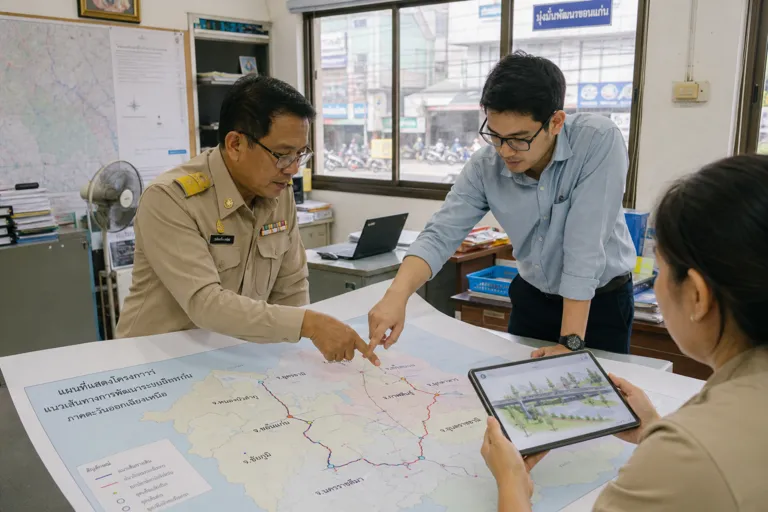
The policy narrative increasingly centers on regional growth corridors, not only the capital. An analysis of the Eastern Economic Corridor (EEC) describes it as a flagship testbed spanning Chonburi, Rayong, and Chachoengsao, with smart city initiatives tied to infrastructure, digital services, and investment interest. MDES also highlighted different city roles: tourist cities such as Phuket and Chiang Mai are positioned to support the creative economy and digital nomads, while industrial cities like Rayong and Chonburi are linked to the BCG (Bio-Circular-Green) model and Industry 4.0. Meanwhile, an academic review cites One Bangkok within Rama IV Smart City as a mixed-use development of 16.7 hectares, showing how Bangkok projects can coexist with a wider regional agenda.
Beyond place branding, agencies are emphasizing practical deployments that can be replicated outside Bangkok. depa’s “Smart Living and Smart Living Plus” program promotes digital technology in 45 communities nationwide, including agricultural carbon activity recording systems, CCTV and solar-powered lighting, agricultural drones, and smart farming IoT solutions. depa also described a 5G Ambulance Project with the Ministry of Public Health that upgrades emergency medical services through digital technology in 40 ambulances from 17 hospitals across 11 provinces. At the same time, MDES is pushing for a secure Digital Government and promoting Open Data to make public services more transparent, fast, and accessible.
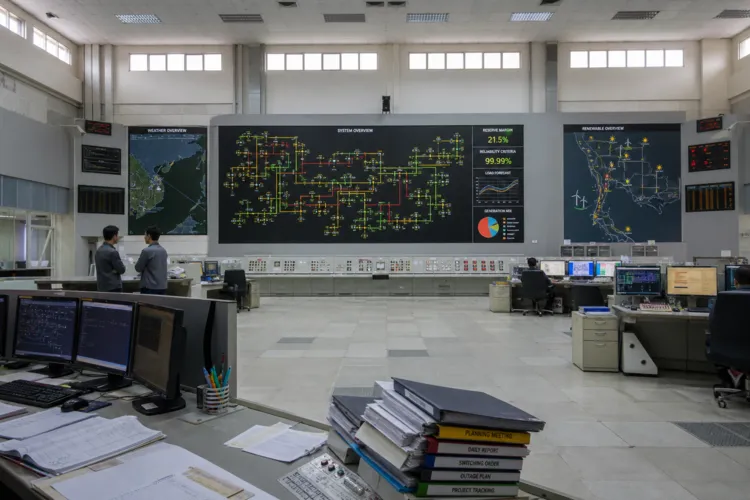
As Thailand smart city development scales, leaders are also stressing standards, trust, and cybersecurity. depa said foreign innovations must undergo rigorous testing and certification before being registered in the Thailand Digital Catalogue, so public and private buyers can select reliable and fairly priced technologies. MDES described AI and IoT as core to city management, but tied that to building cybersecurity to guard against misuse. The government is also investing in a “Smart City Sandbox” model at the Chaeng Watthana Government Complex, which hosts over 35,000 civil servants and more than 50,000 daily visitors. The project targets traffic management, more green space, improved environmental conditions, and better quality of life, with an intent to apply lessons to other cities.
How many smart cities are certified in Thailand right now, and what is the 2027 target?
What signals show Thailand’s smart city work is moving beyond Bangkok?
What investment figures have been reported for smart city initiatives?
What is the Chaeng Watthana Smart Government Complex meant to demonstrate?
How is Thailand managing risks like unreliable technology and cybersecurity in smart cities?