
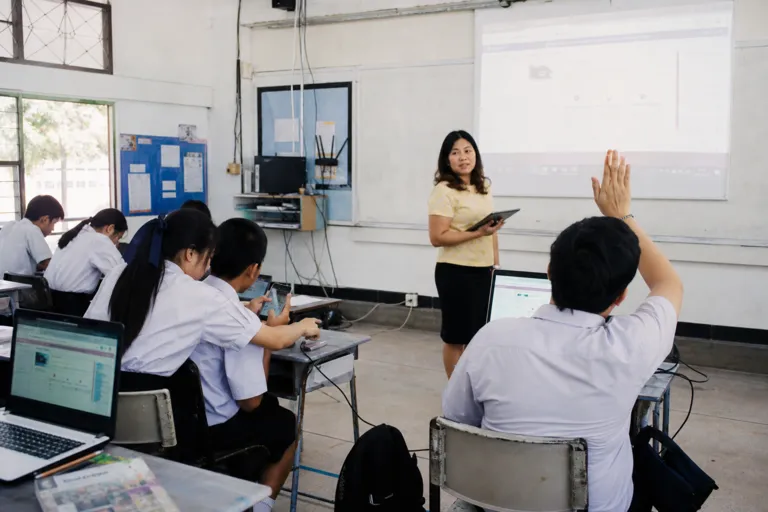
Momentum in Thailand’s EdTech ecosystem is building as more schools and universities accelerate digital learning adoption. IMARC’s outlook places the Thailand EdTech market at USD 4,889.6 million by 2034, with a projected CAGR of 11.44%. Multiple sources tie this shift to expanding internet coverage, government-backed initiatives, and the post-pandemic normalization of online and remote education models. At the same time, demand is broadening beyond single products toward platforms and solutions that can support different learning stages, from preschool through higher education, as digital tools become a more regular part of instruction and skills development.
Institutional demand is also rooted in how Thailand’s education landscape is structured and financed. Nexdigm values Thailand’s education market at USD 22 billion and notes that government investments and rising demand for quality educational services are key drivers. It also reports that the fiscal 2023 education budget allocation was approximately USD 5.9 billion, aimed at improving infrastructure and promoting access, particularly in rural areas. In parallel, GMI Research highlights a national system spanning public, private, and international schools, with free and compulsory education for nine years. GMI also reports 170 international learning institutions nationwide, including schools and preschools, with around 66,700 students enrolled, underscoring the diverse segments that digital learning providers can target.
Universities Push E-Learning While K-12 Builds Digital Foundations
Higher education is a major channel for digital learning adoption. Ken Research values the Thailand e-learning in higher education market at approximately USD 1.2 billion and links its growth to digital platform adoption, rising internet penetration, and demand for flexible learning among students and professionals. It also notes that universities lead end-user adoption, alongside colleges, vocational institutions, corporate training departments, and government educational bodies. Government programs are part of the story as well: Ken Research cites a “Smart Learning” program intended to integrate technology into classrooms and promote e-learning, with the goal of making higher education more accessible and affordable across the country.
Across K-12 and early learning, the shift is not only about moving classes online; it is also about improving engagement and outcomes through newer tools. IMARC points to AI-powered learning tools and gamification techniques as methods that improve learner engagement and retention, and it includes preschool, K-12, and higher education as key segments for technology adoption. GMI Research adds that offline classes still hold the largest share in Thailand’s education market, but online learning platforms have been witnessing robust growth in recent years due to rapid changes in education and a broader shift toward digitalization. In practice, this creates a blended environment where institutions seek solutions that work alongside traditional delivery rather than replace it overnight.
Several demand-side signals suggest the next phase will involve tighter alignment between learning content and workforce needs. Nexdigm describes an “Education 4.0” policy designed to align education with 21st-century workforce demands, including budgeting for updated technology and teacher training. GMI Research notes that Thailand 4.0 is an economic model aimed at modernization and digital transformation and highlights scholarship support tied to science and technology: the Ministry of Higher Education and IPST awarded 472 scholarships out of 615 for studies related to science and technology, while the Civil Service Commission manages scholarships offering full funding from high school through doctorate. On the supply side, IMARC reports that EdTech companies are forming partnerships with specialized sectors, including the EV industry, to build industry-aligned learning programs.
What is the outlook for Thailand’s EdTech market size and growth?
How large is Thailand’s e-learning market in higher education?
What government funding is cited as supporting education modernization in Thailand?
How significant is the international school segment in Thailand’s education landscape?
What technologies are highlighted as boosting engagement in Thai digital learning?