Thailand’s listed developers are operating in a real estate cycle that rewards stable cash flow and flexible exit options. Mordor Intelligence estimates the Thailand real estate market at USD 60.78 billion in 2026, with a projection of USD 80.00 billion by 2031, growing at a 5.65% CAGR from 2026 to 2031. The same analysis highlights pressure from weak mid-income purchasing power, high household debt, and tighter underwriting. Against that backdrop, the Thailand REIT market becomes a practical tool: monetizing stabilized assets can recycle capital, support balance-sheet discipline, and reduce dependence on unpredictable unit sales timing.
Market structure also points in the same direction. In Thailand’s overall real estate mix, residential accounted for 52.4% of revenue share in 2025, while the commercial segment is projected to expand at a 6.22% CAGR through 2031. By business model, sales held a 70.2% share in 2025, but rentals are forecast to grow at a 6.41% CAGR through 2031. This pivot matters for REIT formation and asset recycling because stabilized properties are defined by recurring income. Bangkok led with a 53.1% share in 2025, showing how concentrated the investable asset base remains in the capital even as growth corridors evolve.
Why Stabilized Commercial Assets Are Becoming the Monetization Core
Commercial fundamentals provide a clear pipeline of potential REIT-ready assets, especially where leasing is sustained by structural demand. Mordor Intelligence estimates Thailand’s commercial real estate market at USD 19.02 billion in 2026, rising from USD 18.01 billion in 2025, with a projection of USD 25.03 billion by 2031 at a 5.62% CAGR for 2026 to 2031. Rentals commanded a 69.15% share of Thailand’s commercial market size in 2025, and offices held 38.22% of market share that year. Even as legacy stock affects headline vacancy, corporate and SME occupiers accounted for 71.90% of market size in 2025, which supports the idea that well-positioned, upgraded buildings can stabilize income for monetization strategies.
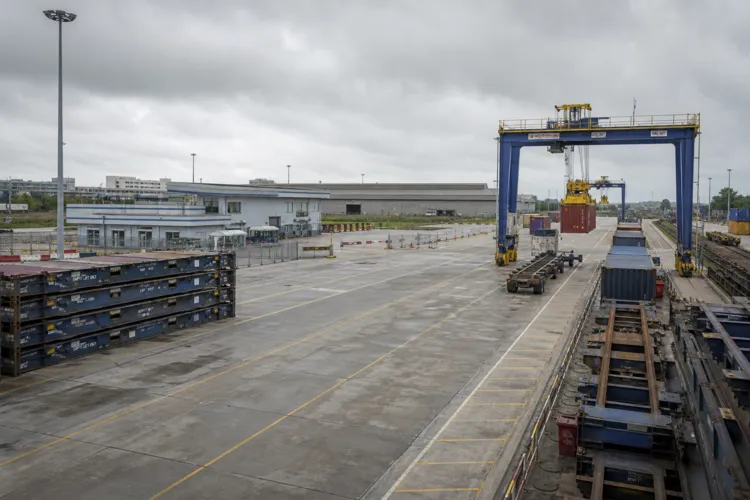
Location strategy is also sharpening around logistics and the Eastern Economic Corridor (EEC). The EEC Board of Investment approved USD 2.7 billion of data-center projects in the first five months of 2024, a signal of demand for high-load digital infrastructure. Public funding also anchors the corridor: a USD 17.8 billion transport pipeline links Bangkok, the EEC, and deep-sea ports. In that environment, industrial land values reached USD 169,000 per rai in H1 2024, up 17% year over year, pointing to tightening supply and higher replacement costs. Developers listed in Bangkok are already described as shifting toward logistics and industrial assets within the EEC, aligning stabilized-income assets with REIT-style capital recycling.
Residential trends reinforce why developers value monetizing completed, stabilized assets rather than waiting on pure sell-down cycles. Mordor Intelligence projects Thailand’s residential market at USD 31.71 billion in 2026, up from USD 30.17 billion in 2025, reaching USD 40.68 billion by 2031 at a 5.11% CAGR from 2026 to 2031. Yet the report notes household debt hovering near 91% of GDP and a 53,000-unit condo glut in Bangkok, both of which can elongate absorption timelines. It also describes institutional investors, pension funds, insurance portfolios, and REITs scaling rental inventories delivering 4–6% yields. Separately, Cushman & Wakefield Thailand notes that older Grade A and Grade B office buildings face tenant-retention challenges, pushing landlords toward refurbishment and asset enhancement. Together, these factors support a deeper ecosystem for stabilized assets that can be packaged, upgraded, and monetized.
What is driving deeper interest in Thailand’s REIT market now?
Which market segments look most aligned with stabilized-asset monetization?
What EEC indicators support the shift toward logistics and industrial assets?
How do Bangkok housing conditions influence developer financing decisions?