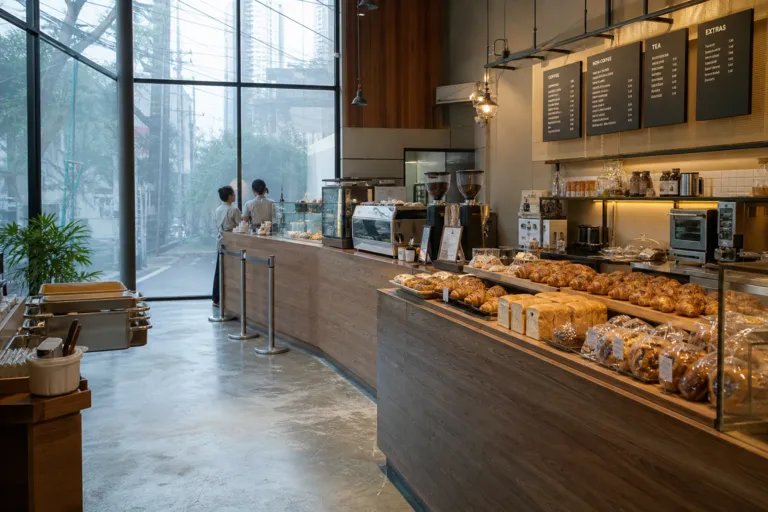
Thailand’s bakery sector is developing in step with a wider Southeast Asian shift toward modern bakeries and café chains. The Asian Development Bank links rapid urbanization and a move toward ready-to-eat formats with the proliferation of modern bakeries and café chains in the region, and sources note that Southeast Asian countries such as Thailand and Vietnam have witnessed growing demand for Western-style pastries and confectionery. At the same time, market profiles for Thailand emphasize that domestic demand is shaped by both household and industrial usage, with trade flows linking local supply to imports and exports. Taken together, these signals point to a market where lifestyle-driven consumption and professionalized supply are becoming increasingly connected.
Fresh bakery is still the anchor category across the region, which matters for Thailand’s positioning inside Southeast Asia’s bakery economy. In the Southeast Asia Bakery Products Market, fresh lines generated 60.55% of 2025 revenue, supported by supermarket in-store bakeries, high-street artisan outlets, and café chains that synchronize bake times with commuter peaks to drive aroma-led footfall. That operating model reinforces why premium cues like “freshness” can coexist with convenience. Another regional signal is consumer intent: Innova Market Insights found that 61% of APAC consumers now prioritise quality over price when buying bakery products. For brands and retailers, the opportunity is to make premium feel effortless—fresh, consistent, and easy to pick up on the way to work or alongside coffee.
Cafe Culture, Premiumization, and the New Value Tension
Café culture is a demand engine, but it also intensifies the push-and-pull between premiumization and value. A 2025 Bain & Company–NielsenIQ report cited in regional bakery trend coverage found that 42% of Southeast Asian consumers are actively seeking the same products at lower prices. That tension shows up in how operators design menus and ranges: premium formats like artisan and sourdough can sit next to everyday staples when consumers want an affordable treat with a “quality” halo. Thailand and Vietnam have each recorded 15–20% annual growth in sourdough product launches since 2023, showing how premium bread cues are being commercialized. Meanwhile, artisan bakery café chains across Southeast Asia expanded by 29% in 2025, widening the number of places where bread, pastries, and coffee are bundled into a single routine.
Convenience demand is also shaping product design and supply choices, particularly where modern retail and food service channels require consistency. Regional analysis describes how tropical formulation adaptation supports shelf stability and humidity tolerance, and notes that enzyme-based shelf-life extension technologies enable ambient distribution without refrigeration. This supports broader access beyond the most premium points of sale. On the procurement side, the same regional source highlights that food service procurement centralization is restructuring bakery demand as hotel chains and quick-service restaurants shift from fragmented artisanal sourcing to contracted supply agreements with industrial-scale manufacturers. Thailand is included in this regional picture through references to tourism recovery supporting more standardized procurement. For the Thailand bakery market, these dynamics reward suppliers that can deliver reliable quality at scale while keeping products aligned with café-driven taste trends.
Thailand’s market story also includes policy and compliance factors that influence what gets baked and how it is labeled. Southeast Asia coverage points to Thailand’s push for a sugar-reduction strategy accelerating adoption of whole-grain bread, indicating how health and reformulation can become a growth lever even in mainstream categories. Another regional analysis notes that Indonesia’s BPOM, Thailand’s FDA, and Vietnam’s VFA enforce divergent additive and labeling standards, fragmenting compliance costs for multi-country operators and forcing country-specific formulation variants. For companies planning portfolios, Thailand-focused market reports emphasize a structured view of market size, trade balance, prices, and per-capita indicators, designed for strategic planning and benchmarking. The implication is clear: winning will depend on pairing café culture-led product excitement with operational discipline in formulation, labeling, and channel execution.
What is driving momentum in Thailand’s bakery demand?
How important is fresh bakery in Southeast Asia, and why does it matter for Thailand?
What do regional consumer surveys say about quality versus price in bakery products?
What trend signals show premium bread gaining traction in Thailand?
How are regulations relevant to companies operating in the Thailand bakery market?