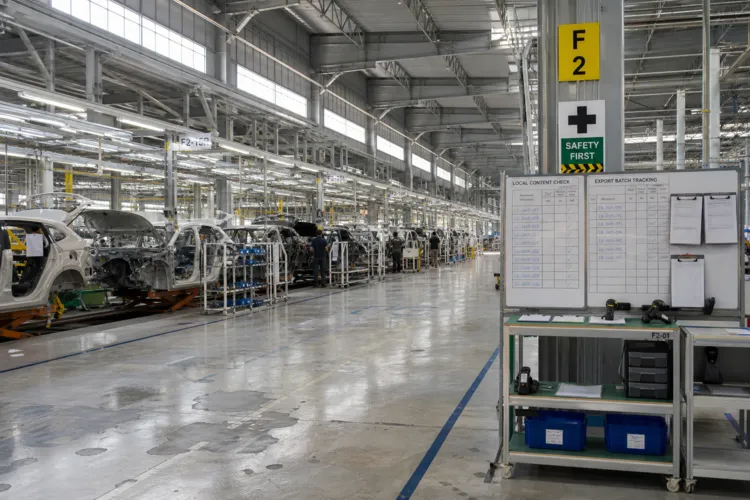
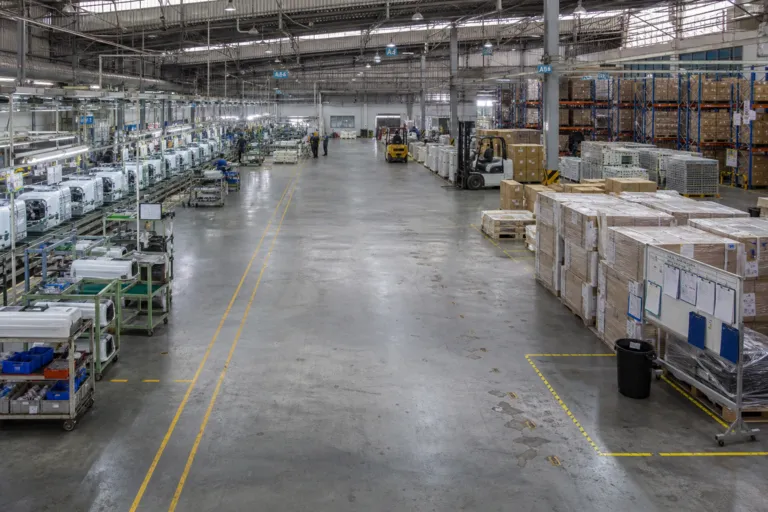
Thailand has strengthened its position in global air conditioner manufacturing by combining scale, logistics advantages, and a deep supplier base. In 2024, Thailand produced around 21 million units and shipped over 19 million units worldwide, generating approximately USD 7 billion in export revenues. A key reason is clustering in the Eastern Economic Corridor, including Rayong, Chonburi near Laem Chabang port, and Chachoengsao, which helps support fast outbound logistics. The local ecosystem also supports domestic sourcing of about 70%–80% of components, with imports focused on higher-tech parts such as sensors.
Exports are concentrated in several product types. Thailand mainly ships split units at about 60%–65% of exports, window units at 25%–30%, and VRF systems at 10%–15%, along with parts such as PCBs and compressors. The country hosts manufacturing by a wide list of brands, including Daikin, Mitsubishi Electric, LG, Haier, and Midea, plus Panasonic, Samsung, Hitachi, Trane, Carrier, and Toshiba. Expansion plans underline the export focus. Haier’s Chonburi factory is described as nearly 3 million units with about 85% aimed at export, with capacity targeted to reach 6 million by 2027. Midea is cited with 4 million units of capacity, with the majority of production going to exports.
US Tariffs Reshape Timing, Prices, and Competition
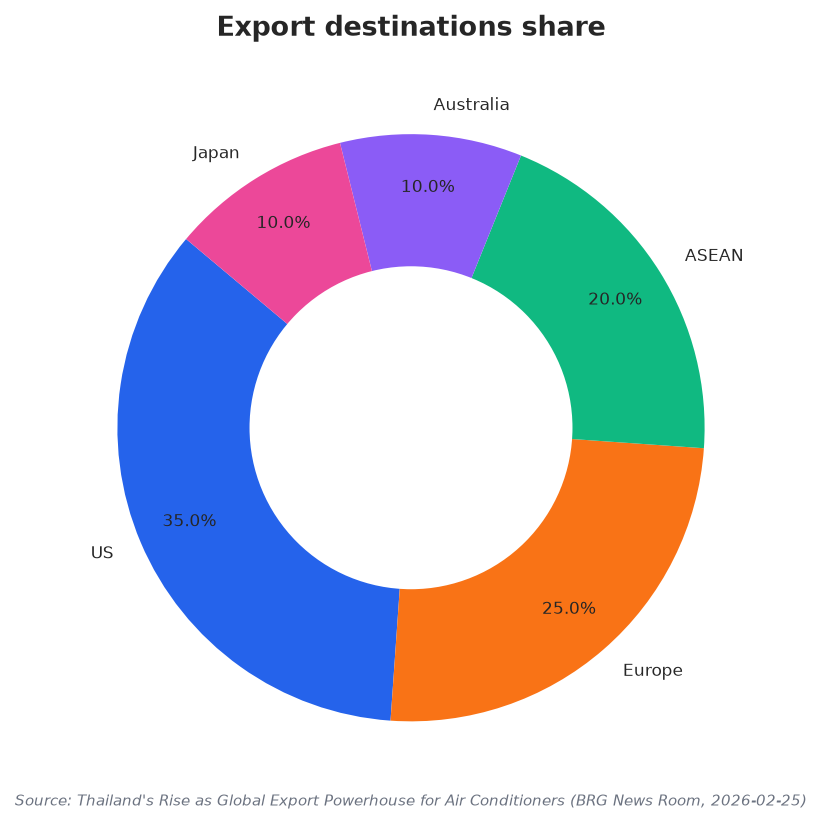
The US market is central to Thailand’s export story and is now the focal point for tariff pressure. One source describes the US taking 35% of Thailand’s air conditioner exports, while trade patterns in 2025 show an even sharper tilt: in the first seven months of 2025, the US took 59% of Thailand’s air conditioner exports, and these shipments were nearly all window-type units. This aligns with US import demand, where window-type (self-contained) air conditioners account for over 95% of total imports. Exporters accelerated shipments ahead of the US enforcing a 19% reciprocal tariff on Thai imports starting August 1, 2025, alongside a 50% tariff on steel components under Section 232.
Despite higher duties, Thai-made products gained a relative pricing edge versus China in the categories where Thailand holds the largest market share. Over 97% of Thailand’s air conditioner exports to the US fall under two main categories, and competitors include China, Mexico, and Indonesia. After price adjustments from the new import duties, Thai air conditioners are still described as 13%–23% cheaper than Chinese units, whereas before the tariff they were 3%–18% more expensive. Indonesia is highlighted as a growing risk because its import prices can be comparable to, or sometimes lower than, Thailand’s, even though Thailand and China together account for over 86% of the total US market.
Forward expectations mix opportunity with volatility for the Thailand air conditioner industry. Kasikorn Research Center is cited forecasting Thailand’s air conditioner exports to the US to expand by 36% in 2025, about USD 651 million, driven by the pre–August 1 shipment rush. The same forecast expects exports to drop by around 70% in the latter part of the year once the 19% reciprocal tariff takes effect and seasonal factors are considered. Over the longer run, the relocation of Chinese manufacturers’ production bases to Thailand, combined with Thailand’s tax structure and BOI incentives such as 15-year tax exemptions and duty-free machinery imports, is positioned as a factor that can keep Thailand a major production and export hub for the US-bound air conditioner supply chain.
How many air conditioners did Thailand produce and export in 2024?
Why do window-type units matter so much for Thai exports to the US?
What new US tariffs are affecting Thai-made air conditioners?
How is Thailand’s pricing versus China changing under the new tariff situation?
What is driving growth and risk for the Thailand air conditioner industry in 2025?