Thailand’s pharmaceutical industry is expanding and, increasingly, thinking upstream. The country’s pharmaceutical market reached approximately 240 billion baht in 2024, up from 212 billion baht in 2023, and it is described as the third-largest pharma market in Southeast Asia. Growth expectations are tied to structural demand drivers that also influence manufacturing strategy, including a population aged 60 and above that now exceeds 21%, and a Universal Coverage Scheme (UCS) budget allocation of THB 235 billion in 2025, an 8.3% increase. Pharmaceuticals also account for 29% of all national healthcare spending in Thailand, which raises the value of stabilizing supply and building deeper production capability over time.
Domestic production today is anchored in supplying local needs. Thailand consumes 90% of its domestic pharmaceutical production domestically, while 10% is exported primarily to Vietnam, Myanmar, and Cambodia. Generic drugs are positioned as the backbone of local manufacturing, while multinational companies are described as dominant in the original (patented) segment mainly through import and distribution rather than local production. This split helps explain why interest in upstream steps matters: if the higher-value or more complex inputs remain external, the local system can be exposed to qualification bottlenecks, lead-time risk, and supplier concentration. That is where Thailand’s upstream manufacturing conversation increasingly intersects with intermediates, APIs, and CDMO strategies.
Why the Upstream Push Is Moving From Strategy to Execution
Signals of execution show up in both manufacturing investment and the enabling ecosystem. Grand View Research points to significant investments supporting Thailand’s expanding pharmaceutical and nutraceutical industries, including ACG’s new capsule manufacturing facility in Rayong in January 2025. While capsules are not the same as API output, they indicate momentum in local production footprints and supply-chain localization thinking. At the same time, market studies in Thailand are mapping upstream workflows more explicitly. IndexBox describes pharmaceutical intermediates as pharmaceutical-grade chemical substances used as formulation components or process aids in the manufacture of APIs and finished drug products, under strict pharmacopeial and regulatory standards, reflecting how upstream capability is increasingly framed as a system of workflows, quality burdens, and qualification requirements rather than a single product code.
Thailand’s ambition also has to contend with areas of clear import dependence. In precision adjuvants, an IndexBox report on TLR4 synthetic agonists characterizes Thailand as a demand node within a global value chain with high import dependence for the core synthetic TLR4 agonist API. The report calls this a strategic vulnerability, but also a partnership opportunity for qualified local CDMOs. It also recommends that the highest-value move is not immediate API synthesis, but building formulation expertise for adjuvant systems and establishing GMP fill-finish lines qualified for adjuvant-containing vaccines, while partnering for the API. This logic illustrates how upstream capability can be staged: start where domestic infrastructure can qualify faster, then deepen control over critical inputs as competence and partnerships mature.
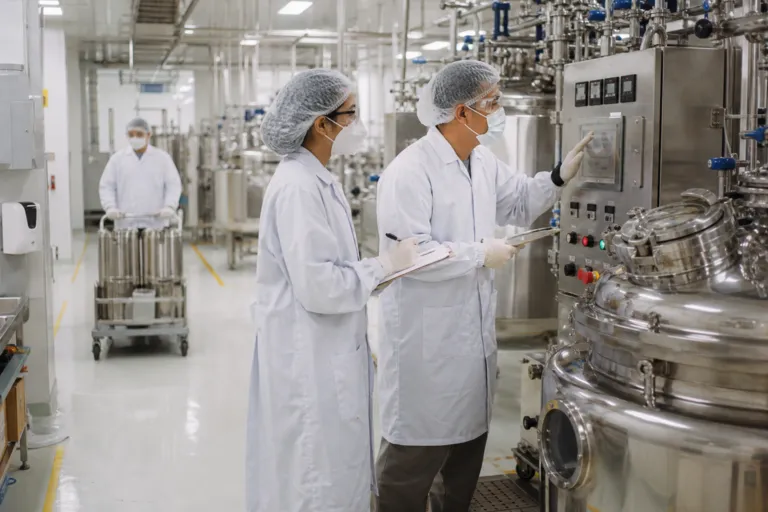
Supporting infrastructure is also evolving in ways that matter for upstream development. IndexBox notes that Thailand’s pharmaceutical incubators market is undergoing a transition shaped by technological integration and evolving regional manufacturing strategies, including a move toward greater automation and data-centric operations. The same source outlines workflows that incubator systems support, such as upstream process development, manufacturing scale-up, in-process control, quality control and release testing, and stability studies, spanning biopharmaceuticals, traditional pharmaceuticals, CDMOs, and academic and government research institutes with GMP facilities. For Thailand API pharmaceutical manufacturing, these building blocks matter because API and intermediates capability is not only about reactors and chemistry; it is also about reproducible processes, GMP documentation, and quality systems that can carry products from development through validated production.
What is driving Thailand’s push to build more upstream pharmaceutical capability?
How much of Thailand’s drug production is used domestically versus exported?
What does the evidence say about API import dependence in Thailand?
What is a practical near-term pathway for Thailand’s API-focused manufacturing buildout?
How does the Thailand API pharmaceutical manufacturing topic connect to intermediates and incubator infrastructure?