Thailand’s fertilizer supply chain is under renewed scrutiny as domestic food demand rises and input prices swing. Mordor Intelligence estimates the Thailand fertilizers market reached USD 2.60 billion in 2025 and projects it will grow to USD 3.20 billion by 2030 at a 4.24% CAGR. The same source notes that fertilizer prices ranged from USD 400 to USD 1,200 per metric ton during supply disruptions, a range that has reinforced the policy and investment case for local raw materials. In this setting, the Thailand potash mining industry is increasingly framed around reducing dependence on imported inputs that can amplify cost shocks for farmers and public budgets.
Food production and export performance add urgency to stabilizing fertilizer availability. Thailand’s rice exports reached 9.9 million metric tons, a 13% increase and the highest level since 2018, according to the cited Thai Rice Exporters Association data in the Mordor Intelligence report. In 2024, the export value rose by 27% to USD 6.4 billion (225.6 billion baht). The report links fertilizers to maintaining this high rice production, which makes domestic supply resilience more than an industrial issue. It becomes a competitiveness and food-security issue, especially when external disruptions can cause rapid swings in input pricing.
Why Potash Projects Matter for Thailand’s Supply Security
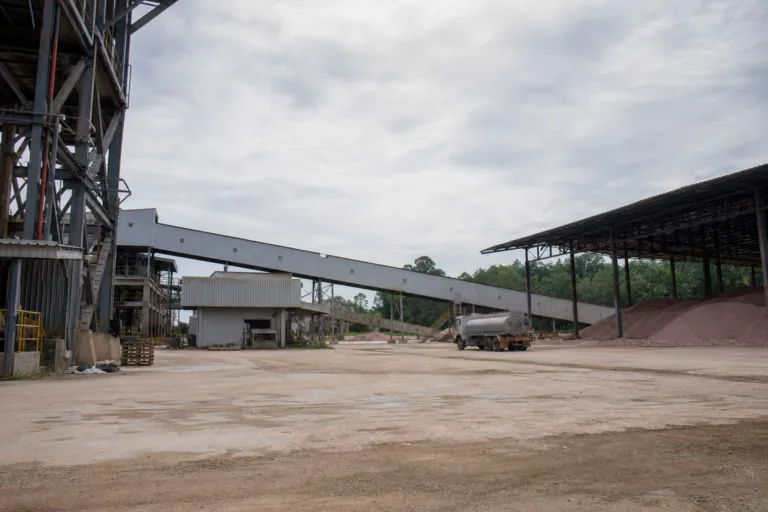
Mordor Intelligence describes a USD 1.8 billion potash mine development intended to reduce dependency on imported raw materials. The report also states the country plans to launch a USD 1.8 billion domestic potash project in 2026 to enhance supply security and reduce future subsidy requirements. Those policy goals are tied to government support mechanisms that protect farmers from international volatility through direct subsidies and price controls. While such measures can keep fertilizers accessible, the same report notes they can reduce profit margins for producers, strengthening the argument for more stable, locally anchored inputs where feasible.
Global market concentration adds context for why countries pursue domestic potash capacity. Market Data Forecast estimates the global potash market was valued at USD 78.85 billion in 2025 and anticipates growth to USD 83.05 billion in 2026, with a forecast of USD 125.83 billion by 2034 at a 5.33% CAGR. The same source says Canada accounts for over 30% of global production, while Russia and Belarus together contribute nearly 40% of global supply. It also cites USGS data that global potash production reached approximately 70 million metric tons. This geographic concentration helps explain why Thailand’s domestic project is positioned as a hedge against supply-chain disruption and global availability swings.
Thailand’s fertilizer mix and farm uses indicate where supply stability could matter most. Mordor Intelligence reports nitrogenous fertilizers held 56.5% of Thailand’s fertilizers market share in 2024. By application, grains and cereals accounted for 42.1% of market size in 2024, while fruits and vegetables are forecast to expand at a 6.7% CAGR from 2025 to 2030. The same report also notes micronutrient fertilizers are forecast to advance at a 5.3% CAGR through 2030. These shares and growth rates underscore how fertilizer security intersects with staple production and higher-value cropping, where reliable nutrient programs support yield consistency and quality outcomes.
What is driving new domestic potash investment in Thailand?
When is Thailand’s domestic potash project planned to launch?
How does fertilizer supply relate to Thailand’s rice exports?
How concentrated is global potash supply, and why does it matter for Thailand?
What does the Thailand potash mining industry mean for fertilizer demand segments?