Thailand’s apparel and textile players are navigating a sourcing reset shaped by tariffs, cost pressure, and supply-chain risk. In the United States, fashion companies surveyed in 2026 again ranked “Protectionist U.S. trade policies and related policy uncertainty, including the impact of tariffs” as their top business challenge. The same 2026 findings note that “increasing production or sourcing costs” rose to the third most significant challenge, and that forced-labor risk management climbed from tenth place in 2025 to sixth place in 2026. This context matters for Thailand’s garment and apparel export positioning, because brand buyers are not only looking for price, but also resilience, compliance readiness, and sourcing diversification.
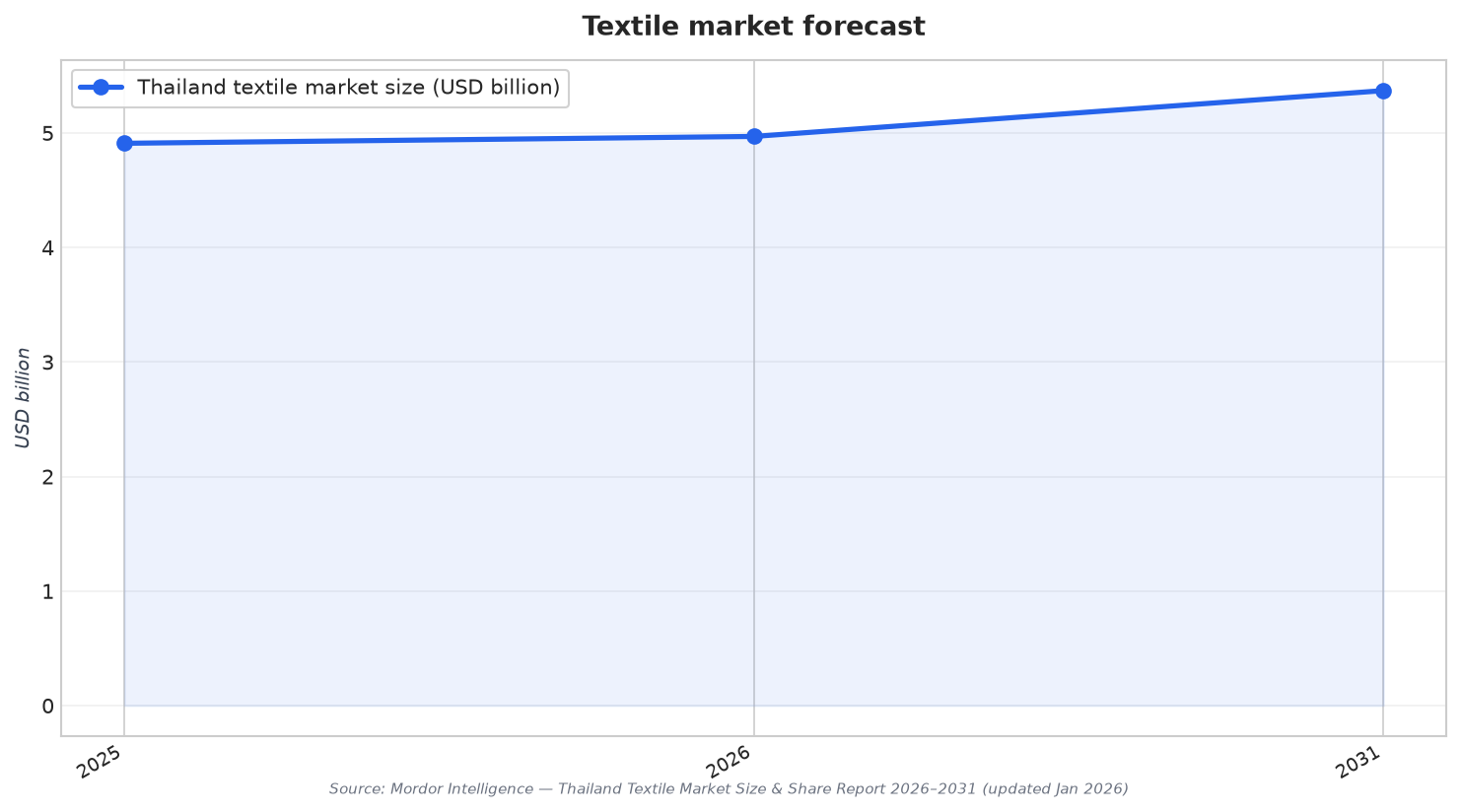
Thailand’s local textile base is also evolving in ways that can support more responsive export programs. Mordor Intelligence estimates the Thailand textile market at USD 4.97 billion in 2026, rising to USD 5.37 billion by 2031, implying a 1.56% CAGR over 2026–2031. In 2025, Fashion and Apparel led with a 62.67% revenue share, while industrial/technical textiles are forecast to expand at a 1.95% CAGR through 2031. The same report shows Natural Fibers at 61.86% share in 2025 and notes Synthetic Fibers are projected to grow at a 1.86% CAGR to 2031. Together, these signals point to a sector keeping apparel as the anchor, while upgrading capability and broadening end markets.
Tariff Shifts Make Modernization and Flexibility a Competitive Weapon
Tariff dynamics are pushing buyers toward multi-country sourcing playbooks rather than quick, single-country moves. The 2026 sourcing survey notes little evidence that higher tariffs have driven large-scale reshoring of apparel production to the United States, with only about 10% of respondents naming “Made in the USA” sourcing as a response strategy. Instead, companies reported broader mitigation tactics such as applying for tariff refunds, using first-sale valuation, renegotiating supplier contracts, and diversifying sourcing. For Thailand-based producers, that environment rewards factories that can quote quickly, handle shorter runs, and prove compliance maturity—because buyers are building optionality rather than betting everything on one origin.
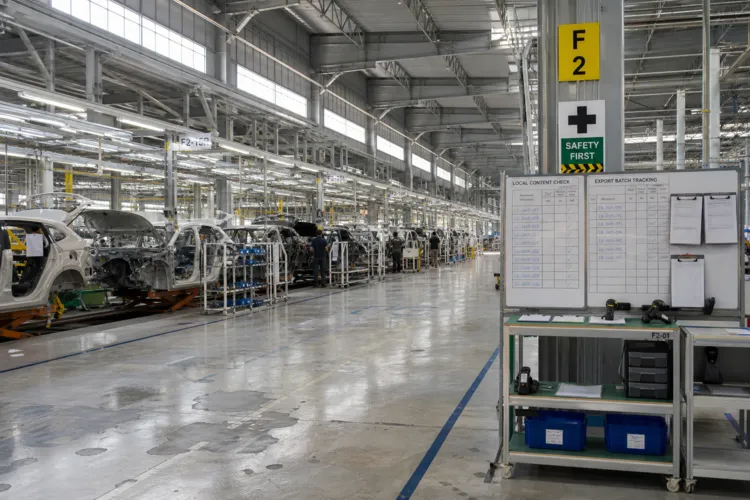
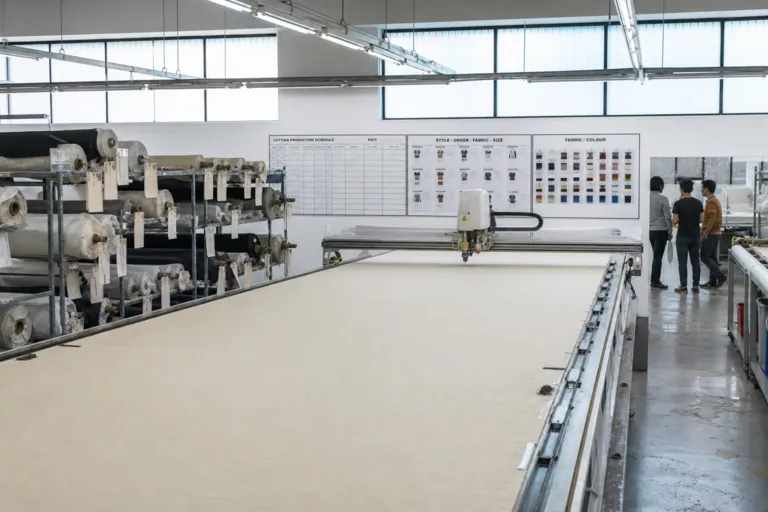
Thailand’s policy support for upgrading equipment aligns with what global buyers say they need. Under the Smart & Sustainable Textile scheme, Mordor Intelligence reports eight-year tax holidays and 50% import-duty waivers on advanced looms, digital printers, and water-treatment systems. It also cites 47 approved projects totaling USD 343 million, aimed to trim energy use by up to 30% per meter of cloth by end-2025. The same source adds that Indorama’s melt-spinning upgrades cut its energy intensity by 15%. These kinds of investments can translate into more stable quality, faster sampling, and more consistent delivery—attributes that matter when tariffs and regulations keep changing and brands want “China Plus One” options that do not sacrifice performance.
Demand signals inside Thailand also shape factory strategy, which can indirectly strengthen exporter readiness. Mordor Intelligence notes tourist spending rebounded to 88% of 2019 levels in 2025 and links that rebound to a 22% jump in casual-wear and resort apparel sales. It describes wholesalers responding by sourcing smaller, more varied fabric lots, and it adds that e-wallet campaigns by the Tourism Authority continued to spur purchases of locally made garments into 2026. That domestic pull can help factories keep lines active, test new materials, and refine short-run execution. At the same time, the industry mix shows a longer-term pivot: woven fabrics captured 85.56% of 2025 output, while nonwovens are advancing at a 1.89% CAGR through 2031—another indicator that Thailand is widening capability beyond volume apparel alone.
How are tariff shifts influencing sourcing decisions for apparel brands?
What do the latest Thailand textile market forecasts suggest about the sector’s direction?
Which modernization incentives are relevant to Thailand’s textile and garment producers?
How does domestic demand connect to export readiness for Thailand-based apparel makers?
What is changing in Thailand garment and apparel export positioning amid China-plus-one sourcing?