Thailand’s water sector is leaning harder into treatment and reuse. The shift is visible in both enabling inputs and end-use demand. A Ken Research report values the Thailand water treatment chemicals market at USD 250 million, linking the market to urbanization, industrial growth, and stricter rules. The same source highlights demand centers such as Bangkok, Chiang Mai, and Pattaya, where dense populations, industry, and tourism raise expectations for consistent water quality. Regulation is a direct investment driver as well. Thailand’s Drinking Water Quality Control Act B.E. 2550 (2007) requires municipal suppliers to meet defined thresholds, including turbidity below 5 NTU and coliform bacteria absent in 100 ml samples, alongside licensing, regular testing, and compliance reporting.
Industrial water reuse is also becoming more central to procurement decisions. Technology choices across Asia Pacific illustrate why treatment suppliers are scaling their offerings, which matters for Thailand because many of the same solutions are deployed across municipal and industrial sites. In an APAC market analysis, membrane filtration is described as a leading technology because it removes contaminants efficiently and is used for both municipal and industrial applications. A separate Mordor Intelligence report on APAC membrane water and wastewater treatment expects the regional market to reach USD 4.23 billion in 2025 and to grow at a 7.26% CAGR to USD 6.01 billion by 2030. That report also notes that an industrial reverse osmosis reuse plant of 10,000 m³/d can require USD 8–12 million in upfront investment, with membrane swaps every 3–5 years adding USD 1.5–2 million, framing the cost profile that buyers evaluate.
Reuse Demand Broadens Beyond Factories as New Loads Emerge
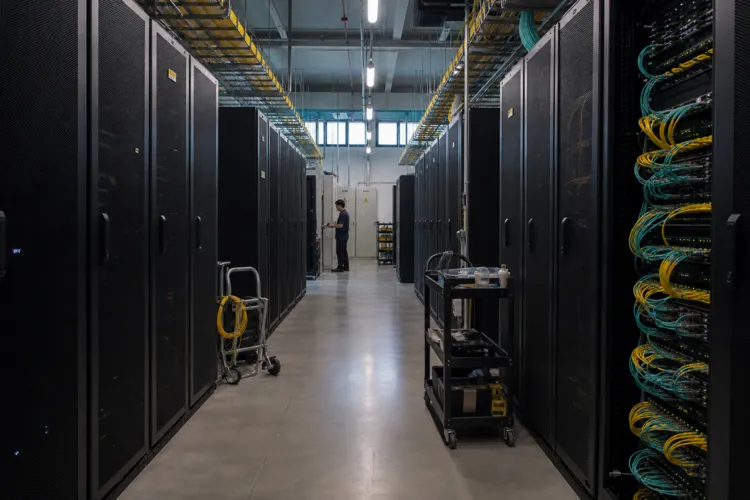
Beyond traditional industrial users, water-intensive digital infrastructure is becoming a clearer planning factor for Thailand. Mordor Intelligence estimates Thailand’s data center water consumption market at 10.68 billion liters in 2025, and projects it will reach 15.62 billion liters by 2030, growing at a 7.90% CAGR. The same report references reuse-water concepts in data centers, including greywater recycling, rainwater recycling, and cooling-tower or heat-exchanger water recycling, and lists common treatment methods for cooling water such as filtration, reverse osmosis, UV disinfection, chemical treatment, and softening. This matters for suppliers because the water quality expectations for cooling loops often push facilities toward more advanced treatment and monitoring, creating additional pull for services and chemicals alongside equipment.
Regional wastewater services trends also point to why Thailand’s buildout and outsourcing opportunities are expanding. Market Data Forecast values the Asia Pacific wastewater treatment service market at USD 25.90 billion in 2025, estimating USD 28.35 billion in 2026 and projecting USD 58.47 billion by 2034 at a 9.47% CAGR. In that regional breakdown, filtration held 23.4% of the market in 2025, secondary treatment accounted for 45.6%, and municipal applications led with 54.9%. China is cited as the largest contributor at 35.3% of the regional market in 2025. While these figures are regional rather than Thailand-specific, they help explain why global and regional providers are prioritizing scalable service models and reuse-oriented upgrades.
Against this backdrop, the Thailand water and wastewater treatment industry is scaling up through three practical levers: compliance-driven municipal upgrades, reuse-focused industrial projects, and new demand from facilities that cannot tolerate interruptions in water quality. Thailand’s chemical market signals continued purchasing for coagulants, disinfectants, and related products tied to regulatory thresholds. Meanwhile, membranes and reuse economics are shaping investment decisions, even when upfront costs are significant. Taken together, these signals show why treatment is being treated less as a utility expense and more as core infrastructure, with technology choices increasingly oriented toward reliable reuse outcomes.
What is driving investment in Thailand’s water treatment chemicals market?
Which Thai regulation is pushing stricter drinking-water compliance?
How large is Thailand’s data center water consumption expected to be by 2030?
What do regional figures suggest about wastewater treatment services growth in Asia Pacific?
What factors are shaping the Thailand water and wastewater treatment industry’s scale-up?