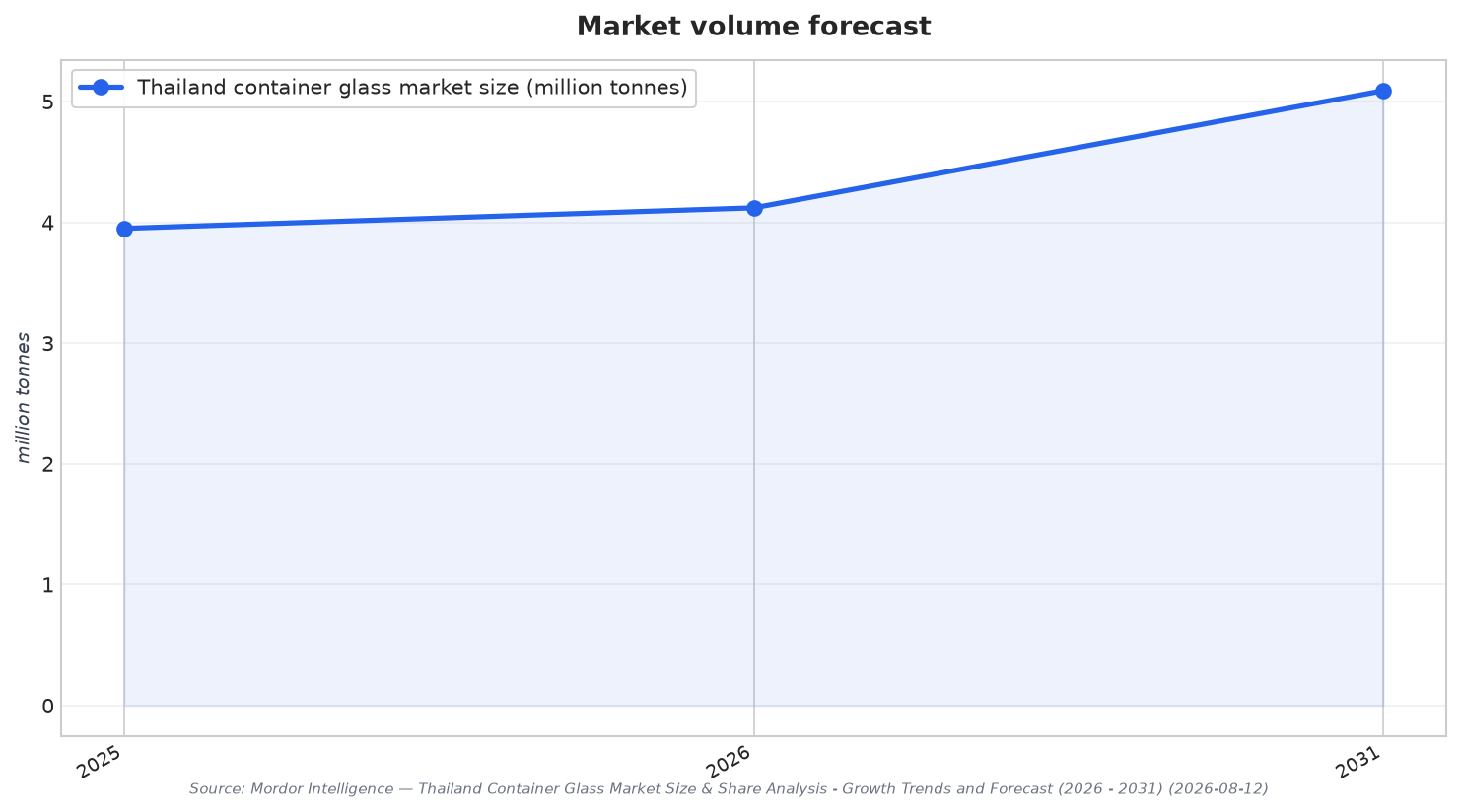
Thailand’s container glass market was valued at 3.95 million tonnes in 2025 and is estimated at 4.12 million tonnes in 2026, with a forecast of 5.09 million tonnes by 2031 at a 4.30% CAGR for 2026–2031, according to Mordor Intelligence. In 2025, beverages accounted for 53.78% of container glass demand by end-user, linking growth to tourism-driven beverage consumption and ongoing brand premiumization in beverage and cosmetics. Policy signals also matter. Thailand’s carbon tax is THB 200 (USD 5.67) per tonne of CO₂ equivalent, reinforcing the case for recyclable packaging choices and encouraging brand owners to specify recycled-content glass.
Regulation and voluntary action are reshaping packaging decisions and reinforcing acceptance of glass. Mordor Intelligence notes Thailand’s plastic-waste roadmap eliminates single-use foam food boxes and thin plastic cups by 2025, while microbeads have been banned in cosmetics since 2020 and retailers have phased down plastic bags. It also highlights a voluntary elimination of plastic cap-seals in bottled water that achieved a 98% reduction among small bottlers by 2019. These steps do not remove glass’s operational challenges, but they do improve demand visibility for producers that can supply compliant, sustainable formats for food-contact and personal-care applications.
Energy Cost Pressure Meets Recycled Content and Efficiency Upgrades
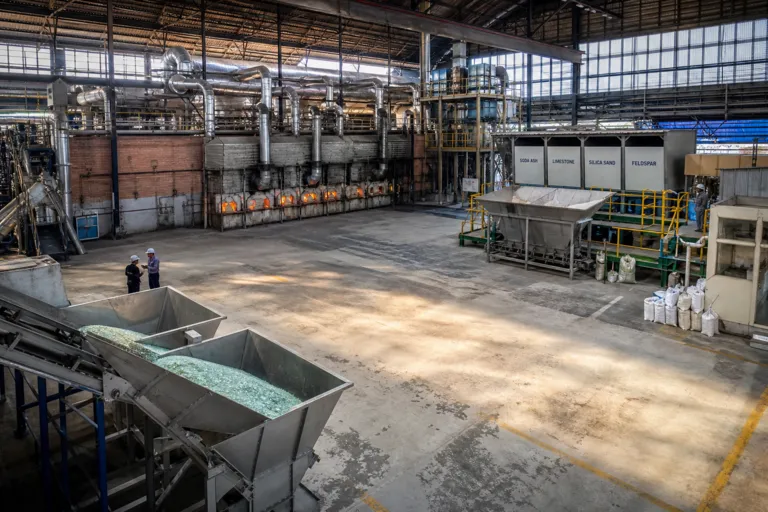
Energy remains a central tension because furnaces are energy-intensive. MarkWide Research points to natural gas price volatility as a restraint, noting melting operations depend heavily on natural gas feedstock and face input cost swings. Producers and policymakers are responding through efficiency and recycled input strategies. Mordor Intelligence states that cost-mitigation incentives tied to cullet usage above 60% partially offset energy-intensive furnace operations and temper the inflationary impact of rising electricity tariffs. MarkWide Research also reports that Thailand’s Board of Investment ties tax privileges to furnace efficiency upgrades and cullet utilization rates, redirecting capital toward recycled-glass production.
Company-level actions mirror this push for better economics per tonne produced. In Mordor Intelligence’s Thailand packaging coverage, BG Container Glass is described as banking on furnace modernization to trim gas use by 8% and raise throughput 15%, explicitly framed as a way to offset glass’s weight disadvantage. MarkWide Research adds that Thai glassmakers are expanding furnace capacity to capture cross-border supply contracts, and describes strategies ranging from Berli Jucker Public Company Limited leveraging distribution across Indochina to Wellgrow Glass Industry Co., Ltd. anchoring premium spirits with specialized mold capabilities. These moves reflect a market that is upgrading its asset base while protecting margins under volatile fuel inputs.
The shift toward lighter packs is also becoming a practical lever, not just a marketing claim. IndexBox reports that brand owners in Thailand are adopting lightweighting and right-sizing initiatives that reduce material intensity per package by an estimated 5–8% across rigid and flexible formats over the forecast period. For the Thailand glass packaging industry, this trend aligns with a broader move toward recycled-content specifications and circularity goals, but it also supports logistics and cost control when combined with higher cullet use and furnace efficiency. Market dynamics will vary by segment: Mordor Intelligence projects the amber glass segment to grow at a 4.92% CAGR during 2026–2031, while beverage remains the largest end-use base.
What is the outlook for Thailand’s container glass volumes through 2031?
Which end-use segment is the biggest driver of container glass demand in Thailand?
How are glassmakers responding to energy-cost pressure in Thailand?
What does lightweighting look like in Thailand’s packaging market overall?
What policy signals are influencing the Thailand glass packaging industry’s shift toward recycled content?