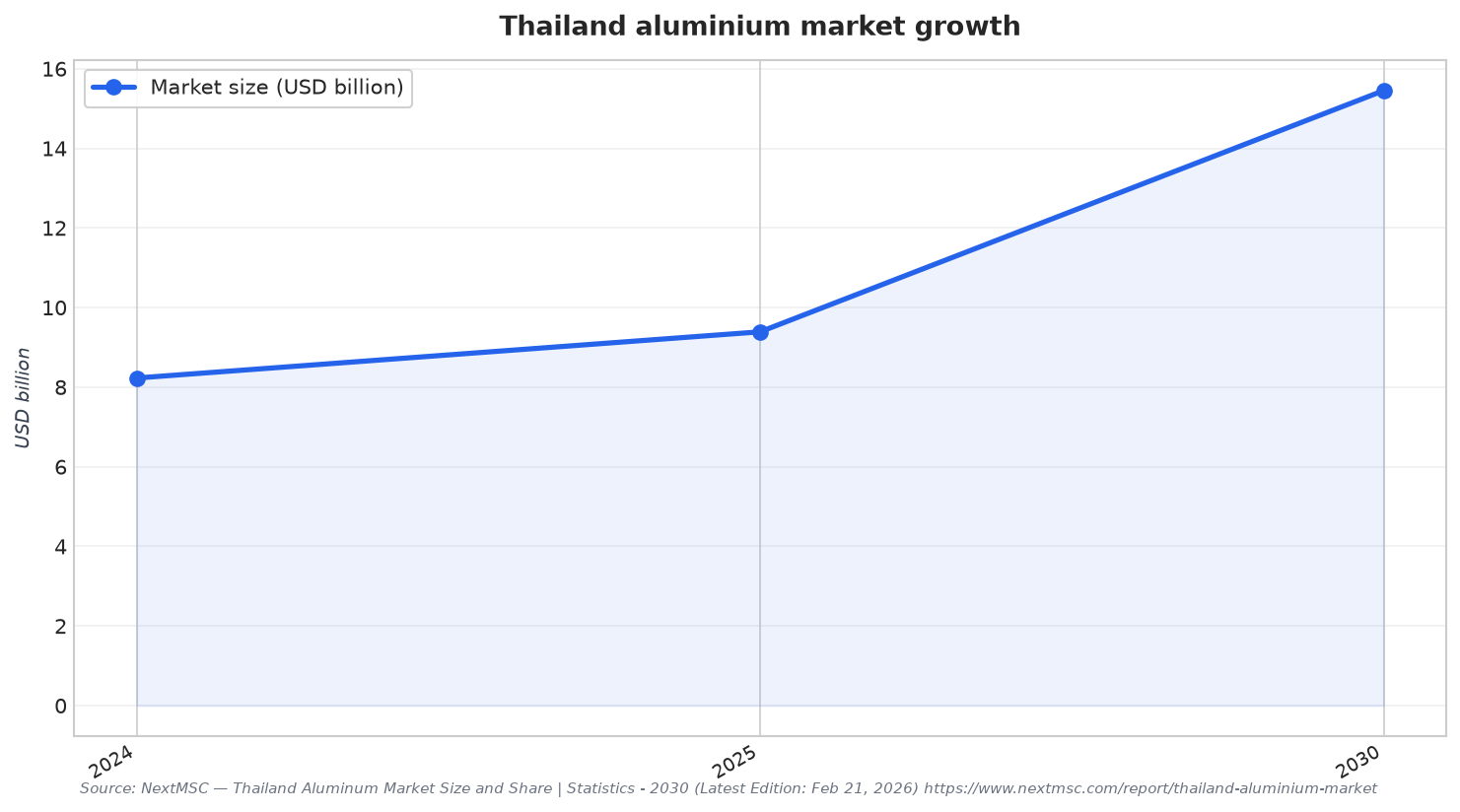
Thailand’s aluminum market shows clear momentum on both value and volume. One market estimate values Thailand’s aluminum market at USD 8.23 billion in 2024 and expects it to reach USD 9.39 billion in 2025, with a projection of USD 15.45 billion by 2030. On volume, the same source places the market at 3,517 thousand metric tons in 2024, rising to 3,995 thousand metric tons in 2025 and 6,295 thousand metric tons by 2030. This growth is linked to broad-based demand from automotive, construction, packaging, and electronics, alongside infrastructure development and a manufacturing base that continues to deepen.
However, the supply side creates a structural vulnerability that shapes strategy and trade exposure. Thailand lacks domestic bauxite reserves and does not have primary smelting capacity, which leaves it reliant on imported aluminum ingots and other raw materials. IndexBox’s profile of Thailand also points to significant import reliance in unwrought, non-alloyed aluminum, with domestic exports described as minimal in global comparison. It further identifies Australia, India, and Saudi Arabia as the key supplying nations that together accounted for a dominant share of import value. This import dependence increases sensitivity to global price volatility and makes carbon-intensity and compliance issues more prominent in planning.
EV Light-Weighting and Infrastructure Build-Out Keep Demand Firm
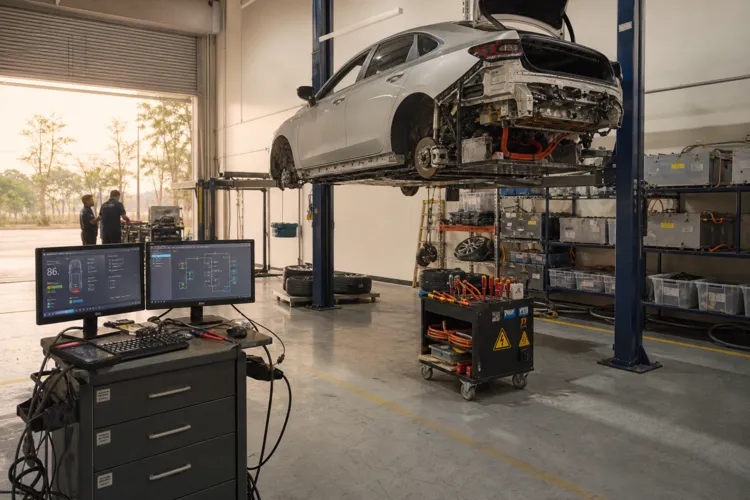
End-use demand signals remain supportive, especially in transport and construction. Thailand’s well-established automotive ecosystem, often described as export-oriented, uses aluminum in vehicle bodies, engine parts, wheels, and EV components because of its lightweight and high-strength properties. Government incentives under the EV 3.0 policy are cited as supporting investment in aluminum processing and downstream industries as the country shifts toward electric mobility and hybrid production. In the wider South-Eastern Asia market context, IndexBox notes that transportation is the primary end-user, strengthened by the expanding EV supply chain where aluminum is used in battery enclosures, body-in-white structures, and thermal management systems.
Construction is a second demand pillar and is directly tied to Thailand’s infrastructure and urban development pipeline. Ongoing expansion in railways, airports, highways, and urban housing is described as a significant contributor to aluminum consumption, with applications including window frames, roofing, facades, bridges, and other structural components. Government-backed initiatives such as the Eastern Economic Corridor (EEC) and smart city projects are also cited as drivers of demand across public and private investment. Regionally, IndexBox similarly frames construction and building as a major consumer of alloys for windows, facades, and structural components across major ASEAN economies.
For competitiveness, the Thailand aluminium industry is also leaning into sustainability-linked levers that can matter in a tightening regulatory environment focused on carbon intensity and circular-economy principles. One Thailand-focused market report highlights sustainability efforts such as recycling and secondary aluminum production gaining traction, alongside technological advances in lightweight and high-performance products. Company strategy is described in terms of capacity expansion, innovation, and strategic collaborations. On the market landscape, leading players named in Thailand include Alucon Public Company Limited, UACJ Extrusion (Thailand) / UACJ Corporation (Rayong Works), Thai Beverage Can Limited (TBC), Standard Can Public Co., Ltd., Bangkok Can Manufacturing Co., Ltd. (BCM), Thai Metal Aluminium Co., Ltd., and United Aluminium Industry Co., Ltd.
How fast is Thailand’s aluminum market projected to grow through 2030?
What volume growth is expected in Thailand’s aluminum market?
Why does import reliance matter for Thailand’s aluminum supply chain?
Which sectors are driving demand in the Thailand aluminium industry?