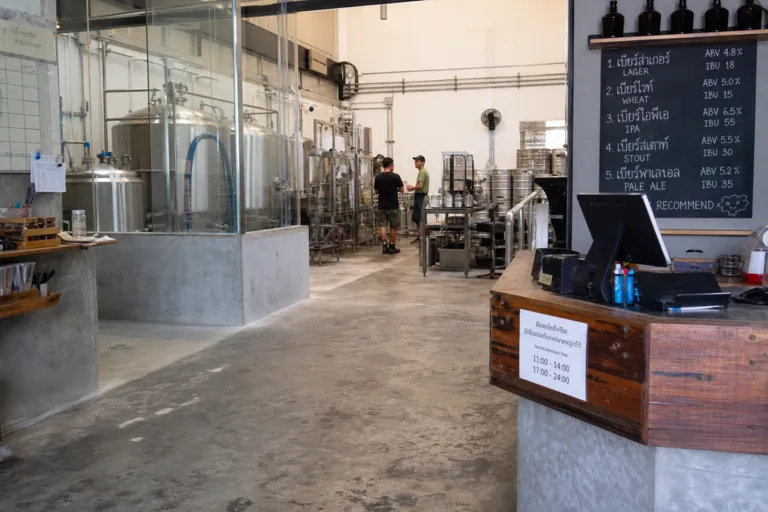
Thailand has finally abandoned its 54-year-old afternoon alcohol sales ban, ending a restriction that was introduced in 1972 to deter civil servants from drinking on the job. The change took effect on a Friday, with permitted sales hours described as 11:00–14:00 and 17:00–midnight, alongside a set of exceptions that allow alcohol sales outside normal hours in specific locations such as international airports, licensed entertainment venues, and hotels. Alcohol sales are also allowed in designated areas at venues hosting meetings, exhibitions, trade fairs, and entertainment events, and in certain authorized zones referenced by royal decree. For operators, the Craft Beer Trade Association said lifting the ban restores a sense of normality and provides greater flexibility in managing business hours.
The policy shift follows a test period before becoming permanent. Authorities conducted a trial easing of the afternoon restriction for 180 days, running from December 2025 to May 2026. Trade commentary suggested the first days after removal brought noticeable customer traffic at Makro Cash and Carry, described as a large-scale wholesale retailer with more than 100 stores nationwide. But the bounce was not uniform. One industry voice cited Q-Galleria shops recording around 1% growth in December and January, and also pointed to a challenging year in a restaurant market described as saturated. That uneven early picture matters for craft producers, whose volumes often depend on restaurant and bar rotations as well as retail shelves.
Why Liberalization Matters in a Market Still Dominated by Big Brewers
Even with loosening rules, Thailand’s beer landscape remains concentrated. Beer in Thailand is described as primarily pale lagers produced by major breweries Boon Rawd and Thai Beverage, with Singha, Leo, and Chang accounting for over 90% of sales volume. The sector is also characterized by large scale: annual volumes are described as surpassing 2 billion liters, representing more than 70% of alcoholic beverage consumption by volume. Historically, strict licensing under the 1950 Alcoholic Beverage Control Act mandated minimum annual outputs of 100,000 to 1 million liters and capital investments of at least 10 million baht, conditions that effectively barred small-scale operations and preserved an oligopoly.
Reforms in 2022–2025 are described as lowering thresholds and permitting direct keg sales, helping spur growth from urban microbreweries targeting premium consumers. This domestic momentum sits within broader regional and global dynamics. In the global beer market, Mordor Intelligence valued total market size at USD 0.81 trillion in 2025 and estimated growth from USD 0.85 trillion in 2026 to USD 1.09 trillion by 2031, a 5.16% CAGR. Asia-Pacific accounted for 30.12% of global revenue in 2025 and is cited as the fastest-growing region at a 5.40% CAGR. These figures are not Thailand-specific, but they provide context for why breweries and retailers may pay more attention to new on-trade and off-trade opportunities as rules evolve.
Within Thailand, one market outlook expects continued expansion in beer overall, noting that the Thailand beer market size is expected to be valued at US$4.7 billion in 2026 and projected to reach US$6.7 billion by 2033, expanding at a CAGR of 5.3 between 2026 and 2033. The same outlook points to diversification into premium, craft, flavored, low-alcohol, and other differentiated offerings, plus experience-led tactics such as tasting events, specialty venues, collaborations, limited releases, and food-pairing concepts. As the Thailand craft beer industry builds on regulatory changes—both on sales windows and on licensing thresholds—near-term results may vary by channel, but the direction of travel is toward more legal routes to market and more reasons for consumers to trade up.
What changed when Thailand ended the afternoon alcohol sales ban?
How did early trading look after the ban’s removal?
How concentrated is Thailand’s beer market today?
What regulatory barriers historically limited microbreweries in Thailand?
What is driving interest in the Thailand craft beer industry now?