Thailand’s spirits scene is shifting as regulation becomes less restrictive for producers, retailers, and hospitality operators. In 2024, Thailand lifted its mid-day sales bans and relaxed advertising regulations, giving brewers and distillers what one industry report called a long-elusive promotional opportunity. That matters in a category where brand visibility has historically been constrained by marketing limits and excise pressure. It also arrives as officials look to support visitor spending. Another report notes tourism accounts for roughly one-fifth of Thailand’s GDP, and the government has linked rule changes to relief for hospitality operators during peak travel periods.
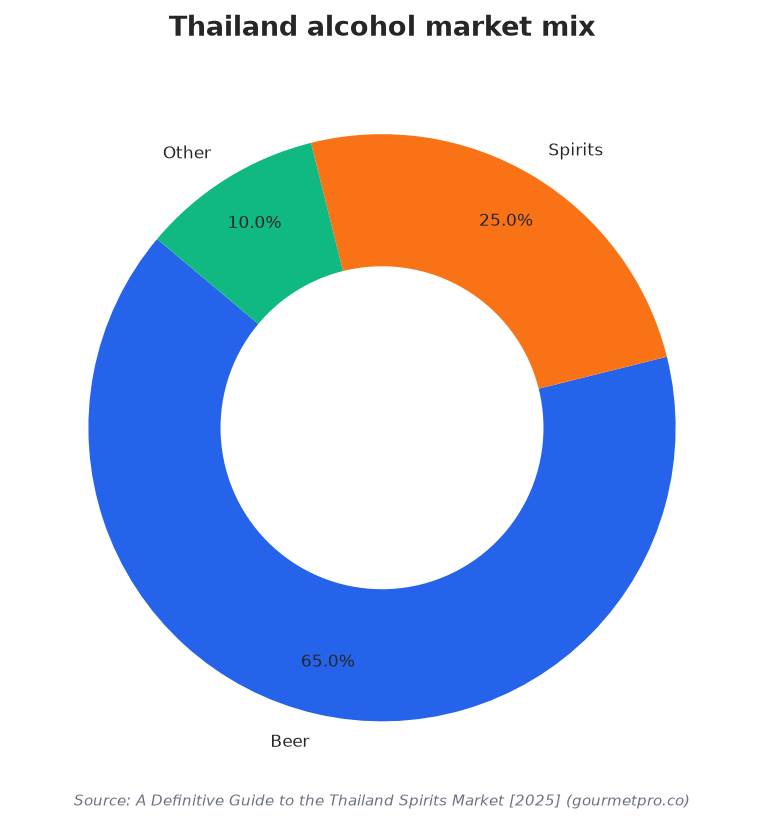
Against that policy backdrop, the Thailand spirits and liquor market remains a major component of the wider alcohol business. One market guide valued Thailand’s spirits market at approximately USD 12.3 billion in 2024, around 25% of the country’s overall alcohol market, while beer was cited at around 65%. The same source split spirits spending into about USD 10.1 billion for at-home consumption and USD 2.1 billion for out-of-home. In 2023, tourism-linked alcohol sales accounted for nearly 20% of the market, reinforcing why rule changes that affect venues, promotions, and visitor experience can ripple through spirits demand.
What Easing Rules Could Mean for Local Distillers and Premium Growth
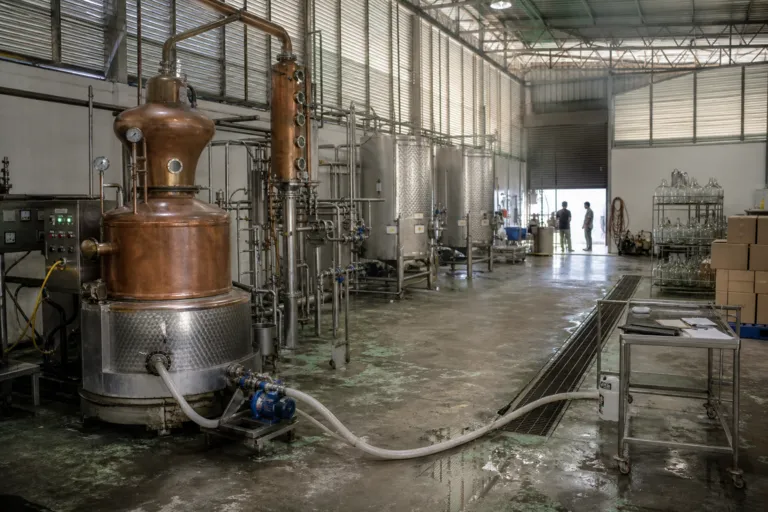
Local production already anchors supply, which is why a more open operating environment can be meaningful for small and craft players. A Thailand beverage statistics report said local distilleries produced 70% of spirits consumed, totaling 175 million liters in 2023. Category-level volumes show where incumbents and challengers compete. The same dataset cited SangSom rum sales volume of 85 million liters in 2023 and described this as 35% of the spirits market, while white spirits (mekhong-style) sales were 90 million liters. It also reported gin consumption rose 18% to 20 million liters in 2023, signaling demand that can support premium pricing and new product launches.
Whisky sits at the center of the competitive picture. An IndexBox report projected Thailand’s whisky market to grow 5–7% annually through 2035, with domestic production estimated at 70–80% of supply volume and imports at 20–30% of volume. It also said the premium and super-premium segment represents 15–25% of market value and is expanding 8–12% annually. Another data report put whisky imports at USD 200 million and 50 million liters in 2023, illustrating how imports can be smaller in volume but still carry high value. Within imported spirits, one Thailand beverage compilation stated Diageo’s Johnnie Walker remains the number one imported spirit by value in Thailand.
Even with easing rules, constraints still shape strategy. The whisky market report described effective excise tax rates of 20–40% on spirits, which can inflate retail prices and widen the affordability gap between domestic and imported bottles. It also noted advertising bans and restrictive marketing regulations that limit brand-building, pushing suppliers toward trade promotions, on-premise activations, and word-of-mouth. Still, the direction is toward reopening: separate reporting described a period when consumption was banned from midnight to 11 a.m. and again from 2 p.m. to 5 p.m., before Thailand walked back parts of tightened regulations after backlash. For local distillers, that combination of demand signals, large domestic supply share, and gradually more flexible rules could translate into more routes to market and stronger premium storytelling over the next few years.
How big is Thailand’s spirits market in recent estimates?
What rule changes improved promotion and sales flexibility for spirits brands?
How much of spirits consumption is supplied by local distilleries?
What is the outlook for whisky and premiumization in Thailand?
What are the main forces reshaping the Thailand spirits and liquor market right now?