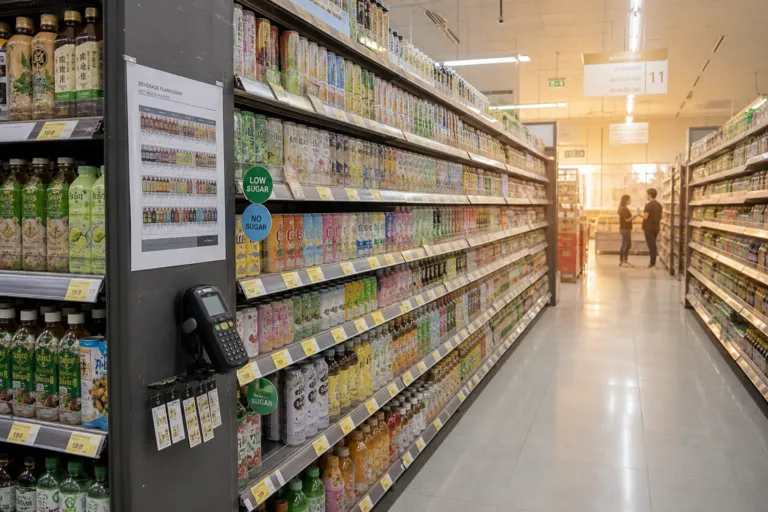
In Thailand, tea consumption sits between mass convenience and premiumisation, and the gap between the two is widening. The country’s hot climate pushes iced formats to outperform hot tea, and “Thai style” is typically strongly brewed and heavily sweetened. That context matters because it explains why reduced-sugar and sugar-free RTD options are becoming a visible point of competition. In the Thailand ready-to-drink tea market, growth is increasingly tied to how brands modernize familiar flavor cues while dialing back sugar and upgrading format choices such as convenient packaging and on-the-go availability.
Modern retail is amplifying that shift. In Thailand, 7-Eleven (operated by Charoen Pokphand Group) introduced ambient and chilled tea sections in 2024 and increased category facings by 30%, while also driving sales with promotional collaborations that included local tea brands such as Oishi. This kind of store-level execution creates room for more SKUs, including lighter, better-for-you variants. It also aligns with wider beverage-market dynamics: Thailand’s beverage market was estimated at US$4.4 billion in 2022 and projected to reach US$6.74 billion by 2025, highlighting the commercial incentives for brands to compete aggressively for shelf presence.
Low-Sugar Formats and Diversification Move From Optional to Central
Health and wellness positioning is becoming more explicit in Thailand’s beverage innovation playbook. One local market view highlights low or no sugar beverages and “healthy tea beverages” such as kombucha and yerba mate as emerging trends to watch, signaling that tea brands cannot rely on sweetness alone to win. Global RTD tea analysis reinforces the same direction: pressure from health regulators and consumer preference is limiting growth in sweetened tea segments, pushing reformulation investment into reduced-sugar and zero-sugar variants. At the same time, premiumisation is arriving through cold-brew, organic, and functional formulations that help brands differentiate beyond commodity iced tea positioning.
Diversification is not only about taste. It is also about credibility, packaging, and shopper expectations. A Mintel insight notes that in Thailand, a quarter of consumers are willing to pay more for tea packaged in plastic-free bags. While that point references tea packaging generally, it signals a broader readiness to reward brands that act on sustainability cues, which can spill over into RTD brand strategy and retailer negotiations on format requirements. On the product side, global tea reporting describes brands expanding into fruit-infused teas, herbal blends, specialty cold brews, and functional beverage positioning, all of which increases the number of “reasons to buy” beyond refreshment alone.
Thailand’s tea economy also shows how varied the opportunity set can be when brands widen their portfolios. One market analysis reports that bubble tea is purchased by 94% of Thais aged 20–29 every quarter, underscoring the power of youth demand and frequent purchase behavior around tea-led beverages. The same source cites premium organic tea reaching ฿200 price points in Bangkok boutiques and notes US$19.7 million in annual export revenue flowing to ASEAN markets. For RTD players, these signals matter because they point to a market where mainstream accessibility, premium cues, and cross-border brand building can coexist—especially when low-sugar formats and smarter differentiation help close the distance between mass and premium segments.
What is driving change in Thailand’s ready-to-drink tea market?
Which retail move expanded RTD tea visibility in Thailand?
What evidence suggests strong tea-led beverage demand among young Thais?
Are Thai consumers signaling interest in more sustainable tea packaging?
How does premiumisation show up in Thailand’s tea scene?