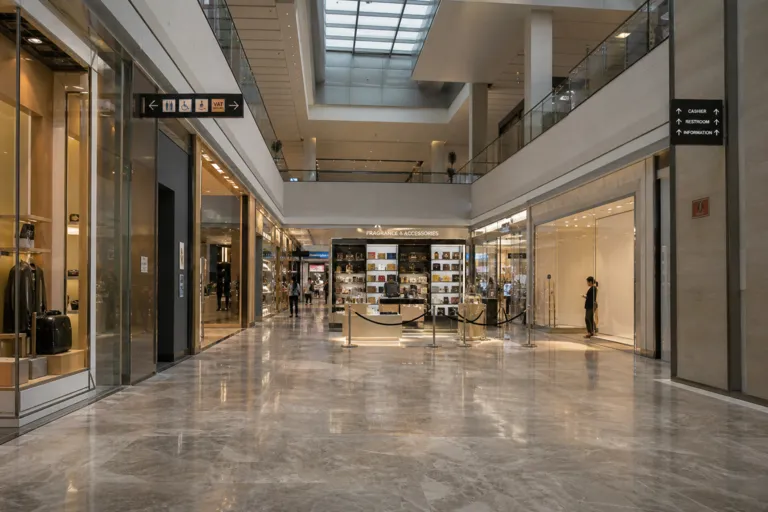
Thailand’s luxury scene is expanding, but the sources describe a clear adjustment in where demand comes from. Mordor Intelligence estimates the country’s luxury goods market at USD 2.72 billion in 2026, up from USD 2.55 billion in 2025, and projects it to reach USD 3.74 billion by 2031 at a 6.6% CAGR. That growth is supported by recovery in inbound tourism, rising disposable incomes among Gen-Z, and ongoing investment in flagship malls, alongside the launch of a long-stay visa program. At the same time, volume growth faces constraints, including counterfeit proliferation and a “subdued demand from Chinese group tours,” which pushes retailers to build more durable domestic demand rather than leaning on tour-driven bursts.
The broader retail backdrop shows why luxury operators still care about visitor flows, even as they diversify beyond tourists. Mordor Intelligence reports tourist arrivals rose past 35 million in 2024, restoring footfall across flagship malls and duty-free stores. The same source says average international trip expenditure climbed to THB 50,900 (USD 1,450). Yet spending patterns within travel retail are changing due to policy and pricing convergence. In the travel retail channel, Central Thailand—anchored by Bangkok’s dual-airport system—held a 60.25% share in 2025, while operators leaned into exclusivity, limited releases, and concierge service as domestic prices moved closer to duty-free levels.
Local Wealth and Long-Stay Residents Become the Stabilizer
As travel retail dynamics shift, brands are leaning harder on consumers who buy repeatedly in-country. Chiang Rai Times describes an “Expat Economy,” stating foreign consumers are spending 1.5 times more than local Thai buyers, and that retailers are benefiting from long-term international residents rather than relying solely on short-term tourists seeking quick souvenirs. The same source highlights “Frequent Visitors,” described as wealthy individuals who do not live in Thailand full-time but typically spend at least three months a year in the country. Together, these segments can smooth seasonality and support premium categories that rely on trust, service, and return visits.
Domestic momentum is also being shaped by younger affluent shoppers and category mix. Mordor Intelligence cites Thailand Board of Investment data showing people aged 15–24 made up 12.24% of the nation’s population in 2024, and notes that Gen-Z preferences are reshaping luxury toward experiential and digital-first engagement. It also cites a Bangkok Post figure that Gen-Z discretionary spending on experiences rose to 56% in 2024 from 45% in 2023. In market structure, clothing and apparel led with a 26.73% share in 2025, women generated 57.32% of 2025 revenue, and men are forecast as the fastest-growing end-user segment at a 7.32% CAGR to 2031.
Retailers are responding with formats and compliance strategies designed to hold demand even when tourist mixes change. Single-brand stores accounted for 35.35% of 2025 sales, but multi-brand stores are forecast to grow faster at a 7.86% CAGR through 2031, aligning with curation-led discovery. In travel retail, key policy drivers cited by Mordor include a mutual visa-free regime with China, the August 2024 closure of inbound duty-free, and the January 2026 end of low-value duty exemptions—factors that can reshape where purchases occur and how pricing is perceived. Across channels, sources point to omnichannel shopping, influencer-led promotion, and experience-focused retail concepts, as Thailand’s luxury ecosystem tilts toward resilient local and resident spending while continuing to capture high-intent visitors.
How large is Thailand’s luxury goods market, according to Mordor Intelligence?
What tourism figures are supporting luxury footfall in Thailand?
Which part of Thailand leads the travel retail market?
What is the “Expat Economy” described in the sources?
What are the key forces shaping the Thailand luxury retail market as tourist spending shifts?