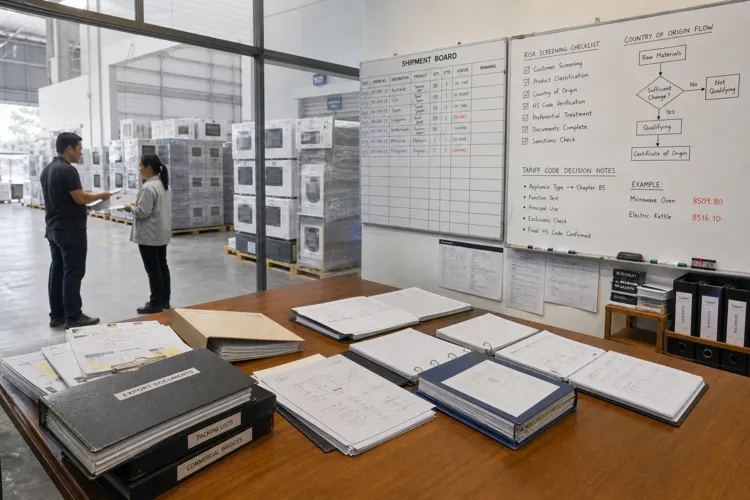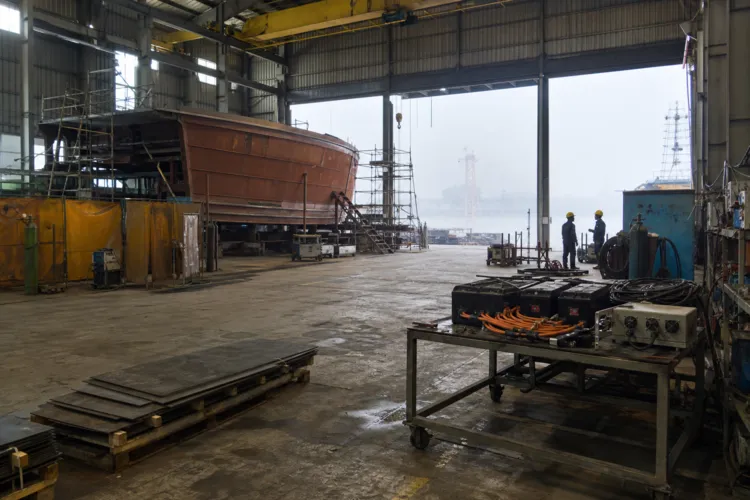
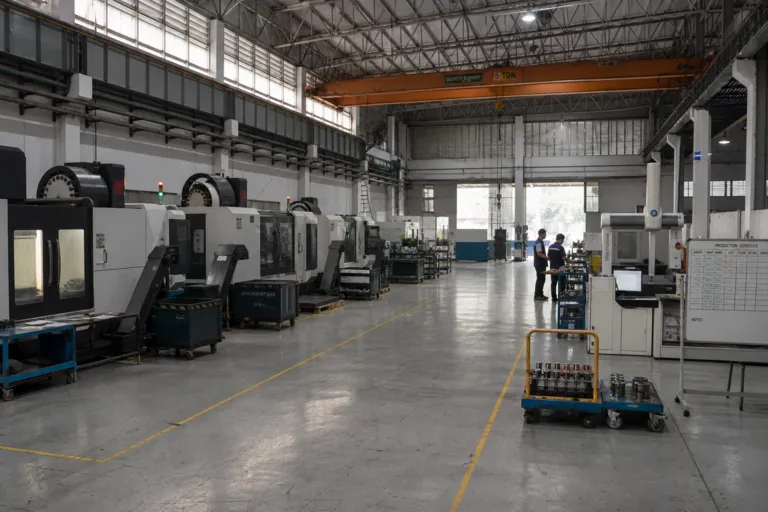
Thailand’s manufacturing base is a major driver of factory investment, and it sets the backdrop for modernization in equipment, automation, and machine tools. Manufacturing accounts for approximately 25% of Thailand’s GDP and employs close to 10% of the workforce, spanning automotive, electronics, food processing, petrochemicals, and medical devices. Thailand’s main export industries by value include electronics and electrical equipment, motor vehicles and automotive parts, and processed foods, together forming the majority of annual merchandise export revenue of over USD 280 billion. This production footprint creates steady demand for industrial equipment upgrades, especially as companies pursue digital transformation and smarter production methods.
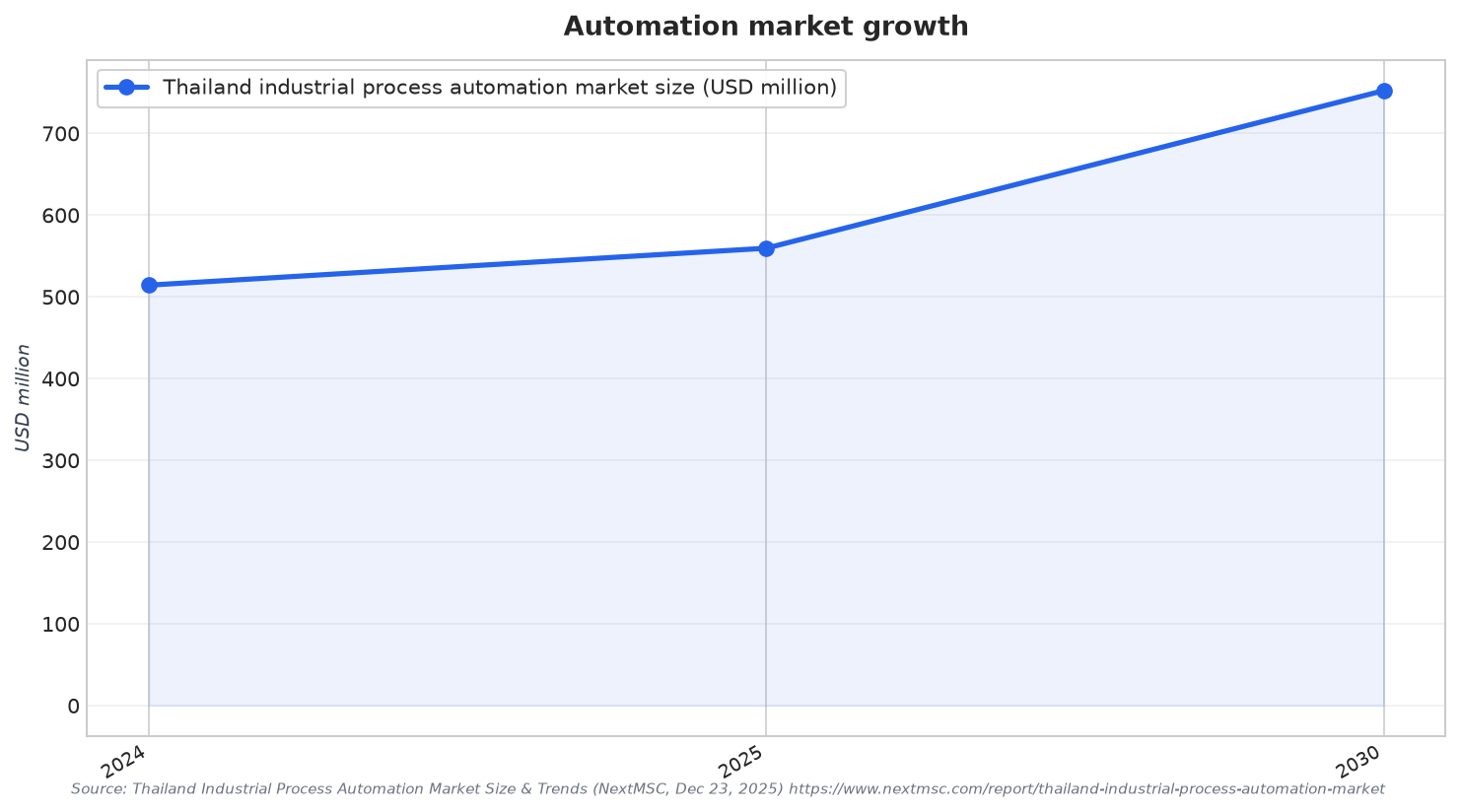
In this context, the Thailand industrial machinery market is increasingly influenced by smart manufacturing priorities and the connected technologies associated with Industry 4.0. Thailand’s industrial process automation market was valued at USD 514.4 million in 2024 and is projected to reach USD 559.6 million by 2025. It is expected to continue growing to USD 752.4 million by 2030, at a CAGR of 6.54% from 2025 to 2030. Sources link this momentum to the expansion of smart manufacturing and to automation needs in automotive production, where automation supports assembly, quality control, and material handling to improve efficiency, precision, and scalability. At the same time, high upfront costs for equipment and integration can slow adoption among SMEs.
Machine Tools and Trade: Import Dependence Meets High-Value Exports
Machine tools are another window into how Thai factories are modernizing, particularly in the category of machine-tools for working any material by removal of material. Thailand’s market is described as significantly import-dependent, with China as the dominant supplier. In value terms, China accounted for 54% of Thailand’s imports, while Japan and Germany followed at 12% each. Exports are more diversified on the customer side: the United States, India, and the Netherlands together represented 55% of Thailand’s total export value, with Japan, South Korea, China, Italy, and Hong Kong SAR contributing a further 32%. The price gap is notable. In 2024, the average export price was $1.4 million per unit, up 122% year over year, while the average import price was $96 thousand per unit, a 6.1% increase.
Regional and global positioning also matters for procurement strategies. In the Asia-Pacific machine tools landscape, Thailand’s machine tools market is described as holding a 1.0% share in APAC, while the broader APAC market is projected to grow from USD 28.97 billion in 2024 to USD 44.98 billion by 2035, at a CAGR of 4.08% during 2025–2035. Globally, consumption of machine-tools for removing material is led by India at 24% of total volume, and production is dominated by China at approximately 65% of total output. These surrounding dynamics help explain why Thailand continues to rely heavily on imported machinery, even as it ships select, higher-value units abroad.
Thailand’s Industry 4.0 push is also shaping the tools and systems factories prioritize. One source notes that Thailand’s Industry Ministry aims to become a global leader in robotic and automation technology by 2026 to enhance production systems, aligning with demand for more interconnected control systems. In January 2025, Dobot Robotics expanded in the region by opening a branch in Thailand, aiming to strengthen local manufacturing capabilities with collaborative robots. Reports on Southeast Asia highlight growth drivers such as widespread Industry 4.0 adoption, CNC system integration, and demand from automotive, aerospace, and electronics, which increasingly require accuracy and automation. Together, these signals point to a factory modernization cycle where automation software, robotics, and advanced machine tools move in tandem.
What is driving factory modernization in Thailand’s industrial machinery landscape?
How fast is Thailand’s industrial process automation market growing?
Where does Thailand source most of its removal-of-material machine-tool imports?
Why do export and import prices for Thailand’s machine tools look so different?
What should buyers watch in the Thailand industrial machinery market as Industry 4.0 expands?