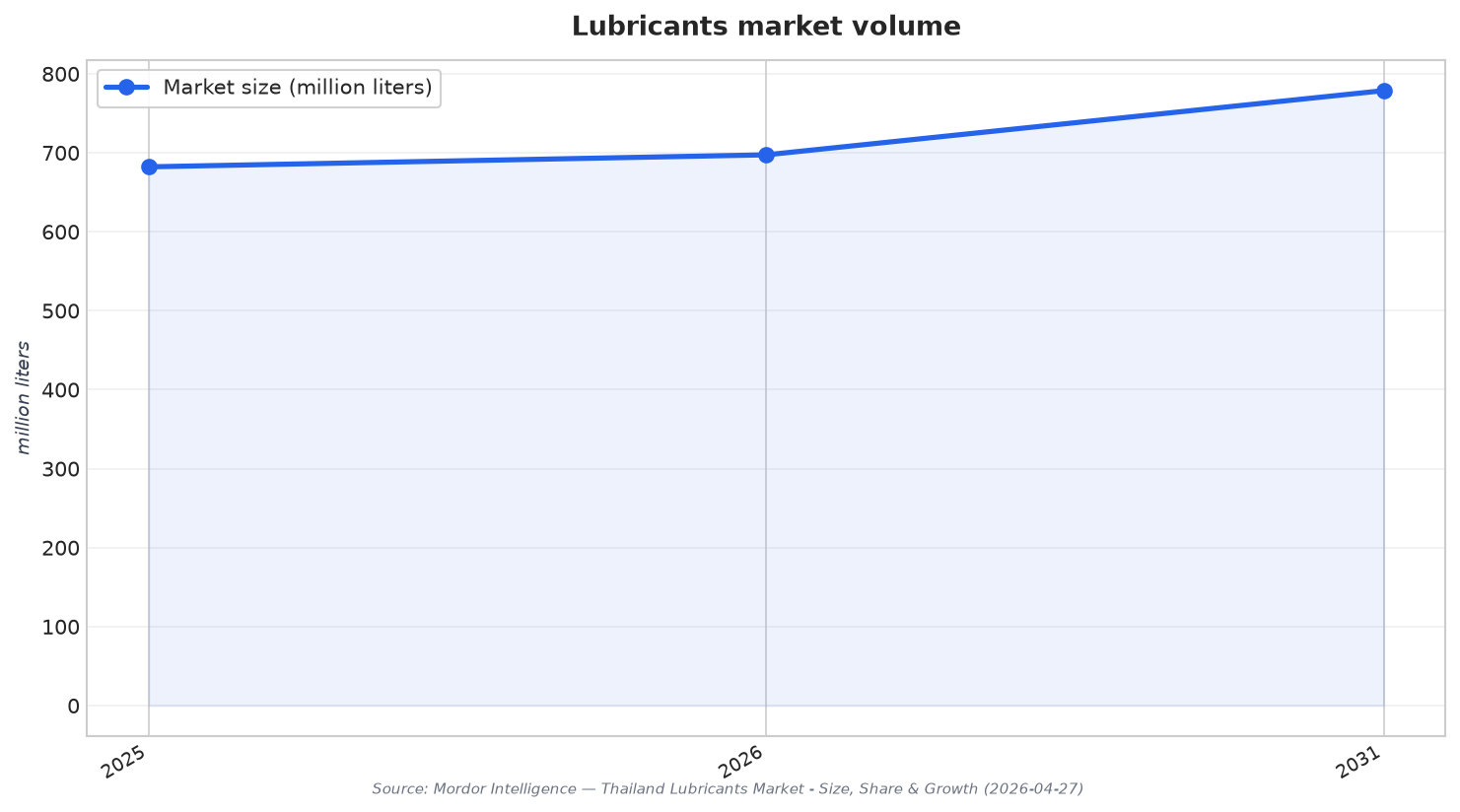
Thailand’s broader lubricants market is forecast by Mordor Intelligence to rise from 682.21 million liters in 2025 to 697.42 million liters in 2026, reaching 778.73 million liters by 2031 (2.23% CAGR over 2026–2031). Within this, automotive remains the largest end-user, accounting for 70.13% of market share in 2025. But long-term demand is being reshaped by electrification and regulation. The government’s 30@30 roadmap and tightening product specifications under Euro 5 are pushing a quality shift away from mainstream mineral oils toward more specialized synthetic formulations, even as total volume edges upward.
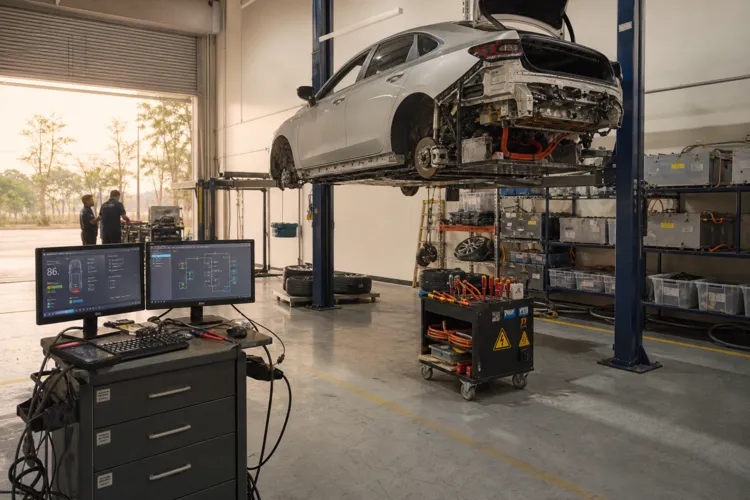
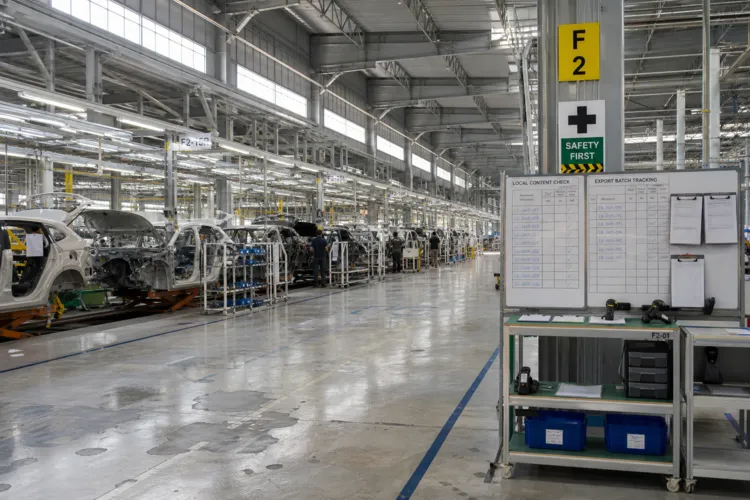
EV adoption is already changing what gets sold, not just how much. Registrations of battery electric cars grew fivefold between 2022 and 2024, reaching 9% of all new light-duty vehicles, supported by subsidies of THB 50,000–100,000 per unit. EVs remove demand for crankcase oils and can reduce automatic transmission-fluid volumes, shrinking the traditional automotive core. At the same time, Thailand’s role as a regional vehicle production and distribution base helps keep a demand floor under lubricants. Automotive output stabilized at 1.50 million vehicles in 2025, and motorcycle production was projected at 2.10 million units, supporting ongoing consumption even as lubricant intensity per vehicle declines.
How Suppliers Are Rebalancing Portfolios Toward Synthetics and Specialty Fluids
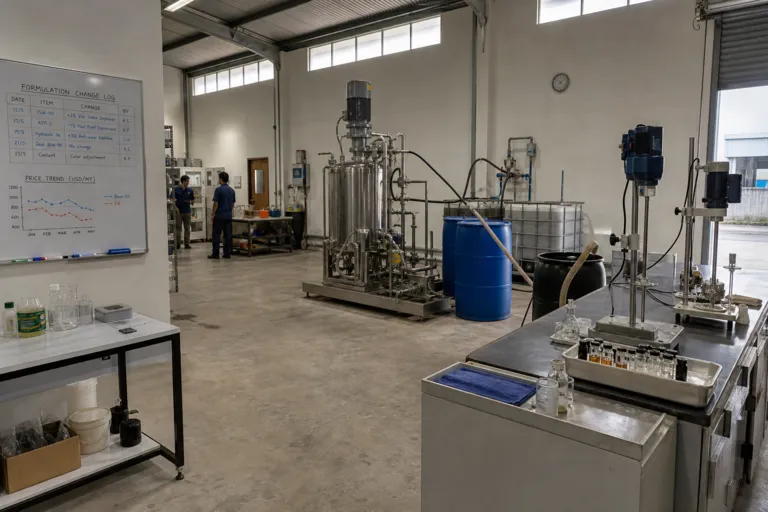
Euro 5 diesel quality standards and fleet economics are accelerating synthetic adoption. Mineral oil-based lubricants still made up 69.66% of Thailand’s lubricants market in 2025, but synthetic lubricants are forecast to grow at a 2.93% CAGR from 2026 to 2031. Commercial fleets are migrating to low-SAPS synthetics, and named products such as Shell’s Rimula R6 LM and Chevron’s Delo 600 ADF are positioned to extend drain intervals to 40,000 km. These shifts change the base-oil and additive demand profile. In automotive lubricants specifically, engine oil held 57.45% share in 2025, while automatic transmission fluids are projected to rise fastest at a 2.05% CAGR (2026–2031).
Outside passenger cars, industrial and logistics drivers are taking a bigger role in Thailand’s lubricant story. The industrial sector is the fastest-growing end-user segment, forecast at a 3.12% CAGR through 2031, while greases are advancing at 3.22% CAGR. Mordor Intelligence also cites ongoing data center construction valued at above USD 7 billion as a factor supporting demand for specialty cooling fluids and high-performance industrial oils. Logistics remains a key outlet too, with online retail penetration exceeding 18% of total retail sales in 2024, prompting fleet additions among parcel carriers and third-party logistics firms. As utilization rises, operators increasingly specify tighter viscosity tolerances that favor semi-synthetic and full-synthetic blends.
For blenders and base-oil buyers, the transition is happening under margin pressure. Mordor Intelligence notes that base-oil price swings and foreign-exchange shifts add raw-material risk, pushing smaller players toward consolidation or partnership strategies to secure scale. Competition also includes enforcement against counterfeit products and differentiation through OEM-approved formulations and extended-drain technologies. One example of scale on the supply side is PTT Lubricants, which recorded capacity utilization of over 260 million liters in 2025, supported by procurement from hauling companies linked to e-commerce networks. Taken together, the Thailand lubricants industry is adapting to EV-led demand erosion in legacy oils by prioritizing higher-spec, higher-value fluids.
How fast is Thailand’s lubricants market expected to grow in volume?
What share of Thailand’s lubricants demand comes from automotive uses?
How is EV adoption affecting demand for traditional engine oils in Thailand?
Which product categories are shifting fastest in Thailand’s lubricants mix?
What is reshaping the Thailand lubricants industry’s base-oil and formulation strategy?