

Thailand’s dietary supplement sector is being pulled forward by a clear shift in consumer intent: prevention first, treatment second. Ken Research estimates the Thailand Nutritional & Dietary Supplements Market at USD 4.1 billion based on a five-year historical analysis, and links growth to increasing health consciousness, rising disposable incomes, and an aging population seeking preventive healthcare solutions. The same research also highlights a spending shift, noting that an estimated 20% of households now spend more than THB 3,150 per month on health-related products. In urban areas, premiumization is also visible, with a reported 25% rise in sales of premium health products. Together, these signals point to a market where shoppers are buying supplements as part of routine health management, not only for occasional needs.
Product demand is broad, but several categories repeatedly surface as core to the Thailand dietary supplement market story. Ken Research segments nutritional and dietary supplements into vitamins, minerals, herbal supplements, protein supplements, omega fatty acids, probiotics, functional foods and beverages, sports nutrition, and others, and says vitamins and herbal supplements are particularly popular due to perceived benefits and natural origins. In a separate Ken Research view of nutraceuticals and dietary supplements, the market is valued at USD 1.5 billion and is similarly described as driven by health awareness, an aging population, and a preventive healthcare trend. It also notes that key cities including Bangkok, Chiang Mai, and Pattaya dominate because of dense populations, urban lifestyles, and easier access via health food stores, pharmacies, and online retail platforms.
Preventive Health and Aging Are Reshaping What Sells
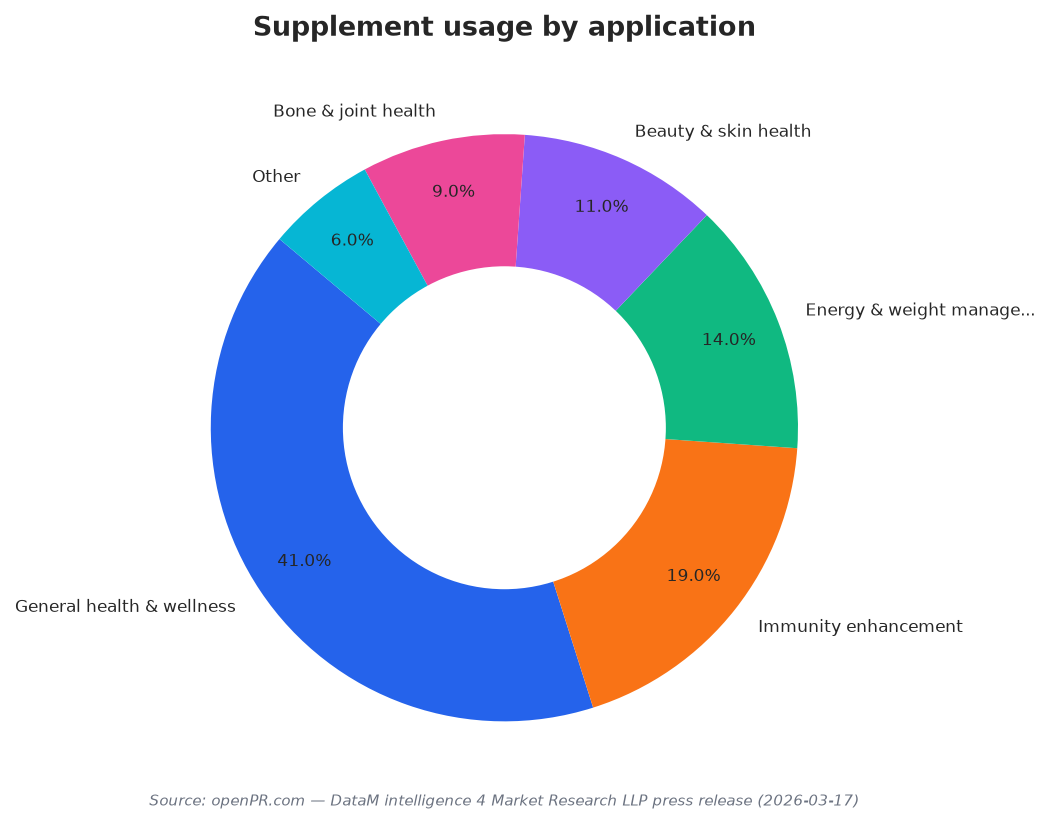
Preventive health is not just a narrative theme; it appears in how the market breaks down by usage and age group. A press release published on openPR.com attributes a 41% share to general health and wellness applications, followed by immunity enhancement at 19%. It adds energy and weight management at 14%, beauty and skin health at 11%, bone and joint health at 9%, and other applications at 6%. The same source says adults account for the largest age-group share at 52%, linking this to urban lifestyles, stress, and growing health consciousness. Aging dynamics reinforce the preventive angle as well. Ken Research reports that the proportion of individuals aged 60 and above is expected to reach 18% of the total population in one outlook, while another states it is expected to rise to 20% in the future, supporting demand for supplements positioned around daily maintenance and age-related needs.
Economic and information factors are also pushing consumers into the category, especially vitamins. Market Research Future states that increasing disposable income makes Thai consumers more inclined to invest in health-related products such as vitamins and supplements, and its market analysis suggests the vitamins market could see a revenue increase of up to 15% in the coming years. It also forecasts that the preventive healthcare focus could lead to a growth rate of around 12% in the vitamins sector over the next few years, while increased nutritional awareness is projected to support a CAGR of approximately 8% over the next five years. Alongside demand drivers, oversight is tightening. Ken Research notes that in 2023 the Thai government implemented FDA regulations requiring nutraceutical products to undergo safety and efficacy assessments before market entry, aiming to improve consumer safety and product quality and strengthen trust.
Distribution and competition are evolving as brands respond to these demand signals. Ken Research describes a mix of regional and international participants, listing companies such as Herbalife Nutrition Ltd., Amway Corporation, Blackmores Limited, GNC Holdings, Inc., and others as contributors to innovation and expansion. The openPR.com press release adds a deal-driven angle, stating that Amway enhanced its footprint in Southeast Asia, including Thailand, by acquiring select regional distribution assets in April 2025. It frames the move as improving last-mile connectivity and access to dietary supplements in line with rising demand for personalized nutrition solutions in urban Thai populations. Taken together, the direction is clear: prevention-led routines, aging-related needs, and wider access are reinforcing a market where trust, reach, and targeted formulations increasingly shape growth.
What is the estimated size of Thailand’s nutritional and dietary supplements market?
Which supplement applications lead usage in Thailand?
How is Thailand’s aging population influencing supplement demand?
What regulations affect nutraceutical products entering the Thai market?
What is driving the Thailand dietary supplement market toward preventive health purchases?