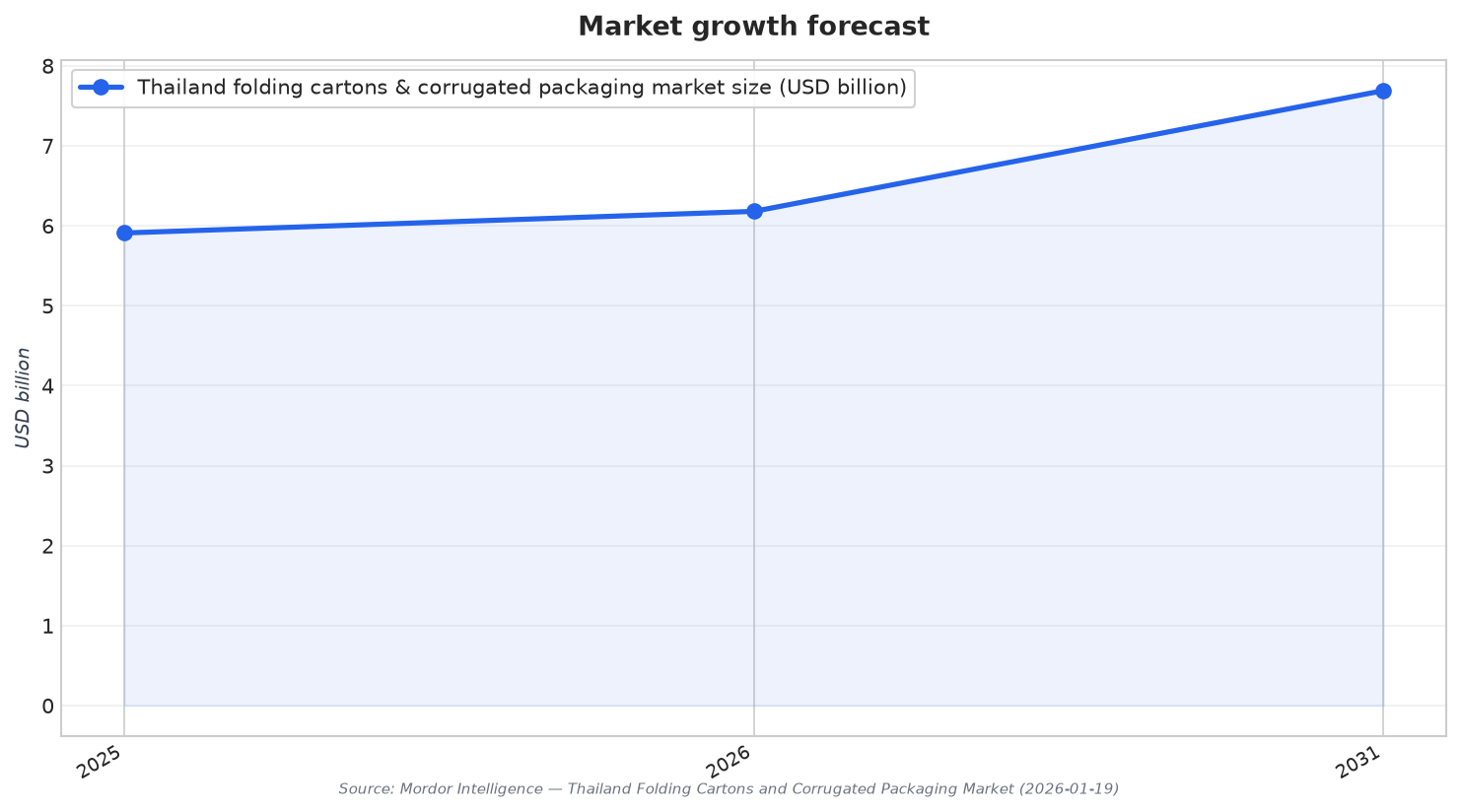
Thailand’s corrugated box value chain is being reshaped by the same force reshaping retail: delivery. Research from Mordor Intelligence links growth in Thailand’s folding cartons and corrugated packaging market to rising e-commerce volumes, manufacturing relocations from China, and incentives that reward circular packaging, even as volatile recycled paper prices pressure margins. In value terms, that folding cartons and corrugated segment was valued at USD 5.91 billion in 2025, with an estimate of USD 6.18 billion in 2026 and a forecast to USD 7.69 billion by 2031 (4.49% CAGR for 2026–2031). Within the segment, corrugated boxes held 54.47% of 2025 value, underscoring their central role in transport protection and fulfillment.
E-commerce logistics is also changing what “good” corrugated packaging looks like. Mordor Intelligence describes an online fulfillment surge that is pushing demand for right-sized corrugated mailers that can withstand high parcel-handling cycles. Logistics operators are investing in automated box-forming lines that customize dimensions on the fly, which supports lower damage rates and more efficient cube utilization. Cold-chain parcels for fresh groceries add another requirement: moisture resistance. That lifts uptake of poly-coated liners and triple-wall board, and the same report forecasts triple-wall configurations as the fastest-rising board type at a 5.63% CAGR from 2026 to 2031. In the broader Thailand packaging market, Mordor Intelligence also notes daily parcel volumes topping 7 million, reinforcing how delivery intensity is becoming a design constraint for shippers and outer packs.
Sustainable Fiber Moves From Preference to Procurement
Procurement signals are increasingly aligned with fiber-based sustainability narratives. In the folding cartons and corrugated segment, recycled fiber led materials with a 47.86% share in 2025, according to Mordor Intelligence. The same analysis points to bamboo and agro-residue fiber blends as a growth pocket, projected at a 6.01% CAGR through 2031, tying product development to Thailand’s Bio-Circular-Green (BCG) agenda. Buyers also favor paper over plastic for curbside recyclability, and the report notes this preference is pushing converters to certify under Forest Stewardship Council (FSC) schemes. In parallel, the Thailand packaging market report says converters are redesigning portfolios to meet a draft Packaging Act’s anticipated extended producer responsibility targets, which favor lighter, mono-material structures over heavy, rigid formats—an echo of the same “lightweighting plus circularity” logic seen in transport packaging decisions.
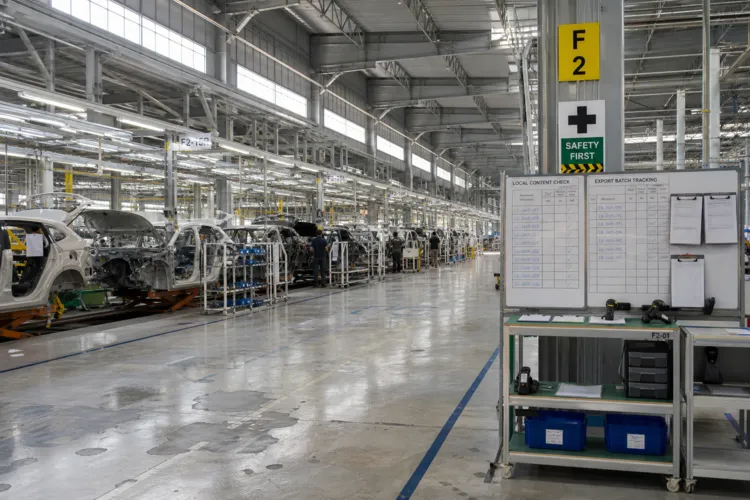
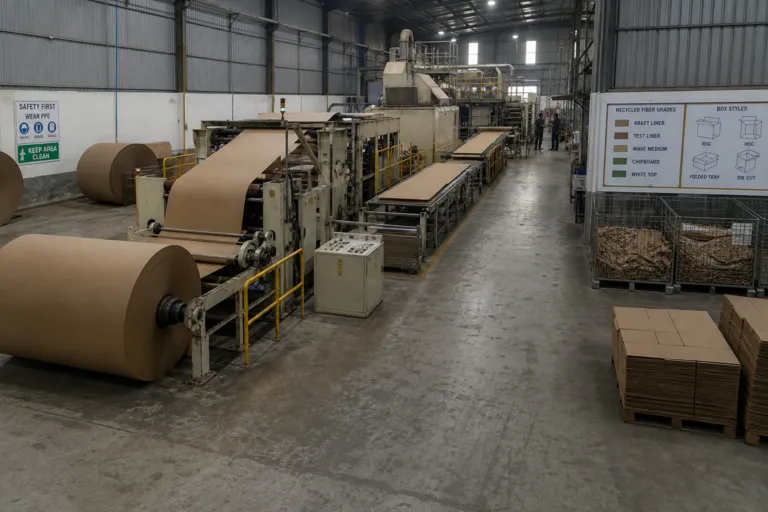
Investment tailwinds are feeding capacity and capability upgrades. Mordor Intelligence reports capital inflows approved by Thailand’s Board of Investment worth THB 721 billion (USD 20.6 billion) in 2024, channeling spending into food processing and automation, with knock-on demand for packaging lines. Food exports add another steady pull: Thailand shipped USD 32.8 billion worth of food products in 2024, and domestic food factories reached 78% capacity utilization in 2025, both of which sustain orders for corrugated shippers alongside other formats. On the factory floor, the paper packaging market analysis at Data Insights Market highlights a shift toward sustainable materials like recycled paperboard, plus innovative designs focused on reduced material usage and improved recyclability. It also cites a concrete upgrade: in May 2022, J.K. Packaging Group Co. Ltd adopted a complete modern corrugated box production process with production control in every step, aimed at improving efficiency and quality.
Capability differentiation is accelerating as converters chase speed, customization, and consistency. Mordor Intelligence notes digital printing as a fast-growing technology in Thailand’s folding cartons and corrugated segment, projected at a 6.54% CAGR through 2031, while medium-sized producers automate short runs to shrink time-to-market. This matters because e-commerce packaging must often be both functional and brand-forward, and right-sized designs rely on precise and repeatable converting. At the same time, integrated strategies are becoming more valuable. The same report points to vertical integration into recovered fiber and chemical additives as a way to reduce exposure to raw-material volatility and import-tariff swings. Together, these moves show how the Thailand corrugated packaging industry is evolving: more automation for fulfillment demands, more fiber strategy for sustainability goals, and more operational resilience for cost control.
How big is Thailand’s folding cartons and corrugated packaging market?
What share of the market do corrugated boxes hold in Thailand?
Which materials are leading the shift toward sustainable fiber?
What is e-commerce changing in corrugated packaging design?
What’s driving modernization in the Thailand corrugated packaging industry?