
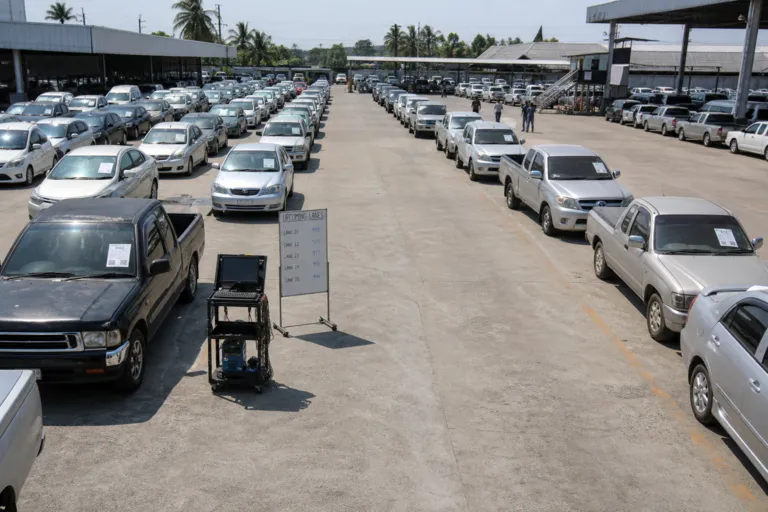
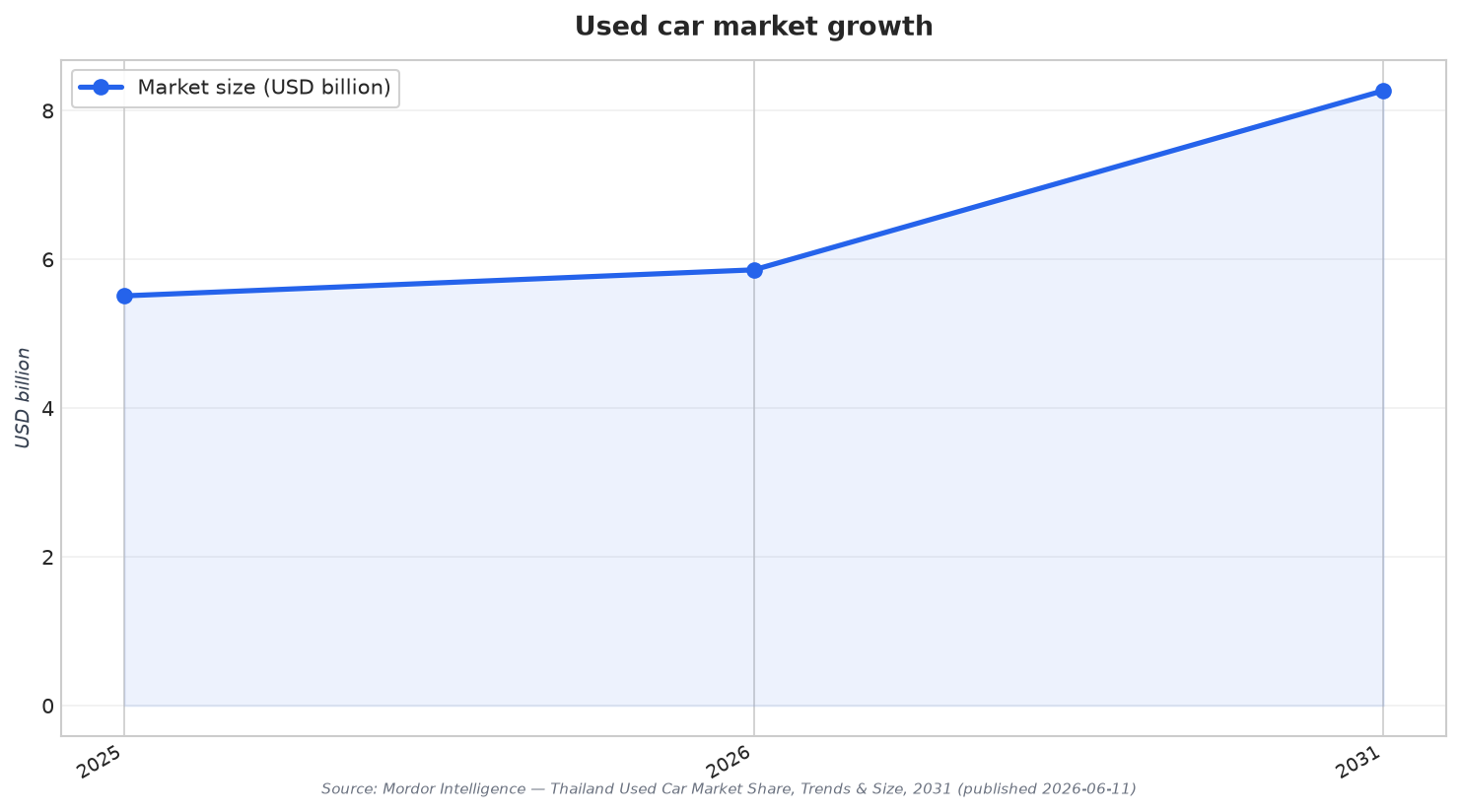
Thailand’s used-car landscape is being reshaped by a new kind of competition: aggressive EV discounting that changes how buyers think about “value.” Mordor Intelligence valued the country’s used-car market at USD 5.51 billion in 2025 and estimated it would grow from USD 5.86 billion in 2026 to USD 8.27 billion by 2031, a 7.13% CAGR for 2026–2031. Yet the near-term mood is cautious. The Bangkok Post reported expectations that used-car sales would remain sluggish in 2026, weighed down by competitive pricing in new cars, particularly EVs, as buyers anticipate further price reductions in brand-new vehicles.
Pressure on resale values is being amplified by an EV pricing battle that is unusually visible to consumers. Global Fleet reported backlash after BYD faced complaints over dealer discounts of as much as 340,000 baht (about USD 10,000) on some models, with buyers saying vehicle values fell shortly after purchase. It added that Chinese brands now account for more than 70% of Thailand’s battery electric vehicle market, and Thailand registered about 70,000 battery electric vehicles last year. In this environment, Krungsri Research said used passenger EVs in Thailand depreciate by around 22.9% after first sale, with values declining faster than internal-combustion equivalents due to intense competition and rapid model turnover.
Why Pricing Shocks Hit Used Values So Quickly
The resale-value debate is also becoming a consumer-protection issue. Eco-Business reported that Thailand ordered nationwide inspections of EV dealers and showrooms, requiring sellers to provide complete and accurate information on vehicle specifications, battery performance, and warranty conditions. It linked the move to rapid market growth and fierce competition, citing International Energy Agency figures that electric car sales in Thailand surged 70% in 2025 to about 140,000 vehicles, accounting for nearly a quarter of all new car sales. A 2025 study by the Thailand Consumer Council warned that sudden price cuts could erode second-hand values and increase financial pressure on existing owners, while Ipsos similarly found concerns over after-sales support and resale value.
At the same time, the structure of the used market explains why the shock can spread beyond EVs. Mordor Intelligence reported that offline transactions accounted for 83.37% of bookings in 2025, and unorganized vendors held a 67.71% share that year, even as organized players expand. It also found demand concentrated in practical categories: SUVs and multi-purpose vehicles led with 37.81% of volume in 2025, and vehicles aged 3–8 years commanded 48.71% of trades. With petrol-powered units capturing a 63.47% share in 2025, most listings still reflect the installed base, but the faster growth of battery-electric units adds a new layer of pricing uncertainty.
Value sensitivity is clearly visible in price bands and financing conditions. Mordor Intelligence said inventory priced below USD 10,000 represented 45.63% of demand in 2025, while the premium tier above USD 20,000 is advancing at a 7.21% CAGR through 2031. The same report noted elevated household debt and significantly high auto-loan rejection rates, with more vehicles facing repossession, shifting preference from new cars to competitively priced pre-owned options. But when new EVs keep getting cheaper, used pricing becomes harder to anchor. Iconicthai warned of further volatility in resale values and cited trust barriers including 6–10 month spare parts wait times and 20–25% insurance premium increases in 2025.
What is weighing on Thailand’s used-car demand in 2026?
How is the EV price war affecting residual values in Thailand?
How large is the Thailand used car market, according to Mordor Intelligence?
What EV market signals are pushing Thailand to tighten scrutiny of sales practices?
Which segments dominate used-car activity in Thailand, based on reported shares?