Developers in Bangkok are tightening the link between building performance and leasing outcomes, and that is reshaping how large projects think about cooling. Research cited by The Nation reports that roughly 80% of new office leasing activity in Bangkok’s central business district over the past five years has gone to ESG-compliant buildings. The same source says green-certified assets can command rental premiums of up to 14% above the market average, and up to 96% of local corporate occupiers say they are targeting fully green-certified portfolios by 2030. In that context, district cooling becomes more than a utility choice. It becomes part of the underwriting for occupancy and long-term asset competitiveness.
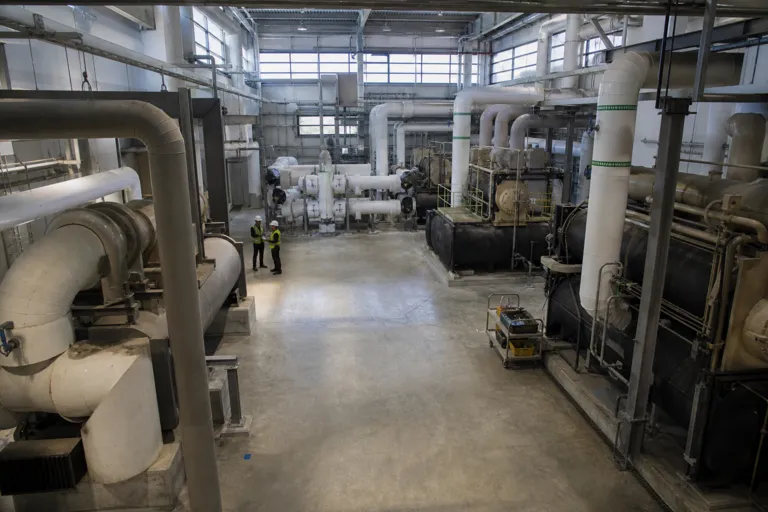
Thailand’s best-known proof point is One Bangkok, where The Nation says FPT invested roughly 3 billion baht in technology, including a centralised district cooling plant built in partnership with Tokyo Gas, Osaka Gas and Mitsubishi Corporation. The system pipes chilled water through a two-kilometre underground loop from a single central plant. The estimate in the same report is a 30–40% cut in air-conditioning energy consumption compared with conventional building-by-building chillers. It also cites annual energy savings of around 17,000 megawatt-hours. These kinds of quantified outcomes help explain why the Thailand district cooling market is gaining visibility alongside the rise of mixed-use, high-density development.
Mixed-Use Scale, Tenders, and Measurable Savings
Market activity is also showing up in project awards. According to Global Market Insights, in September 2023 SP Group, via a joint venture with Banpu NEXT, won a tender to deliver a district cooling system for Government Complex Center Zone C in Bangkok, Thailand. The same source cites expected savings of about 20% and 3,000 tons of CO2 per year. That pairing matters for large complexes. Developers and public-sector owners can point to both energy and emissions impacts while standardizing cooling performance across multiple buildings. The logic aligns with what district cooling is designed to do: deliver chilled water from a centralized plant to multiple buildings, rather than duplicating equipment in each structure.
Demand for efficient cooling equipment is rising in parallel. Next MSC estimates the Thailand HVAC System Market was valued at USD 1.58 billion in 2023 and is predicted to reach USD 2.90 billion by 2030, at a CAGR of 8.5% from 2024 to 2030. The report ties growth to a construction boom across office towers, mixed-use complexes, and logistics parks, plus new data center projects that require tight temperature and humidity control. It also highlights Thailand’s adoption of advanced HVAC technologies such as VRF systems and IoT-enabled controls. This broader HVAC momentum supports district cooling adoption because it expands the ecosystem of high-efficiency chillers, controls, and turnkey delivery models that large projects increasingly expect.
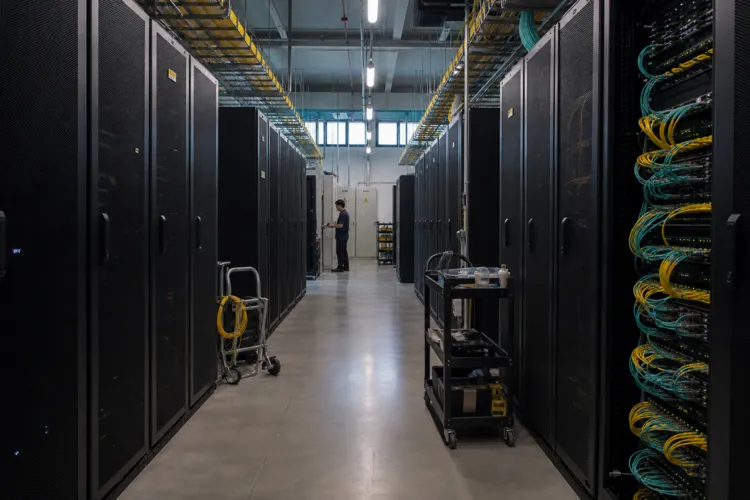
Data centers add another layer to the efficiency story. DC Market Insights values the Thailand Data Center Cooling Market at USD 89.04 million in 2020 and USD 185.37 million in 2025, and anticipates USD 860.53 million by 2035 at a CAGR of 16.52% during the forecast period. The same source notes Bangkok leads activity and points to the Eastern Economic Corridor as a high-potential cluster. It also says operators target lower PUE values to manage rising electricity tariffs, while energy efficiency standards shape procurement choices. Together, mixed-use districts and digital infrastructure are pushing Thailand toward cooling approaches that can document performance, scale reliably, and support sustainability goals through measurable energy and emissions outcomes.
What is driving Thailand’s district cooling momentum in mixed-use developments?
What energy-saving results have been reported for One Bangkok’s district cooling system?
What Bangkok district cooling tender includes quantified savings and emissions reductions?
How fast is Thailand’s HVAC systems market expected to grow through 2030?
How is data center cooling growth shaping demand for efficient cooling in Thailand?