Thailand’s cannabis policy is moving away from the loose retail environment that followed decriminalisation on June 9, 2022. By 2026, the direction is a “medical-use only” framework, with recreational use criminalised again and access increasingly tied to healthcare settings. Reporting in early 2026 described a shift away from the 2022 “wild west” period, as the Public Health Ministry tightened control and required dispensaries to meet stricter operating conditions. In parallel, legal hemp continues under low-THC rules, but with licensing and FDA oversight for consumer goods such as textiles, food, cosmetics, and CBD products.
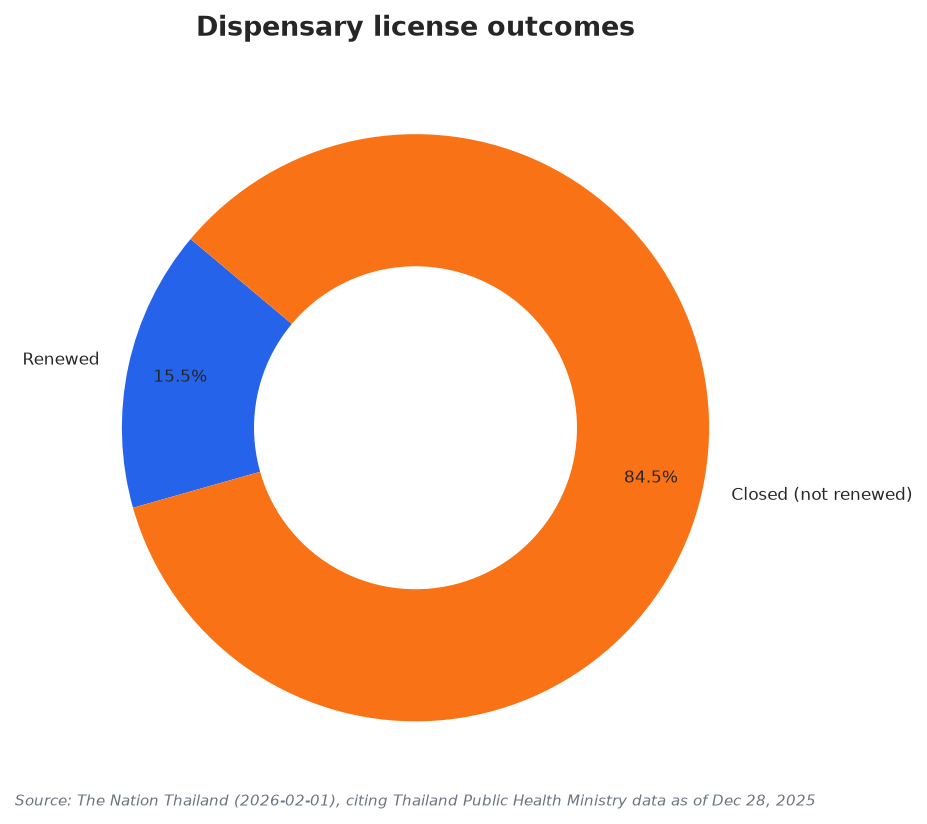
The most visible impact is on retail shop counts. Public Health Ministry data as of December 28, 2025 recorded 18,433 cannabis shops operating nationwide. In the same dataset, 8,636 licences expired last year, and only 1,339 outlets—15.5%—renewed. That left 7,297 shops choosing to shut down and 11,136 still in operation. Operators cited higher compliance burdens, including the requirement to have a licensed or registered Thai traditional medicine practitioner on-site. One Bangkok shop owner described starting with 200,000 baht and later investing nearly 1 million baht in renovations, equipment, and stock, only to see the new conditions make renewal feel unviable.
From Dispensaries to Medical Facilities: What the New Model Requires
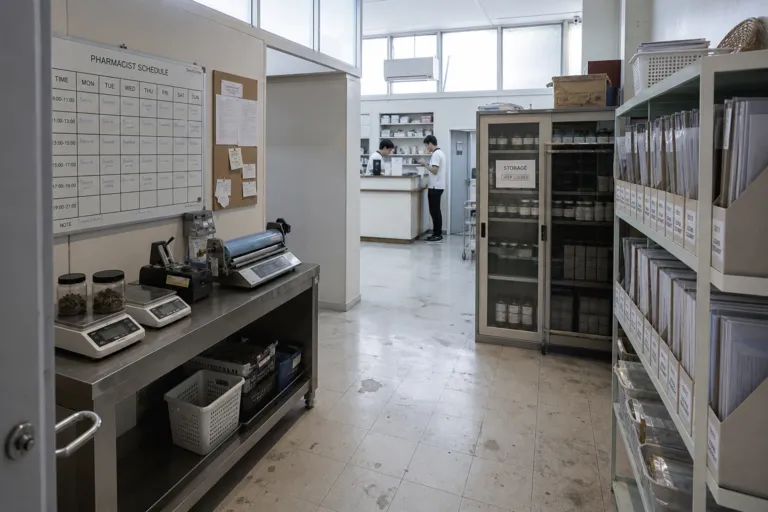
Under the new push, ordinary cannabis shops are expected to “upgrade” into medical facilities if they want to renew licences. Public Health Minister Pattana Phromphat said the government will support medical cannabis, but under tighter controls covering cultivation, extraction, and use, and with closer monitoring of renewals. Dr Phongsathorn Phokphoemdee said the shift includes expanded enforcement authority under the Protection and Promotion of Traditional Thai Medicine Wisdom Act, along with the Public Health Ministry and police. Operators are not required to change overnight, but once licences expire they must meet the new conditions to renew, with a three-year transition period to adjust. Officials also plan mapping of licensed outlets and stickers at shopfronts showing licence status and expiry dates.
Rules around products and access are tightening as well. Cannabis and hemp extracts exceeding 0.2% THC may only be produced, imported, exported, sold, or possessed for four specified purposes: government narcotics-control functions, medical use, medical or scientific research, and industrial use. Walk-in recreational purchases are described as no longer permitted, and buying cannabis flower generally requires a doctor’s prescription. Another update says the revised rules limit access to an authorised medical prescription with a 30-day supply. Dispensaries are also described as barred from selling cannabis online or in designated public areas, with all forms of cannabis advertising prohibited and public consumption remaining illegal with fines of up to 25,000 baht (US$795).
Even so, enforcement and day-to-day practice do not always align. A Bangkok Post report noted that despite regulations intended to restrict use to medical purposes, cannabis remained widely accessible for recreational use in tourist areas, highlighting how the market can adapt faster than regulators. At the same time, lawmakers and regulators continue to work toward a single framework: a draft Cannabis and Hemp Act was submitted to the Cabinet in November 2024, and a Cannabis and Hemp Bill was under public consultation until the end of May 2026, with plans to accelerate its passage to tighten controls over cultivation and distribution. This reset is reshaping the Thailand cannabis and hemp industry into a narrower, compliance-heavy model focused on medical and industrial channels.
How many cannabis shops closed after Thailand tightened licence renewals?
What staffing requirement is making licence renewals harder for cannabis shops?
What does the 0.2% THC threshold mean for cannabis and hemp extracts in Thailand?
What penalties are cited for public cannabis consumption under the revised rules?
How is the Thailand cannabis and hemp industry being repositioned in 2026?