
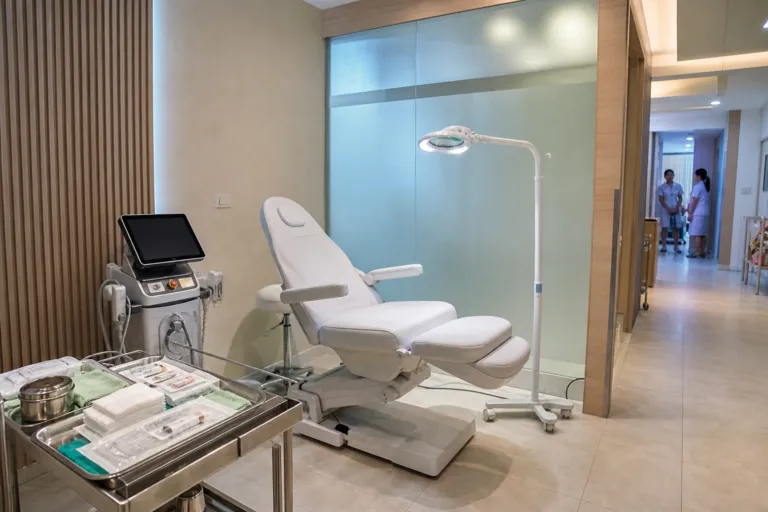
Thailand is increasingly positioned as a major destination for aesthetic medicine, serving both local consumers and international patients. Chameleon Pharma Consulting describes Thailand as emerging as one of Asia’s most influential markets for aesthetic medicine, with demand spanning fillers, laser procedures, and non-surgical thread lifts. Vogue also frames Thailand as Asia’s second largest aesthetic medicine hub after South Korea, pointing to a large base of government-registered clinics. This mix of clinic capacity, competitive positioning, and consumer interest is turning cosmetic procedures into a visible part of a wider beauty economy that extends beyond products into services and treatment journeys.
Clinic density and treatment volume help explain why providers keep expanding in urban centers and beyond. Chameleon Pharma Consulting reports that Thailand has over 7,000 aesthetic clinics, including 2,000 in Bangkok and 5,000 in other provinces. Vogue cites more than 6,600 government-registered aesthetic clinics. On the demand side, Ken Research states that Thailand’s non-invasive aesthetic treatment market is seeing a surge, with over 1.5 million procedures performed annually, and notes over 1,000 clinics operating in major cities within the non-invasive segment. These figures point to a highly competitive landscape where scale, service differentiation, and geographic reach matter.
What Patients Want: Minimally Invasive, Natural-Looking Results
Consumer preferences are pulling the market toward non-invasive and minimally invasive services, with cultural norms shaping what “good results” look like. Chameleon Pharma Consulting lists laser treatments for acne scars, pigmentation, and rejuvenation; dermal fillers for contouring and anti-aging; thread lifting; botulinum toxin injections; and mesotherapy. The same source highlights that natural-looking outcomes are strongly preferred, while skin whitening and brightening therapies remain deeply embedded in Thai beauty culture. It also flags male aesthetics as a rising segment, with men increasingly opting for skincare, fillers, and anti-aging solutions, expanding the addressable client base for clinics.
Medical tourism is a key accelerant, helping Thailand convert its service reputation into recurring demand. Vogue reports that foreign patients now account for nearly 30% of The Demis’s clientele, up from 10% two years ago, with demand expanding beyond Asia to Europe, the US, and the Middle East. Wifitalents.com also states that Thailand is the world’s top destination for medical tourism, with 40% of visits for cosmetic procedures. Together, these signals suggest that cross-border patient flows are not only sustaining volumes for leading clinics, but also raising the bar for safety, outcomes, and the full-service experience that tourists expect.
The business case is reinforced by forecasts and the way clinic services link into Thailand’s broader beauty and personal care growth. Vogue cites a Thai Medical Hub Board forecast that the aesthetic medicine market will be worth $7.51 billion by 2027. Wifitalents.com reports that Thailand’s medical aesthetics market is valued at US$1.5bn in 2023. In the adjacent consumer market, Custom Market Insights forecasts Thailand’s beauty and personal care market will grow at a CAGR of 5.45% from 2025 to 2034, reaching USD 7.87 Billion by 2034 from USD 4.75 Billion in 2025. This is the backdrop for the Thailand aesthetic clinic market to keep evolving as procedures and products feed into one another.
How large is Thailand’s clinic base for aesthetic medicine?
How many non-invasive aesthetic procedures are performed in Thailand each year?
What trends are shaping demand in the Thailand aesthetic clinic market?
How important is medical tourism to Thailand’s aesthetics growth?
What market value figures are reported for Thailand’s medical aesthetics sector?