


Thailand consumer trends are evolving around two important developments: an ageing population and changing mobility preferences. Growing demand for healthcare, wellness, accessible services, and electric vehicles is creating opportunities for brands, while localisation remains essential to reaching different Thai consumer segments.
These shifts are explored in The New ASEAN Consumer, a 2023 whitepaper by Eurogroup Consulting produced for the French Foreign Trade Advisors (CCE) APAC Forum in Ho Chi Minh City.
Drawing on industry research and expert interviews, the study examines how demographic changes, sustainable mobility, and local consumer expectations influence purchasing behaviour.
For companies entering or expanding in Thailand, these trends point to opportunities that require distinct market strategies.
How Is Thailand's Ageing Population Changing Consumer Demand?
Thailand's demographic transition is reshaping demand across healthcare, housing, retail, and lifestyle services.
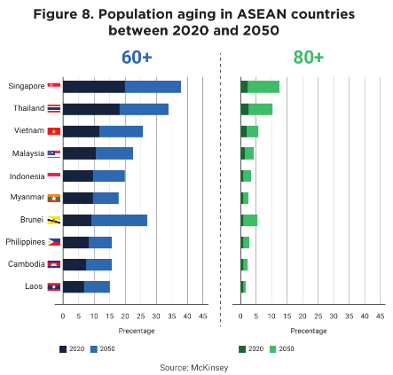
Research cited in the whitepaper projected that people aged 60 and above would account for approximately 33% of Thailand's population by 2040, compared with 13% in 2010.
The projection highlights the scale of Thailand's anticipated demographic change.
For businesses, an ageing consumer base creates opportunities beyond conventional healthcare.
Older consumers may require more accessible products, convenient shopping environments, and services supporting independent living.
However, age alone does not determine purchasing behaviour.
Income, health, digital familiarity, location, and individual preferences influence how consumers evaluate products.
Brands should therefore consider more detailed segmentation rather than treating older shoppers as one uniform group.
The New ASEAN Consumer whitepaper examines this demographic shift alongside broader changes in Southeast Asian consumption.
Thailand's Silver Economy Extends Beyond Healthcare
Thailand's ageing population presents potential opportunities for companies in healthcare, wellness, housing, technology, and retail.
The whitepaper identifies several areas where businesses may need to adapt products and services:
- Healthcare and home care: Medical services, preventive care, and support for independent living.
- Wellness and active ageing: Fitness, nutrition, mobility, and lifestyle services suited to different needs.
- Senior-friendly housing: Accessible homes, residential services, and property adaptations.
- Convenient shopping: Clear communication, accessible digital interfaces, and reliable customer support.
These opportunities depend on understanding the diversity of older consumers.
Some may be active digital shoppers, while others prefer familiar brands, in-person assistance, or traditional communication channels.
The research also highlights the importance of trust, word of mouth, and consistent service.
For businesses, the commercial challenge is developing products that address genuine customer needs without making assumptions based on age.
Thailand's silver economy is not a single market. It encompasses multiple consumer groups with different expectations, incomes, and levels of independence.
Why Are Electric Vehicles Gaining Ground in Thailand?
Mobility is another area where Thai consumer preferences are evolving.
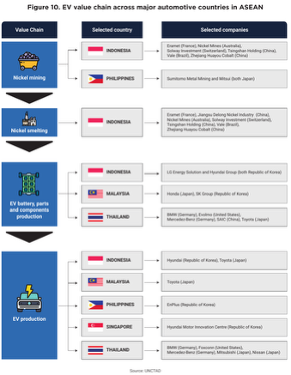
The whitepaper identifies government support, charging infrastructure, and the availability of competitively priced models as important factors influencing electric vehicle (EV) adoption.
At the time of the study, the regional EV market remained relatively small. According to figures cited in the report, electric vehicles accounted for approximately 1% of new vehicle sales across ASEAN in 2021.
That historical regional figure should not be interpreted as Thailand's current EV market share.
Thailand was already developing policies to encourage EV manufacturing and adoption when the study was published.
The whitepaper described the country's ambition to expand electric mobility and strengthen its position in the regional automotive value chain.
Damien Kerneis, Co-founder and CEO of Siam Car Deal, explained the emerging shift:
"EV is having a big traction in Thailand, especially urban Thailand."
His interview also highlighted improvements in charging infrastructure and the arrival of attractively priced EV models, particularly from Chinese manufacturers.
For automotive brands, these developments create new requirements around pricing, vehicle specifications, financing, charging access, and after-sales services.
EV adoption also influences opportunities for component manufacturers, charging providers, and other mobility-related businesses.
Decathlon Shows Why Localisation Matters in Thailand
Successful consumer strategies also require understanding how Thai purchasing preferences differ from those in neighbouring markets.
Decathlon provides an example of how an international retailer can approach ASEAN through local consumer segmentation.
According to the whitepaper, the sporting-goods company adapts its customer strategy to differences in demographics across Southeast Asian countries.
For example, Thailand has an older demographic structure than Cambodia, which influences the consumer groups available to sporting-goods retailers.
Decathlon therefore avoids assuming that one regional customer profile will work equally well across ASEAN.
Its approach demonstrates how global product expertise can be combined with market-specific consumer insights.
The same principle applies across other consumer categories.
Retailers should understand differences in purchasing power, product preferences, store accessibility, and digital engagement before determining their market positioning.
Local partnerships can also strengthen distribution and customer understanding.
The study briefly highlights Coca-Cola's partnership with ThaiBev as another example of how established local networks can support market access.
For international businesses, the central lesson is that localisation should influence operational decisions, not only advertising.
What Should Brands Prioritise in Thailand's Changing Market?
Thailand's demographic transition and developing EV market illustrate how consumer needs can evolve in different directions.
Brands targeting older consumers face different challenges from automotive manufacturers responding to changing mobility expectations.
A practical strategy should include:
- Segment the market carefully: Understand differences in age, income, location, lifestyle, and purchasing motivations.
- Adapt products and services: Match product design, pricing, accessibility, and customer support to identified needs.
- Evaluate channel preferences: Combine relevant physical and digital touchpoints rather than assuming one purchasing journey.
- Strengthen local expertise: Develop partnerships, market intelligence, and operating capabilities suited to Thailand.
These priorities are particularly relevant for healthcare providers, retailers, mobility companies, and consumer brands.
For companies evaluating opportunities, Thailand consumer behavior analysis services can help identify customer segments, purchasing motivations, and market positioning.
Businesses can also contact Market Research Thailand to discuss consumer research and expansion strategies.
Frequently Asked Questions
Is Thailand an ageing society?
Yes. Thailand is undergoing a significant demographic transition, with older consumers representing an increasingly important market segment. Eurogroup Consulting's 2023 whitepaper cites projections showing continued growth in the older population through 2040. This creates opportunities across healthcare, wellness, housing, retail, and services supporting independent living.
Which industries could benefit from Thailand's ageing population?
Potential opportunities include healthcare services, home care, preventive wellness, accessible housing, senior-friendly technology, and specialised lifestyle services. However, commercial demand varies among older consumers depending on income, health, location, and purchasing preferences. Businesses should validate specific customer needs before developing products or investment plans.
Why are electric vehicles gaining traction in Thailand?
The 2023 whitepaper identifies government support, improving charging infrastructure, and the availability of competitively priced EV models as important adoption factors. Consumer interest is also influenced by vehicle costs, convenience, and access to reliable charging. Companies should use current market data when evaluating present-day sales opportunities.
How do older Thai consumers prefer to shop?
Older consumers may value familiar brands, convenient purchasing experiences, clear information, and reliable customer service. The whitepaper also identifies the relevance of traditional media, word of mouth, and accessible digital channels. However, purchasing behaviour differs considerably by income, lifestyle, and individual digital familiarity.
Do international brands need to localise in Thailand?
Localisation can improve relevance by aligning products, pricing, marketing, and distribution with Thai consumer expectations. Decathlon's regional approach illustrates the value of adapting strategies to local demographics. However, the appropriate level of localisation depends on the product category, target segment, and advantages offered by the international brand.
Explore the Consumer Shifts Changing Thailand's Market
Thailand's ageing population, evolving mobility preferences, and diverse consumer expectations are creating opportunities across multiple industries.
For business leaders and brand managers, The New ASEAN Consumer provides deeper insights into demographic change, sustainable mobility, localisation, consumer profiles, and practical strategies for succeeding across Southeast Asia.