
Client
Issues
The retailer was experiencing changes in consumer behavior that were difficult to pin down. Sales data showed some product categories, like organic foods and ready-to-eat meals, were growing quickly, while others, such as sugary snacks, were declining – but the company lacked insight into the drivers behind these trends.
Additionally, customer demographics were evolving: younger, urban customers shopped differently (more frequent small trips, often preferring online channels for certain products) compared to the older generation of shoppers. The one-size-fits-all merchandising and marketing approach the chain traditionally used was becoming less effective; some stores were overstocked with items that didn’t appeal to the local clientele, and centrally designed promotions failed to resonate equally across diverse segments.
The retailer had loyalty card data and POS transaction records, but it was not effectively analyzing this wealth of information for actionable insights. Without a clearer picture of consumer behavior, the company risked losing ground to competitors – both other brick-and-mortar retailers who were quick to adapt to trends, and e-commerce players personalizing the shopping experience online.
Solution
Eurogroup Consulting implemented a consumer behavior analysis initiative to make the retailer’s strategy more data-driven and customer-centric. The solution involved deep-diving into the chain’s rich data sources and supplementing them with new consumer research.
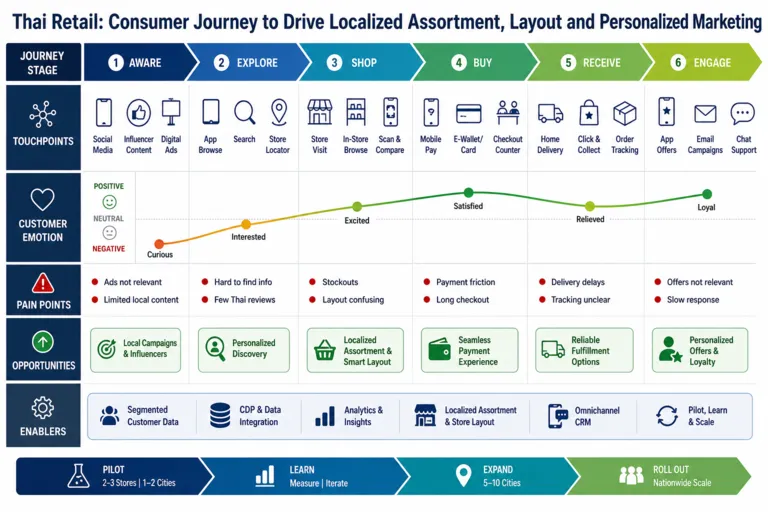
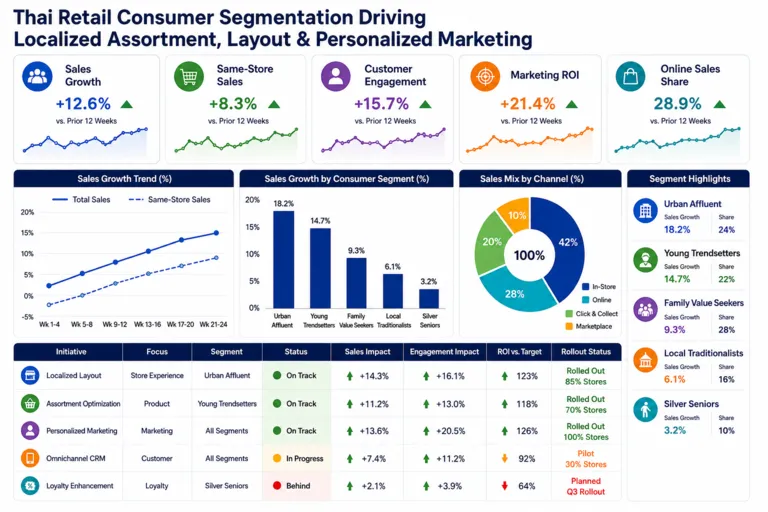
First, the consultancy partnered with the retailer’s IT and marketing teams to mine loyalty program data, which provided purchase histories for millions of customers. Advanced analytics were used to segment customers based on purchasing patterns, identifying key groups (for example, “health-conscious young families,” “budget-focused bulk buyers,” “tech-savvy singles,” etc.) and their distinct shopping behaviors. In parallel, the consultancy oversaw in-store observations and surveys – studying how customers navigated the stores, which sections they spent the most time in, and where they experienced friction (like long waits or difficulty finding items).
They also incorporated external data such as social media trends and Google search data related to shopping and product keywords to sense emerging interests. With these insights, Eurogroup Consulting pinpointed several opportunities: the need for a broader organic and healthy product range in urban stores, an untapped demand for more convenient meal solutions, and confusion caused by store layouts that no longer matched shopper priorities. The strategy recommended by the solution was multifaceted. It included reorienting store layouts to put trending products (like health and wellness items, or quick meal kits) in more prominent positions, and tailoring the assortment of each store more closely to the profile of its local customer base (using the identified segments).
Marketing campaigns were redesigned to be more personalized – for instance, targeted email or app notifications were created for different consumer segments, offering promotions relevant to their interests (a baby product sale for young families, or a discount on gourmet ready meals for busy professionals).
Approach
The project’s approach combined analytical rigor with collaborative design. Eurogroup Consulting’s data scientists analyzed the loyalty card and sales data using clustering algorithms and predictive models to find patterns – for example, identifying that customers who buy organic vegetables also often seek out gluten-free products and tend to shop on weekend mornings. These findings were shared in workshops with the retailer’s merchandising and store operations teams, sparking discussions on how to adjust offerings and layouts.
One pilot was launched at a flagship store in Bangkok: changes included rearranging aisles to create a prominent “Health & Wellness” section grouping organic, low-carb, and natural products together (reflecting the tastes of a large segment of that store’s customer base), and adding signage highlighting quick meal options for on-the-go consumers. Additionally, digital kiosks were installed for customers to easily find product locations or check stock – an idea that emerged from observing customers wandering to find certain niche products.
On the marketing side, the consulting team worked with the retailer’s CRM department to design and send out a new wave of personalized coupons and recommendations via the store’s shopping app and email newsletter, segmented by the behavioral clusters identified. Throughout the implementation, the changes were measured: key metrics such as category sales, dwell time in certain aisles, and redemption rates of the personalized promotions were tracked to gauge the impact.
The pilot data and continuous consumer feedback were then used to refine the approach before a broader rollout. Eurogroup also trained the retailer’s team on using data visualization dashboards and analytical tools, embedding the capability to continually analyze consumer behavior going forward.
Recommendations
Upon concluding the analysis and pilot phases, Eurogroup Consulting provided key recommendations for the retailer to sustain a consumer-centric strategy. It was recommended to establish a permanent consumer insights team that regularly analyzes shopping data and market research, ensuring that decisions on product assortment and marketing are grounded in up-to-date consumer trends.
The retailer was encouraged to invest in technology for real-time data capture – such as upgrading POS systems to better track item-level sales by customer segment and deploying mobile app analytics to understand how customers browse digitally – and to integrate those insights with in-store strategies. Eurogroup also advised expanding successful pilot concepts: for example, rolling out the refined store layout and localized product mix to all stores, while allowing some flexibility so each store manager could tweak offerings based on their specific customer profiles. In marketing, the recommendation was to deepen personalization: utilize machine learning to auto-generate personalized deals and to consider a tiered loyalty program that rewards different segments in ways that matter to them (e.g., cooking classes for food enthusiasts, higher discounts for bulk shoppers).
Additionally, the consultancy highlighted the importance of omnichannel synergy – using insights from in-store behavior to improve online recommendations and vice versa, giving customers a seamless experience. Finally, Eurogroup recommended continuous engagement with consumers beyond sales data: implementing regular quick surveys through the shopping app or at checkout to capture qualitative feedback, and staying agile to shifts (for instance, the next big food trend) by quickly adjusting inventory and promotions accordingly.
Engagement ROI
By leveraging behavioral insights, the retailer achieved a more responsive and effective strategy. The pilot store that underwent layout and assortment changes saw a measurable lift in relevant category sales – the Health & Wellness section enjoyed a 25% sales increase in the first two months, indicating that making these products more visible met a previously under-served demand.
Customers reported a better shopping experience; surveys showed improved satisfaction scores related to finding products and feeling that the store “understands what I need.” Personalized marketing efforts yielded higher returns than the old mass promotions: email engagement and coupon redemption rates doubled when tailored to consumer segments, directly translating into increased basket sizes among those targeted shoppers.
Perhaps most importantly, the retailer noticed a slowdown in customer attrition; more loyalty program members were remaining active shoppers, suggesting that the improved relevance of offerings and communications was building loyalty. The insights-driven approach also prevented costly missteps – for example, the chain avoided a planned expansion of a product category that analysis revealed was actually declining in popularity.
Instead, resources were reallocated to the fast-growing areas identified by consumer data. Overall, the engagement demonstrated that decoding consumer behavior is not just an academic exercise, but a practical tool to drive retail performance. The retailer emerged with a playbook for continually adapting to consumer needs, giving it a stronger footing in Thailand’s competitive retail landscape while delivering greater value to its customers.